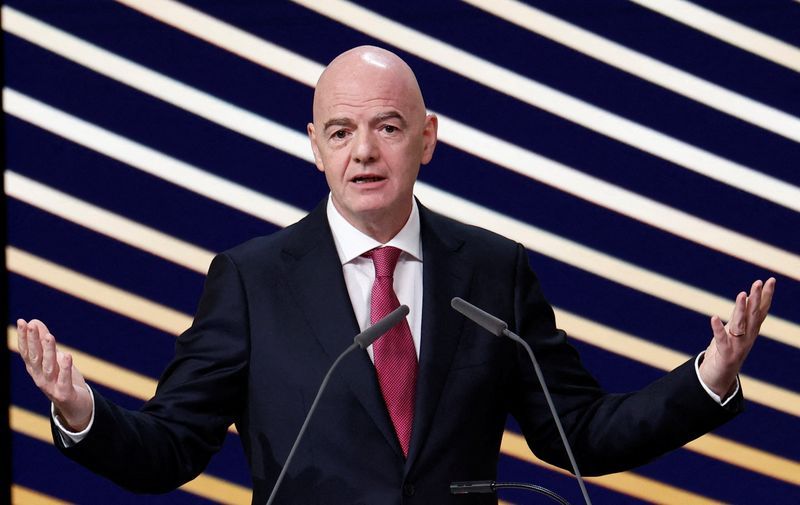
The collapse of FIFA President Gianni Infantino's private equity-backed venture, known as FIFA Football Enterprises, has exposed deep fractures within world football's governing structure—and highlighted an unexpected force in the opposition: women leaders demanding accountability and ethical governance. Laura McAllister, Wales' representative on UEFA's executive committee and a UEFA vice-president, and Lise Klaveness, Norway's football federation president, have emerged as two of the most vociferous critics of Infantino's leadership, shifting the conversation about FIFA's future beyond typical bureaucratic disputes into questions about the sport's fundamental values and who should steer its direction.
McAllister and Klaveness represent a rare demographic in global football administration. Of FIFA's 211 member associations, only 10 are led by women, underscoring how male-dominated the governance of the world's most popular sport remains. Their prominence in the current crisis has inevitably prompted reflection on whether football might be approaching a pivotal moment where female leadership could gain traction at the highest levels. Yet both leaders approach this prospect with measured realism rather than triumphalism, acknowledging that visibility and capability alone cannot overcome entrenched political structures that have resisted gender parity for decades.
The rebellion that McAllister and Klaveness helped catalyse began with the FFE proposal, which aimed to inject private capital into FIFA's commercial operations. UEFA and several regional governing bodies swiftly mobilised against the initiative, with Wales becoming the first nation to withdraw support for Infantino's re-election. The speed and breadth of the backlash revealed how vulnerable Infantino's position had become, prompting him to schedule an emergency meeting in Morocco to address the crisis. McAllister's proposal for UEFA member states to boycott FIFA events garnered unanimous backing at an emergency conference, demonstrating the depth of institutional resolve behind the opposition.
What distinguishes the current governance crisis from previous FIFA controversies is the articulation of principled objections that extend beyond procedural complaints. McAllister has pointed to a troubling pattern: FIFA's entanglement with the failed European Super League initiative, persistent political interference surrounding World Cup hosting decisions, and the controversial rescinding of a red card involving American striker Folarin Balogun following external pressure allegedly from U.S. President Donald Trump. These incidents, when considered collectively, suggest systematic compromises in FIFA's independence and decision-making processes that erode the sport's credibility among stakeholders worldwide.
For McAllister and Klaveness, their interventions stem from professional grounding in legal and political analysis respectively, combined with personal experience as international players in women's football. This background has cultivated what both describe as a values-driven commitment to football as a universal endeavour rather than a commercial enterprise to be divvied among private investors. McAllister articulates this philosophy with particular clarity: football must serve grassroots participants as enthusiastically as elite professionals, reach impoverished nations as readily as wealthy ones, and remain insulated from both private capital accumulation and political manipulation. The preservation of these principles is, in her assessment, essential to football's existential legitimacy.
The broader question of female leadership at FIFA remains complicated by geopolitical realities that McAllister does not shy away from acknowledging. Contending for FIFA's presidency would require coalitions extending well beyond Europe, drawing support from African, Asian, and South American federations where governance traditions and political alignments differ markedly from European norms. McAllister advocates a gradualist approach—building momentum steadily rather than attempting to force rapid transformation through confrontational tactics. This counsel reflects pragmatic understanding that institutional change in global football governance occurs incrementally, through persistent advocacy and demonstration of competence rather than through revolutionary rupture.
Former International Olympic Committee marketing director Michael Payne offers comparative perspective on FIFA's lagging approach to gender equity. He notes that the IOC, now led by Kirsty Coventry, has pioneered gender parity initiatives for two decades, with the Olympics achieving 50-50 gender balance in athlete participation. FIFA's World Cup, by contrast, remains markedly unequal in this respect, suggesting that football's governing institutions have substantially more work to accomplish before approaching genuine parity. This disparity underscores how FIFA's governance shortcomings extend beyond corruption concerns to encompass systemic failure to align with contemporary standards of institutional inclusion and equity.
The convergence of the FFE crisis and renewed discussion about female leadership reveals something perhaps unintended by those focused solely on the private equity dispute: that governance renewal and gender diversity may be interconnected imperatives rather than separate policy questions. An institution willing to compromise its independence by entertaining private equity schemes may simultaneously be unwilling to challenge traditions that exclude women from senior decision-making roles. Conversely, leaders advocating for governance reform may find that transforming corporate culture and institutional values necessarily involves dismantling structural barriers to female advancement and authority.
McAllister's comments on the complexity of advancing female leadership in FIFA carry implicit acknowledgment that meritocracy, while valuable as an aspiration, cannot explain why women remain so dramatically underrepresented in global football administration. She points instead to deeper structural obstacles: political alignments, regional governance traditions, and informal power networks that privilege incumbents and marginalise outsiders. Overcoming these barriers requires not merely identifying talented women candidates—of whom many exist—but fundamentally reshaping the political terrain on which FIFA presidential contests occur and the constituencies whose backing aspirants require.
For Southeast Asian readers, these governance questions carry particular resonance given the region's emerging footballing ambitions and the economic stakes involved in developing competitive national teams and professional leagues. FIFA's integrity and independence from private capital interests have direct implications for how continental confederations like AFC allocate resources, structure competitions, and discipline member associations. A FIFA compromised by commercial entanglement or political interference diminishes the confidence of regional bodies in the global system's fairness and impartiality. McAllister and Klaveness' insistence on principled governance thus serves interests extending well beyond European football, encompassing all federations seeking assurance that FIFA decisions reflect sporting merit rather than financial manipulation or political pressure.
The emergency meeting scheduled for Morocco will determine whether Infantino retains sufficient support to weather the present storm or whether institutional pressure forces his departure. Whatever that immediate outcome, the governance crisis has already shifted the conversation about football's future in meaningful ways. The prominence of McAllister and Klaveness in articulating reform demands has demonstrated that women leaders can mobilise institutional support around principled positions, command respect for substantive arguments about governance, and influence outcomes on questions of strategic importance to global football. Whether these developments ultimately accelerate female advancement into FIFA's highest offices remains uncertain, but the groundwork they are laying through consistent advocacy and demonstrated competence makes such advancement less implausible than it appeared merely months ago.

