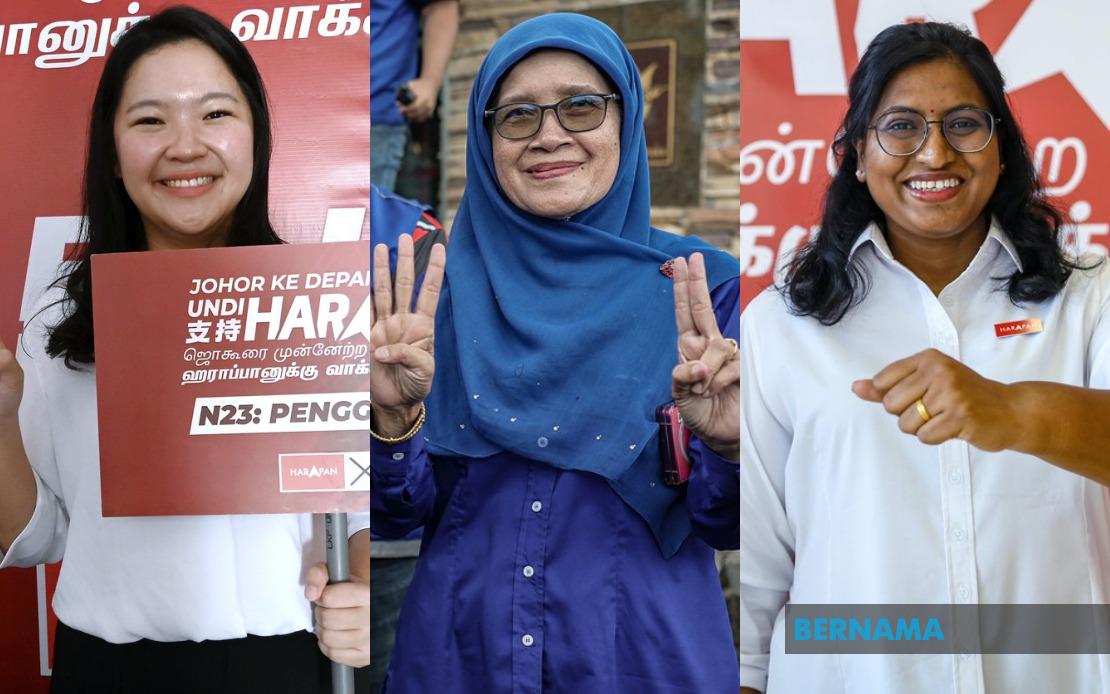
The 16th Johor State Election has delivered a significant, if measured, advance for female representation in the state's legislative body, with ten women candidates securing assembly seats across both major coalitions. The victories underscore a developing trend of voter confidence in women's leadership within Johor's competitive political environment, even as their numbers remain a minority within the broader electoral field. These results offer instructive insights into the pace of gender-based political advancement in Malaysia's most populous peninsula state and the varying fortunes of women candidates across different party structures and geographical constituencies.
Barisan Nasional's seven successful women candidates have emerged as the primary beneficiary of female political progress in this election cycle. The coalition's female winners included Nadhirah Afiqah Abdull Rahim in Serom, Nor Rashidah Ramli in Parit Raja, Alwiyah Talib in Endau, Norlizah Noh in Johor Lama, Fauziah Misri in Penawar, Chan San San in Johor Jaya, and Hasrunizah Hassan in Pulai Sebatang. The demographic diversity of these victories—spanning urban and semi-rural constituencies—suggests that voter acceptance of female BN candidates extends beyond traditional strongholds, potentially positioning the coalition's women members as valuable assets in future electoral consolidation efforts.
Packatan Harapan captured three seats through women candidates: Felicia Poh Rui Ling in Penggaram, Chu Poh Yee in Mengkibol, and Kartiyaini Jeyapalan in Skudai. The coalition's lower absolute numbers of female victors reflects both its overall reduced performance in the election and, potentially, the different strategic calculus governing female candidate selection and deployment across opposition parties. These three seats, however, represent retention rather than breakthrough victories, with all three constituencies previously held by PH, indicating consistency in female voter and candidate support for the opposition coalition.
Nadhirah Afiqah Abdull Rahim's victory in Serom merits particular attention as a maiden electoral triumph. The Ledang Puteri UMNO chief secured a commanding majority of 9,406 votes in her first attempt at legislative office, defeating candidates from both Perikatan Nasional and Pakatan Harapan in a three-way contest. Her success demonstrates that even first-time female candidates can achieve decisive wins within BN's organizational framework, particularly when backed by party machinery and grassroots support networks.
The Parit Raja result illuminates one of the most significant narratives of female political advancement in this election: Nor Rashidah Ramli's dramatically expanded majority. Her 19,572 votes delivered a winning margin of 13,576 votes—more than triple the 4,219-vote majority she achieved in the 2022 Johor state election. This substantial swing represents not merely a personal triumph for the incumbent but evidence of deepening BN support across this constituency, with Nor Rashidah herself clearly constituting a factor in that coalition's enhanced performance. Her result carries implications for how both parties assess the electoral value of retaining and promoting experienced female assemblymen.
Alwiyah Talib's victory in Endau marked an unprecedented achievement in this election: securing the seat for a third consecutive term. Despite facing a competitive four-way contest involving candidates from Perikatan Nasional, the Malaysian Orang Asli Party, and Pakatan Harapan, Alwiyah prevailed with a majority of 3,041 votes. Her sustained electoral success across three election cycles—spanning eight years of political service—establishes a compelling counter-narrative to assumptions about short tenure or limited endurance among female legislators. Alwiyah's longevity in office demonstrates that female candidates can build durable political foundations and constituent relationships capable of withstanding multi-candidate challenges.
Norlizah Noh's comprehensive victory in Johor Lama, where she accumulated a majority of 16,344 votes in a three-way contest, provides further evidence of strong voter endorsement for the incumbent female legislator. Notably, Norlizah faced competition from Danish Hossman Abd Rahman, identified as the election's youngest candidate, yet her experience and existing connections within the constituency proved decisive. Fauziah Misri similarly achieved a commanding result in Penawar, recording a landslide majority of 15,776 votes against both PH and PN challengers, indicating substantial and consolidated support for her continued representation.
Chan San San's upset victory in Johor Jaya constitutes perhaps the most remarkable individual result among the ten successful women candidates. The BN candidate captured a seat long regarded as a Democratic Action Party stronghold, accumulating 35,971 votes to defeat DAP's incumbent and candidates from independent and Parti Bersama Malaysia lists. This breakthrough victory suggests that strategic candidate selection and deployment can overcome conventional partisan geography, particularly in urban constituencies where floating voter populations remain susceptible to persuasion and where female candidates may carry distinctive electoral advantages.
Packatan Harapan's female victors demonstrated varying patterns of support. Felicia Poh Rui Ling, at 28 years old, achieved her maiden victory in Penggaram while defending the seat for her coalition, triumphing over BN challenger Boo Chin Liong with a majority of 4,137 votes in a straight contest. Her youth and electoral success point toward PH's capacity to mobilize younger female voter demographics and to present generationally renewed leadership alternatives. Chu Poh Yee retained Mengkibol with a more modest majority of 4,213 votes against BN, while Kartiyaini Jeyapalan, a Skudai-based lawyer, maintained her traditional PH seat against a four-way contest with a substantial majority of 15,280 votes, indicating that professional credentials and incumbent advantages continue to generate voter confidence.
The broader context reveals that the 34 women candidates who contested—accounting for nearly 20 percent of the total electoral field—achieved a 29.4 percent success rate. This conversion ratio significantly exceeds the proportional representation implied by their numerical presence, suggesting that female candidates, once fielded, enjoy competitive electoral prospects comparable to or potentially exceeding those of their male counterparts. The distribution of victories across both BN and PH, and across constituencies of varying demographic profiles, indicates that female political advancement transcends individual party or regional factors.
Barisan Nasional's comprehensive victory—winning 48 of 56 seats—incorporated success across its female candidate roster, while Pakatan Harapan's eight-seat performance nonetheless preserved representation from three female legislators. These results will likely inform both coalitions' strategies for female candidate recruitment and positioning in future electoral cycles. The demonstrated viability of women across different constituency types and competitive contexts suggests that gender-based arguments against fielding female candidates have diminished political traction, even within conservative-leaning constituencies.
The Johor results reflect Malaysia's broader trajectory regarding female parliamentary participation, where incremental gains accumulate across election cycles without dramatic systemic transformation. The ten successful candidates join their male colleagues in shaping legislative outcomes and policy priorities, yet their minority status within the 56-member assembly continues to concentrate female representation on discrete issues and committees. The implications for Malaysian democracy extend beyond gender equity metrics: female legislators historically bring distinct constituent concerns and policy priorities to legislative proceedings, with documented impacts on education, healthcare, and social welfare policy outcomes across state and federal parliaments.

