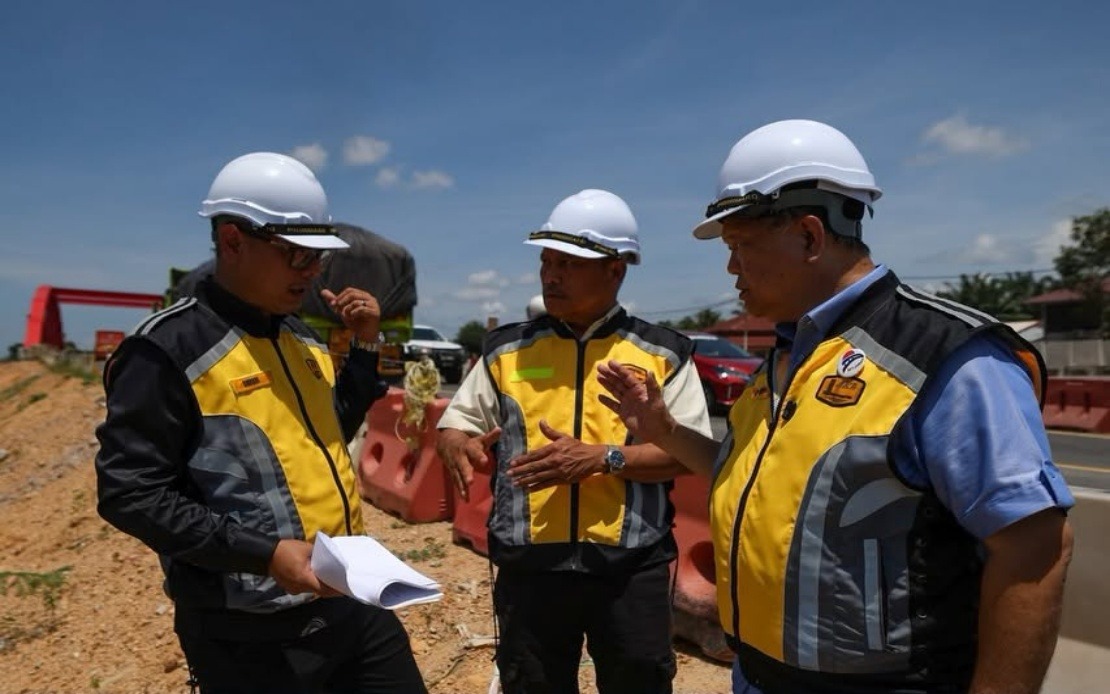
The Ministry of Works has taken decisive action to address mounting delays in the Sungai Durian Bridge Replacement Project in Kuala Krai, with Works Minister Datuk Seri Alexander Nanta Linggi issuing orders for the contractor to substantially increase the pace of work. Despite having been granted six separate Extensions of Time since the project's inception, the construction remains significantly behind schedule, prompting the minister to conduct an unannounced inspection of the site to personally evaluate the current status and identify impediments to completion.
During his surprise visit to assess progress firsthand, Nanta conveyed his instructions to the contractor with unmistakable firmness. The minister's direct intervention signals the government's frustration with ongoing delays that have prevented the public from benefiting from this critical infrastructure upgrade. His inspection approach underscores a shift toward more active ministerial oversight, reflecting broader governmental efforts to ensure accountability in major infrastructure projects across the country.
The project has encountered substantial technical challenges that have contributed to its protracted timeline. Borepile installation works, a foundational element of the bridge replacement, have been severely hampered by the presence of existing utility pipelines underground at the site. These obstacles required careful coordination and rerouting to prevent damage to essential services, adding complexity to an already challenging construction sequence. Additionally, complications with the temporary support structure required for the steel bridge installation have further complicated the contractor's ability to maintain momentum.
However, Nanta made abundantly clear that such obstacles, while acknowledged, cannot serve as indefinite justifications for postponement. His statement conveyed a hardened stance against accepting excuses rooted in implementation weaknesses, signalling that the ministry will hold contractors accountable for efficient project delivery. This reflects growing public and political pressure to demonstrate tangible progress on infrastructure commitments, particularly in East Coast states like Kelantan where development projects carry significant electoral and community importance.
The minister has prescribed specific remedial measures designed to overcome current impediments. The contractor has been instructed to deploy substantially increased workforce and equipment resources to the site, thereby accelerating the overall construction timeline. Simultaneously, the ministry has mandated rapid resolution of all outstanding technical issues through enhanced collaboration between the contractor and the Public Works Department, creating a more integrated approach to problem-solving than may have existed previously.
This infrastructure project holds particular significance for Kuala Krai constituents who have endured an extended period without the completed bridge facility. The repeated Extensions of Time, while sometimes necessary, have eroded public confidence in project execution and created genuine frustration among residents dependent on this infrastructure. Communities affected by such delays often face practical inconveniences in their daily lives, whether through longer travel times, safety concerns with existing infrastructure, or deferred economic development benefits that a new bridge might unlock.
From a broader infrastructure perspective, the Sungai Durian project exemplifies challenges that frequently plague major Malaysian construction undertakings. Coordination between contractors, utility providers, and government agencies often proves difficult, particularly when unforeseen underground obstacles emerge. The steel bridge's temporary support structure difficulties suggest that some design or engineering considerations may not have been fully anticipated during planning phases, underscoring the importance of rigorous preliminary site surveys and engineering studies.
Nanta's commitment to continuous monitoring represents a necessary shift in project governance. By pledging that the Works Ministry and Public Works Department will maintain close oversight until completion, he has essentially assumed personal responsibility for delivery, raising the political stakes of any further delays. This approach can prove effective in mobilising contractor resources and maintaining focus on deadlines, though it also increases ministerial vulnerability if obstacles prove insurmountable.
The broader implications for Malaysian infrastructure development are noteworthy. As the country pursues increasingly ambitious development agendas and larger construction projects, the capacity to manage complex logistics, coordinate multiple stakeholders, and navigate technical challenges becomes ever more critical. Projects like Sungai Durian that face repeated delays can erode public faith in government capabilities and distract resources from other pressing infrastructure needs throughout the nation.
For Kelantan specifically, timely completion of this bridge replacement carries economic and social dividends. Enhanced infrastructure connectivity supports regional development, facilitates commerce, and improves quality of life for residents. The project's status as a ministerial priority suggests it may finally overcome the obstacles that have plagued it, though sustained pressure and active oversight will likely remain necessary until the bridge is completed and fully operational for public benefit.

