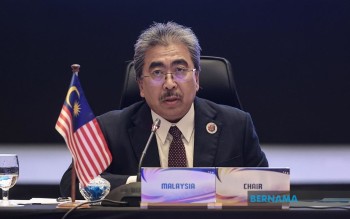
The World Trade Organization faces an existential challenge to remain meaningful in a world transformed by geopolitical tension and economic nationalism, according to Investment, Trade and Industry Minister Datuk Seri Johari Abdul Ghani. Speaking at the 39th Asia-Pacific Roundtable in Kuala Lumpur, Johari articulated what many policymakers across the region now privately acknowledge: the WTO's founding logic—that removing trade barriers automatically generates prosperity and international stability—no longer reflects how governments actually conduct economic policy.
When the WTO was established in 1995, its architects operated within a post-Cold War consensus that embraced globalisation and market integration. The organisation embedded these principles into its rulebook, creating dispute mechanisms premised on the assumption that states would prioritise trade expansion over other policy objectives. Johari's remarks, however, signal that this consensus has fractured. Contemporary policymakers now weigh trade benefits against competing national imperatives that the WTO's current architecture fails to adequately address. These new priorities—resilience, technological dominance, strategic self-sufficiency, and supply chain security—represent a fundamental reorientation of how nations define their economic interests.
For Malaysia and other Southeast Asian economies positioned between major power blocs, this institutional gap poses particular problems. These nations depend critically on open markets for their export competitiveness, yet they also face mounting pressure to develop domestic technological capabilities and reduce dependence on vulnerable supply chains. The tension between these objectives cannot be resolved through traditional WTO negotiations focused on tariff reduction. A modernised WTO must accommodate legitimate concerns about economic coercion and strategic vulnerability without reverting to protectionism that would devastate small open economies.
Johari identified the core problem succinctly: unless the WTO evolves, it risks becoming irrelevant precisely when multilateral trade rules matter most. The alternative to a functioning rules-based system is not harmonious bilateral agreements but rather unilateral coercion, retaliatory tariffs, and escalating economic conflict. In an era of great power competition between the United States and China, with secondary tensions involving Europe and others, a weakened WTO cannot manage disputes or prevent economic disputes from transforming into geopolitical confrontation. The stakes extend far beyond commercial interests into regional stability.
The challenge lies in adapting WTO frameworks to acknowledge that governments legitimately pursue objectives beyond trade maximisation. Current dispute settlement mechanisms lack language to accommodate security exceptions or industrial policy considerations that might otherwise violate most-favoured-nation principles. Reforming these mechanisms requires consensus among 164 member states with vastly different economic interests, a daunting political task. Yet inaction guarantees continuing fragmentation, with countries pursuing their own economic strategies outside the multilateral framework entirely.
Southeast Asia experiences this fragmentation acutely. The region's countries must navigate competing pressures from supply chain diversification initiatives, strategic partnerships with multiple powers, and efforts to develop technological independence. These objectives frequently contradict classical free trade doctrine. A WTO that could accommodate such complexities while maintaining basic non-discriminatory principles would serve regional interests far better than the current framework, which implicitly pushes countries toward explicit bilateral arrangements and bloc-based trading systems.
Johari's statement that Malaysia reaffirms support for multilateralism while insisting the system must evolve reflects the pragmatic position shared across most ASEAN capitals. These nations strongly prefer the existing order to wholesale replacement, yet they recognise that without substantive reform, the WTO will increasingly become irrelevant to how members actually manage their trade relationships. The real debate is not whether change occurs but whether it happens through coordinated multilateral negotiation or through ad hoc fragmentation.
Addressing discriminatory practices has become crucial within this context. Beyond traditional measures like tariffs and subsidies, governments now employ technology restrictions, investment screening mechanisms, and supply chain policies that operate at the margins of WTO jurisdiction. The organisation must develop transparent rules governing these instruments, lest they become vectors for economic coercion disguised as legitimate policy. Malaysia and regional peers worry particularly about asymmetric application of such measures by larger economies.
The Asia-Pacific Roundtable, where Johari delivered these remarks, represents the appropriate forum for discussing such systemic questions. The conference brings together senior officials, strategic thinkers, and business leaders who collectively shape how the region approaches trade and security. That policymakers at this level now openly discuss WTO reform indicates substantial momentum behind institutional change. However, translating such discussion into concrete proposals requires bridging deep disagreements between developed and developing countries, between security hawks and trade advocates, and between those favouring regional integration and those preferring bilateral flexibility.
Ultimately, Johari's argument rests on enlightened self-interest: all WTO members gain from a credible, effective dispute resolution system and transparent rules, even if those rules differ from the original framework. The alternative—a world where economic disputes escalate into military confrontation and supply chain disruption becomes weaponised—serves no member's long-term interests. Whether major powers prove willing to negotiate such reforms, however, remains uncertain. What is clear is that the current trajectory leads toward either significant institutional adaptation or gradual irrelevance.

