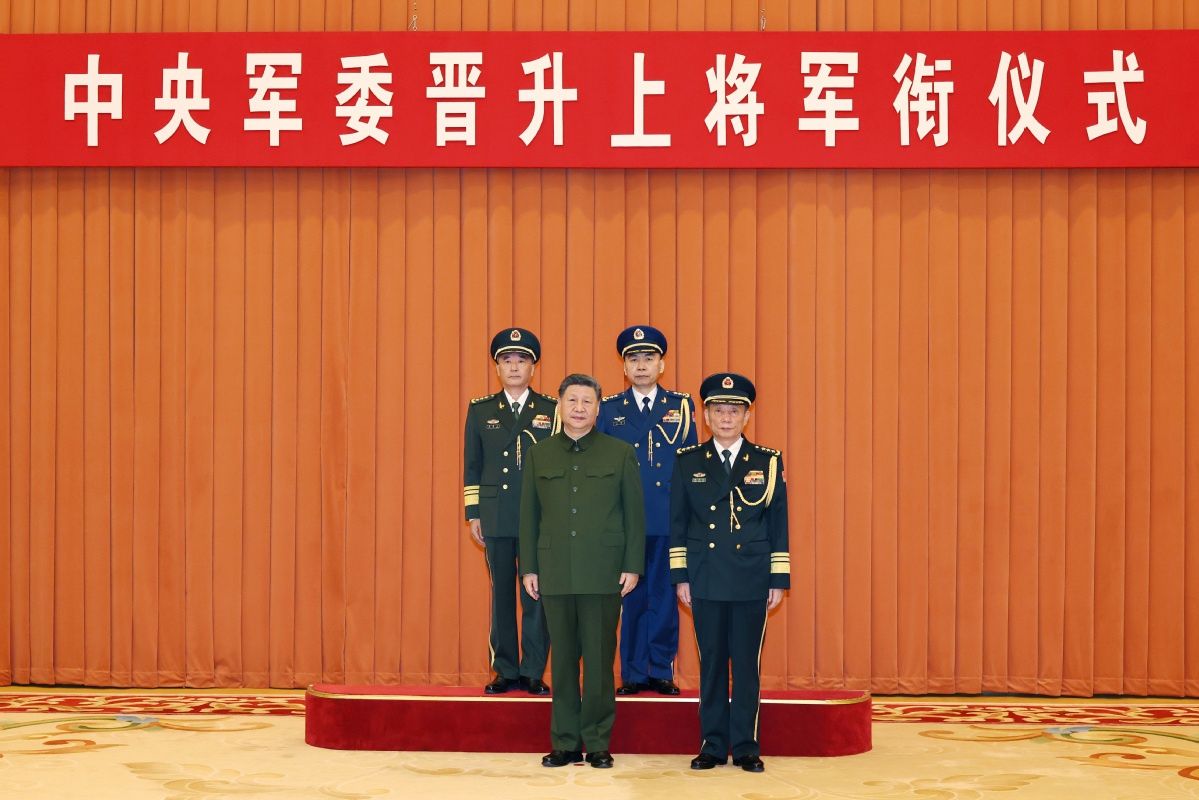
Chinese President Xi Jinping has consolidated his grip on military leadership by installing a fresh command structure in the armed forces' anti-corruption apparatus, marking another significant step in what observers describe as the most extensive military reorganisation in half a century. The reshuffle, unveiled at a Beijing ceremony on Friday, July 3, signals Xi's determination to maintain control over personnel at the highest echelons of China's defence establishment as he cements his unprecedented third consecutive term in power.
Zhang Shuguang now heads the Central Military Commission's discipline inspection commission, taking over responsibility for rooting out graft within the armed forces. Wang Gang simultaneously assumes command of the People's Liberation Army Air Force. Both appointments came with promotions to general rank, China's highest active-service officer level, underscoring their elevated status within the military hierarchy. The move was confirmed by the state-run Xinhua News Agency following the ceremonial announcement attended by Xi himself.
The departing anti-corruption chief, Zhang Shengmin, transitions to become vice chairman of the Central Military Commission—a lateral move that removes him from direct oversight of graft investigations while keeping him within the upper echelon of military governance. The fate of former Air Force Commander Chang Dingqiu remains unspecified, leaving observers uncertain whether the officer will assume a different posting or step back from frontline responsibilities. These personnel adjustments reflect the fluid nature of command transitions currently unfolding across China's defence establishment.
The latest reshuffle forms part of a sweeping anti-corruption campaign that Xi initiated in mid-2023, shortly after consolidating political dominance through his controversial third-term election. Over the subsequent eighteen months, the campaign has dismantled significant portions of the military's senior leadership structure, removing two vice-chairs of the Central Military Commission, three additional CMC members, a former defence minister, and approximately a dozen generals commanding major operational theatres. The scale and pace of these removals far exceed typical peacetime military reforms, signalling Xi's willingness to execute major structural changes across defence institutions.
The anti-corruption drive reached a dramatic crescendo earlier in 2024 when Xi personally initiated an investigation into Zhang Youxia, a four-star general and one-time trusted ally who previously served as vice-chair of the Central Military Commission. The targeting of such a senior figure—someone with whom Xi had cultivated relationships over decades—underscored that no rank or historical connection offers immunity from scrutiny. This development particularly startled China-watchers, suggesting that Xi's anti-corruption mandate operates within a framework where personal loyalty proves secondary to ideological alignment and demonstrable commitment to his vision.
The justification for these sweeping removals ostensibly centres on purging systemic corruption within defence hierarchies. However, analysts across Southeast Asia and beyond increasingly interpret the campaign as serving dual purposes: eliminating potential rivals, consolidating Xi's personal control mechanisms, and reshaping military culture according to his specifications. By replacing commanders and oversight officials at regular intervals, Xi reduces opportunities for subordinates to build independent power bases or develop factional allegiances that might challenge central authority. The pattern reflects longstanding Communist Party tactics of preventing institutional competitors from accumulating excessive influence.
For Malaysian policymakers and regional observers monitoring China's military modernisation and strategic posture, these developments carry significant implications. The ongoing personnel turbulence potentially affects operational continuity, decision-making processes, and strategic planning within China's defence ministry. Countries engaged in maritime disputes with Beijing, including those navigating South China Sea tensions, face an uncertain interlocutor whose command structure remains in flux. The anti-corruption purge may temporarily distract senior military figures from external strategic planning while they navigate internal political uncertainties.
Furthermore, the campaign's intensity raises questions about whether systemic corruption actually warranted such extensive intervention or whether Xi identified an expedient vehicle for consolidating authority. The removal of multiple CMC members and senior generals within an eighteen-month period suggests either remarkable historical corruption requiring dramatic remediation, or a deliberate strategy to ensure loyalty through uncertainty and potential vulnerability. Either interpretation carries weight for regional security considerations, as military leadership uncertainty can produce unpredictable policy shifts or miscalculations.
The military's internal disruption occurs against broader regional anxieties about China's strategic intentions. Southeast Asian governments must assess whether leadership changes will alter Beijing's approach to disputed territories, military posturing, or diplomatic engagement. The replacement of the Air Force commander, traditionally responsible for aerial operations in contested zones, constitutes particularly significant personnel change given aviation's centrality to South China Sea disputes. Wang Gang's priorities and risk tolerance remain unclear, introducing variables that regional defence establishments must monitor closely.
Last week's removal of six military lawmakers from national parliament representation amplified the perception of comprehensive institutional overhaul. This legislative dimension demonstrates that Xi's restructuring extends beyond executive military command into legislative representation, preventing the armed forces from maintaining autonomous political influence through parliamentary channels. The coordinated timing of these changes—military appointments, legislative removals, and anti-corruption investigations—suggests carefully orchestrated implementation rather than reactive responses to discovered malfeasance.
The implications for civil-military relations within China also merit consideration. By repeatedly cycling through senior military leadership, Xi maintains civilian political supremacy while potentially undermining institutional continuity and operational expertise. Officers navigating this uncertain environment may prioritise political caution over strategic innovation, potentially affecting military effectiveness and strategic planning. This dynamic could inadvertently benefit regional powers seeking to balance China's military expansion, though the reduced predictability simultaneously increases miscalculation risks.
Moving forward, the military's stabilisation following these personnel transitions will significantly influence Chinese strategic behaviour. Observers should watch whether the new anti-corruption leadership under Zhang Shuguang pursues additional investigations or consolidates recently implemented changes, signalling either continued purges or stabilisation phases. The appointment of Wang Gang as Air Force commander will similarly indicate whether Xi plans further operational command changes or permits mid-level stabilisation. These signals will help regional governments calibrate their own strategic responses to China's evolving military posture.

