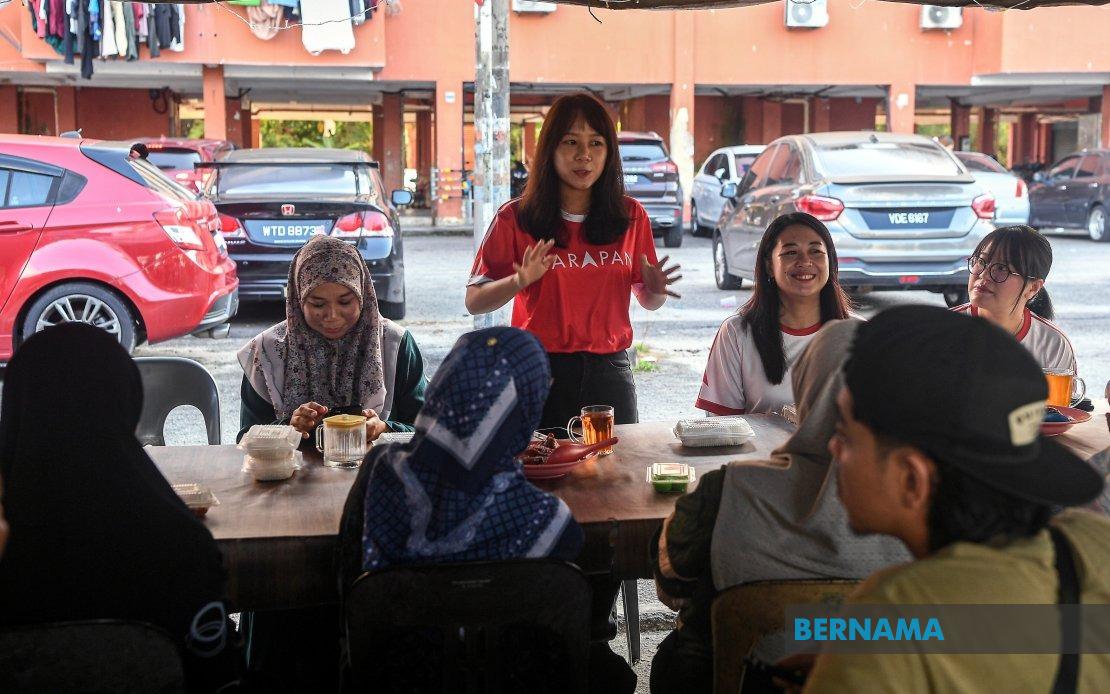
The Johor Jaya state constituency has become a focal point for competing visions on how to attract and retain young talent in Malaysia's southernmost state. Lee Wern Yiing, the 30-year-old Pakatan Harapan candidate, represents a new generation of political entrants who deliberately chose domestic service over lucrative opportunities abroad. After studying in Singapore and completing her education in 2018, Lee made the deliberate decision to return home, convinced that Malaysia's reform trajectory offered meaningful opportunities for contribution. This personal journey underpins her political philosophy and informs the policy platform she now promotes across the constituency.
Lee's entry into politics came through serving as a special officer for the previous Johor Jaya assemblyman, Liow Cai Tung, work that eventually led to her selection as the PH standard-bearer for the seat. As chief of the DAP Socialist Youth wing in Johor, she has cultivated a reputation for directly engaging younger voters through digital channels and ground-level community activities. Rather than dismissing youth disengagement from politics as apathy, she frames young people as rational observers who will assess and respond to tangible policy outcomes. This perspective shapes her campaign messaging and outreach strategy, which combines traditional grassroots programmes such as the Johor Jaya Run with strategic use of social media platforms where younger demographics congregate.
Her policy priorities reflect concerns that resonate throughout Malaysia's urban constituencies. Job creation, affordable housing, and the cost of living crisis occupy central positions in her platform. Lee has identified the Johor-Singapore Special Economic Zone as a critical lever for economic expansion, arguing that proper utilisation of this bilateral project can generate an employment ecosystem sufficiently attractive to reverse migration patterns that have seen young Johoreans seek opportunities in Singapore and Kuala Lumpur. Her framing transforms a constituency-level campaign into a broader narrative about making Johor itself a destination where young families choose to build their futures rather than a launching pad for those seeking greener pastures elsewhere.
Chan San San, the Barisan Nasional candidate, brings a markedly different profile to the contest. Her campaign strategy rests upon more than a decade of direct community engagement work within the Johor Jaya area, a track record she refers to as her primary credential. As a member of the Johor Bahru City Council and holding positions within the MCA party structure, Chan has positioned herself as someone familiar with both administrative machinery and constituent concerns. She explicitly rejects the notion that community problems should be reduced to statistical abstractions, instead emphasizing the organic, relationship-based problem-solving approach that sustained her previous volunteer work with the MCA Crisis Relief Squad.
Chan's development platform centres on four interconnected priorities designed to enhance Johor Jaya's connectivity and economic vitality. Strengthening the local economy forms the foundation, but she has coupled this with an explicit focus on transportation infrastructure. Her proposal to establish Johor Jaya as an eastern Johor Bahru transportation hub represents a more concrete, infrastructure-anchored approach than her opponent's emphasis on youth retention. The Rapid Transit System project receives particular attention in her platform, suggesting that improved connectivity to regional transit networks will enhance both commercial activity and residential appeal. Additionally, she has identified traffic congestion as a material problem affecting quality of life, positioning its resolution as central to the constituency's development trajectory.
The contrasting approaches of the two main candidates reflect broader strategic differences between their respective coalitions regarding how to address Malaysia's persistent challenges in retaining young talent and fostering inclusive economic growth. Lee's emphasis on policy messaging and attracting young people back to their home state represents the Pakatan Harapan emphasis on reform credentials and transformative governance. Chan's stress on practical administration, infrastructure deployment, and relationship-based constituent services articulates the Barisan Nasional's traditional strength in delivering tangible development outcomes through established institutional channels. Neither candidate dismisses the other's core concerns, but rather prioritizes differently and proposes distinct mechanisms for achieving shared objectives around economic vitality.
The election itself unfolds within a highly competitive statewide environment. The Johor Jaya seat is contested by four candidates, including Lau Yi Leong representing Parti Bersama Malaysia and independent contender Lim Hun Peaw. Across the broader Johor state election, 172 candidates are competing for 56 seats, indicating the fragmented political landscape that now characterizes Malaysian electoral contests. This fragmentation means that the centre-right and centre-left coalitions cannot assume automatic support from constituencies where multiple opposition figures compete. The four-way split in Johor Jaya exemplifies how even state-level elections increasingly require candidates to articulate why voters should select them over numerous alternatives.
Polling day for the Johor state election is scheduled for July 11, with early voting available to eligible voters on July 7. The timing and structure of the election underscore Johor's continued political significance within Malaysia's federal structure. As the nation's southernmost state and home to significant economic activity particularly around the Johor Bahru metropolitan region, developments in state politics carry implications beyond Johor's borders. The performance of PH and BN in this election will influence national political calculations and potentially signal shifts in voter preferences that other states will monitor closely.
For Malaysian readers, the Johor Jaya contest encapsulates several themes of national importance. The tension between retaining young talent domestically and making employment opportunities sufficiently attractive to compete with regional alternatives remains acute across the country. Infrastructure investment and connectivity form persistent governance challenges, particularly in secondary cities and their surrounding constituencies. The quality of political candidates, their backgrounds, and their demonstrated commitment to constituent service continue to matter significantly in determining electoral outcomes. Lee and Chan both represent elevated levels of candidate quality compared to some previous contests, whether measured by education, professional development, or sustained community involvement. Their platforms, while differing in emphasis and proposed mechanisms, engage seriously with material concerns rather than resorting to purely rhetorical positioning.
The constituency's internal political dynamics also reflect Malaysia's broader ethnic and religious composition. Both major candidates represent different communities and political coalitions, yet both have grounded their campaigns in concrete policy proposals rather than divisive sectarian messaging. This pattern, increasingly visible across Malaysian elections, suggests that candidates recognize voter demand for practical solutions to pocketbook issues. The prominence of economic concerns—jobs, housing, transportation, cost of living—in both major campaigns indicates that these issues have transcended narrow partisan divides to become baseline expectations across the electorate.

