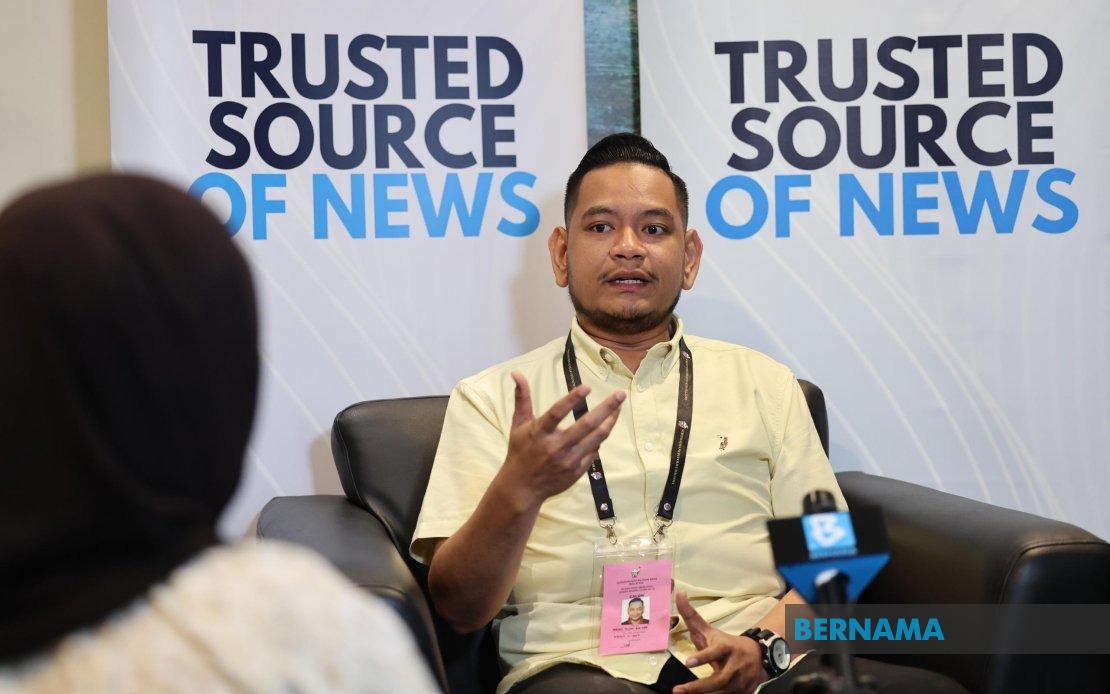
Johor's Sedili state seat is shaping up as a three-cornered contest where generational politics may prove decisive, with Pakatan Harapan fielding a first-time candidate who is deliberately framing his lack of political history as an asset rather than a liability. Amirul Huzni Onn, the 29-year-old chief of Parti Amanah Negara's youth wing, enters the July 11 state election facing an uphill battle in a traditional Barisan Nasional bastion, yet demonstrates remarkable confidence in a campaign strategy centred on the notion that his relative youth and political virginity position him to offer voters something genuinely different from the usual fare of incumbent and established figures.
The Sedili contest brings together three political generations in miniature. Incumbent Muszaide Makmor represents the Barisan establishment, while Rasman Ithnain, a former three-term Sedili assemblyman now championing Perikatan Nasional, embodies accumulated political experience and track record within the constituency. Against this backdrop, Amirul Huzni's candidacy appears unconventional, yet his framing reveals sophisticated campaign thinking about voter fatigue and the appeal of renewal in Malaysia's political landscape. Rather than attempting to match his opponents' institutional credentials, he inverts the competition's terms entirely, suggesting that the absence of a political past is precisely what voters in Sedili may be seeking.
In interviews with media, Amirul Huzni articulated a philosophical approach to his outsider status that extends beyond simple optimism about youth representation. He described his position as a "blank canvas"—a telling metaphor suggesting voters can project their own expectations onto a figure unburdened by previous failures or unfulfilled commitments. This positioning addresses a real challenge facing Malaysian voters accustomed to cycles of electoral promise followed by executive inaction. By emphasizing the absence of blemishes or demonstrated shortcomings, he implicitly critiques the traditional political model where long tenure paradoxically becomes a liability precisely because it generates a record of promises unkept and expectations unmet.
Yet Amirul Huzni's approach demonstrates mature pragmatism about the actual constraints of electoral competition. He acknowledges frankly that by conventional measures of political influence, institutional connections, and grassroots organisation, he operates at a significant disadvantage. Rather than obscuring this reality, his campaign strategy absorbs it, arguing that victory ultimately depends on winning the contest itself rather on accumulating traditional markers of political weight. This framing—reducing politics to its most fundamental binary outcome of winning or losing—attempts to psychologically level an uneven playing field by redefining what constitutes success and by extension, what voters should prioritise.
The generational theme extends to Amirul Huzni's substantive campaign priorities, which reflect a strategy of concrete, achievable promises over grand programmatic platforms. His flagship campaign issue exemplifies this approach: securing construction of a fuel station in Sedili, a facility he describes as long-awaited by the local community, particularly fishermen and recreational anglers whose livelihoods and leisure depend on convenient access to fuel supplies. The compelling detail that land for this facility was cleared more than a year ago yet construction remains in abeyance suggests a failure of execution by existing political structures—precisely the kind of tangible, specific shortcoming that newer candidates can credibly claim to remediate without the institutional baggage that encumbers longer-serving politicians.
This particular campaign focus also reveals astute political reading of Sedili's demographic and economic character. Coastal constituencies dependent on fishing and maritime recreation operate with distinct practical concerns often overlooked by politicians focused on larger urban agendas. By centering his campaign on this specific infrastructure need, Amirul Huzni signals genuine attentiveness to local particularities rather than generic promises. This approach contrasts sharply with campaigns that traffic in broad policy statements disconnected from the texture of everyday life in specific communities. For voters in Sedili, a candidate explicitly focused on resolving a recognisable, specific problem—the fuel station—may prove more persuasive than rhetoric about transformed governance or reimagined systems.
Amirul Huzni's campaign methodology additionally emphasizes electoral conduct and community cohesion, framing the contest not as zero-sum political warfare but as an exercise in respectful competition among candidates committed to representing Sedili. His public statements stress the importance of "conducting electioneering in a mature and respectful manner" and reference his direct engagement with opponents to "preserve harmony within the local community." This posture serves multiple purposes: it positions him as the mature, responsible figure despite his youth; it potentially insulates him from attacks that might alienate swing voters preferring civility over adversarial politics; and it constructs a narrative where his campaign represents not partisan victory but community wellbeing, a framing particularly appealing in constituencies where cross-cutting social networks and family connections link voters to candidates across political divides.
The broader context of this election merits consideration for Malaysian and regional observers. Johor state elections carry outsized significance within Malaysia's political economy, given the state's economic weight, its historical dominance within Umno-led politics, and its function as an important testing ground for campaign strategies and voter sentiments. The emergence of candidates like Amirul Huzni—younger, relatively inexperienced, positioning themselves explicitly as agents of renewal—signals shifting voter appetites that may extend beyond Johor's borders. If his strategy resonates and he performs credibly or better, it would suggest that Malaysian voters across different state contests may be increasingly receptive to younger candidates who distinguish themselves through specific local engagement rather than broad ideological platforms or promises of systemic transformation.
For Pakatan Harapan specifically, fielding Amirul Huzni in a traditionally strong Barisan seat involves calculated risk and patient strategic thinking. Even if he does not secure victory in Sedili, his performance and campaign approach generate valuable intelligence about voter receptiveness to youth-focused, community-centred messaging in different demographic contexts. The July 7 early voting and July 11 general polling will reveal whether Johor voters in Sedili prioritize accumulated political experience and institutional connections or whether they respond to the appeal of fresh perspectives and focused local problem-solving. Regardless of outcome, this contest exemplifies how Malaysian electoral politics continues evolving, with new generations of candidates attempting to reshape the terms of competition itself rather than simply competing within established frameworks.

