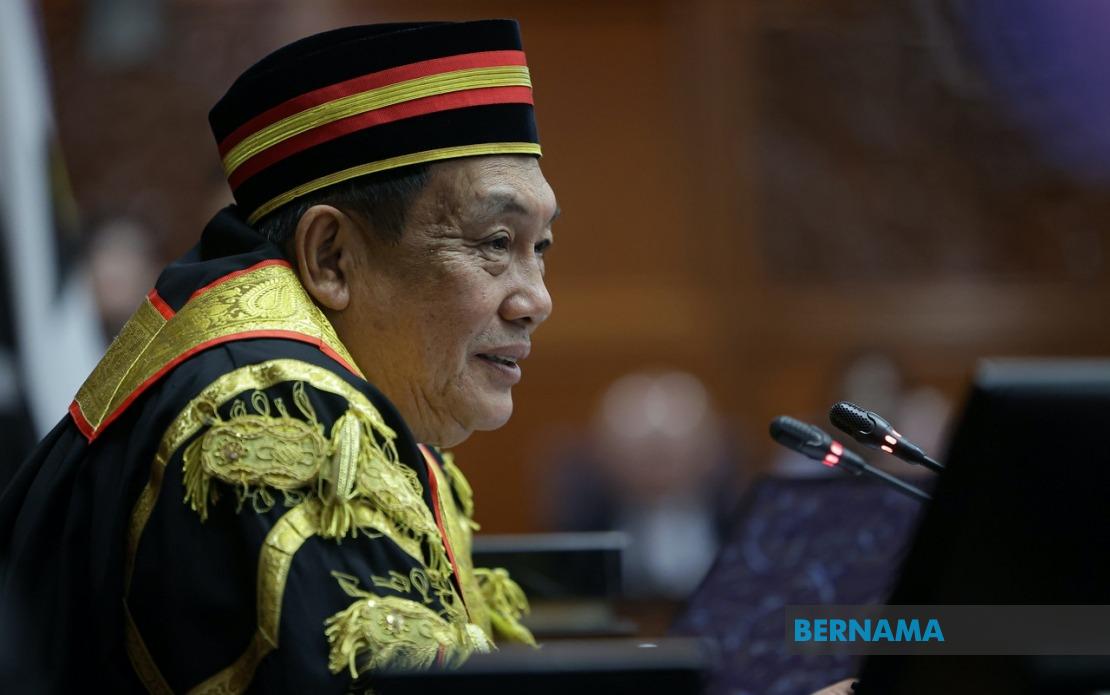
Dewan Negara President Datuk Awang Bemee Awang Ali Basah has characterised Malaysia's Youth Parliament as a transformative institution comparable to an educational establishment dedicated to instilling democratic values in the nation's younger generation. Speaking at the "Tranung Mari! From Campus to Parliament: Youth Voices Shaping Malaysia's Future" programme at Universiti Malaysia Terengganu, Awang Bemee emphasised that the platform equips young people with essential experiences in democratic engagement, from articulating viewpoints to participating in structured debates and accepting decisions reached through majority consensus.
The Senate President framed the Youth Parliament initiative as more than merely participatory theatre. Instead, he presented it as a foundational mechanism through which the nation's future leaders develop the character traits and ethical foundations necessary for responsible governance. Awang Bemee stressed that true leadership transcends the capacity to deliver directives; rather, it encompasses the capacity to listen attentively, comprehend substantive challenges, and formulate constructive remedies. He underscored that occupying positions of authority inherently carries obligations that extend beyond personal advancement.
Within Malaysia's broader democratic framework, Awang Bemee positioned the Youth Parliament as a complementary institution to Parliament itself. Whilst Parliament functions as the primary decision-making apparatus for the nation, the Youth Parliament furnishes perspectives rooted in generational experience and contemporary preoccupations. This dual-track approach strengthens democratic institutions by ensuring that policy considerations incorporate viewpoints from those who will bear the consequences of legislative decisions over extended timeframes. The Senate President articulated this as integral to fortifying Malaysia's democratic practices during a period of significant social and technological transformation.
Understanding youth as essential to national prosperity and continuity, Awang Bemee outlined a tripartite framework for empowering younger citizens to participate meaningfully in governance and nation-building. The first component emphasises democratic accessibility—creating environments where citizens, particularly those still establishing their civic identities, encounter genuine opportunities for expression and find their perspectives genuinely valued. This foundation rests upon institutional commitments to transparency, openness to divergent viewpoints, and substantive engagement with alternative perspectives. Awang Bemee particularly highlighted Malaysia's ethnic, religious and cultural pluralism as a potential strength when accompanied by deliberate cultivation of mutual comprehension and reciprocal respect among diverse communities.
The second pillar addresses educational foundations that extend beyond conventional academic certification. Awang Bemee advocated for curricula emphasising analytical reasoning, computational competencies, comprehension of artificial intelligence technologies, imaginative problem-solving, entrepreneurial capabilities, effective communication methodologies and informed citizenship. He stressed that technological advancement must be accompanied by robust ethical frameworks ensuring that young people deploy digital tools judiciously. Additionally, Awang Bemee directed attention toward emerging economic frontiers, specifically the Blue Economy—encompassing maritime industries from fisheries and aquaculture to tourism, marine renewable energy generation and shipping infrastructure—alongside parallel imperatives for marine ecosystem preservation and coastal development. This integration of economic awareness with environmental stewardship reflects recognition that future prosperity depends upon sustainable resource management.
The third foundational element addresses the relationship between individual liberties and collective responsibility within democratic societies. Awang Bemee articulated that whilst democratic systems protect freedom of expression and intellectual liberty, these freedoms carry attendant obligations. Specifically, he cautioned against conflating unrestricted utterance with licence to disseminate false information or defamatory content. He proposed a practical ethical framework for technology engagement: verification before dissemination, critical examination before acceptance, empathetic consideration before condemnation, and consequence contemplation before action. This approach acknowledges the amplification effects of digital platforms whilst encouraging young people to exercise discernment in their participation within networked communication systems.
The Youth Parliament initiative, functioning as a roadshow spanning higher education institutions, intentionally bridges institutional distance between Malaysia's legislature and student communities. This outreach strategy recognises that many young people encounter Parliament as a distant abstraction rather than an accessible institution responsive to contemporary concerns. By bringing parliamentary representatives and processes directly to university campuses, the programme demystifies legislative functioning and creates direct channels for youth engagement with senior parliamentary officials. A particular session—"Malaysian Youth: Drivers or Spectators?"—facilitated dialogue between student participants and Parliament Malaysia's chief administrator Datuk Dr Ahmad Husaini Abdul Rahman, enabling substantive conversation rather than passive information reception.
The broader aspirational dimension of the Youth Parliament programme centres on cultivating leadership characterised by ethical integrity and developing cohorts of informed, conscientious citizens prepared to assume active roles in determining Malaysia's trajectory. This positioning reflects acknowledgement that demographic reality—with considerable proportions of Malaysia's population under thirty—means that youth engagement represents not merely symbolic inclusivity but strategic necessity. The quality of youth participation in democratic processes substantially influences institutional legitimacy and governmental effectiveness across coming decades.
Awang Bemee expressed conviction that Malaysian youth possess capacity to function as unifying forces bridging communal divisions, addressing complex societal challenges and directing national development toward enhanced prosperity and social cohesion. His remarks signal institutional commitment from parliament's highest levels toward meaningful youth participation rather than tokenistic engagement. This emphasis gains particular salience as Malaysia navigates technological disruption, evolving employment landscapes, climate-related environmental pressures and social transformation that disproportionately affect younger generations who will inherit resulting structural changes.

