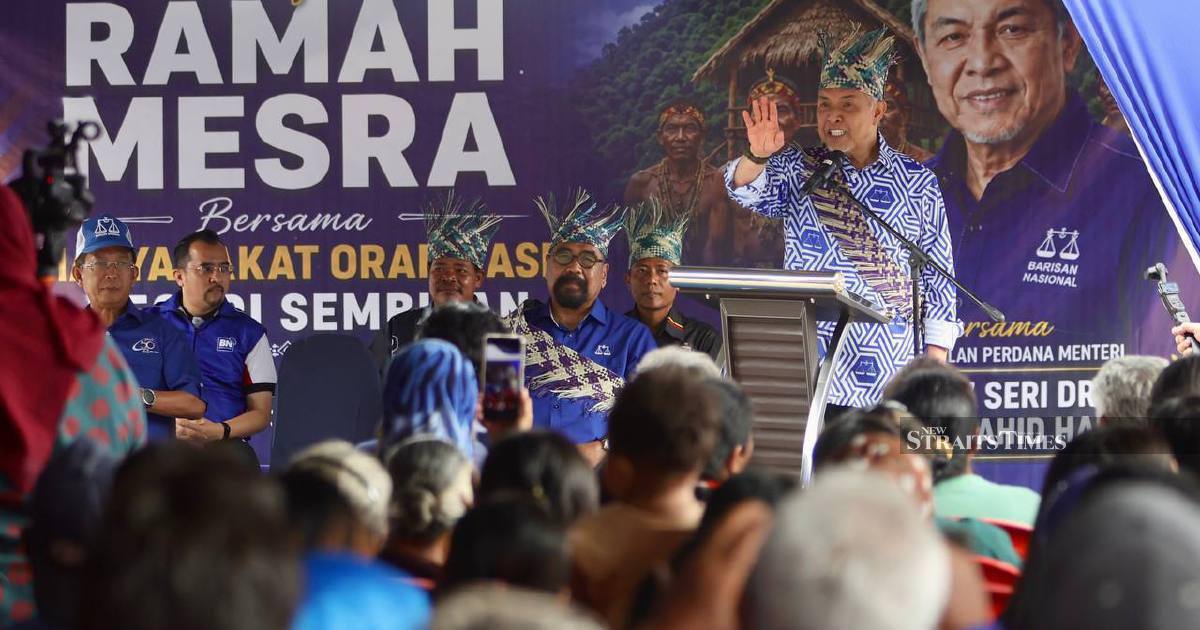
Deputy Prime Minister Datuk Seri Dr Ahmad Zahid Hamidi has put forward a proposal to establish a specialised officer position dedicated to representing the Orang Asli community at the Negri Sembilan Menteri Besar's Office. Speaking in Jelubu, Zahid indicated that such an appointment would not necessitate a formal manifesto pledge, opening the door for the state administration to move forward with the initiative without lengthy procedural hurdles.
The proposal reflects growing recognition at federal level of the need for dedicated institutional channels to address Orang Asli concerns and representation. By creating a specialist post within the Menteri Besar's Office itself, the framework would enable direct communication between indigenous communities and the state's highest executive authority, potentially streamlining the process by which indigenous grievances are raised and addressed.
Orang Asli communities across Malaysia have historically faced marginalisation in policy-making processes, with land rights, education access, and development issues frequently overlooked in mainstream governance discussions. Negri Sembilan, home to several Orang Asli settlements, has particular relevance for this initiative. The appointment of a dedicated officer could serve as a precedent for other states seeking to improve indigenous community engagement at the executive level.
The flexibility that Zahid outlined—permitting such appointments without prior manifesto commitments—is significant for state administrations seeking to demonstrate responsiveness to indigenous concerns. It removes a bureaucratic constraint that might otherwise delay implementation and suggests the federal government views this as sufficiently important to enable rapid action. This pragmatic approach recognises that institutional innovations sometimes emerge from evolving governance priorities rather than pre-election commitments.
For Negri Sembilan's administration, the proposal offers a mechanism to formalise its engagement with Orang Asli communities through a designated point of contact. Rather than Orang Asli issues being diffused across multiple state departments, a centralised officer could coordinate policy responses, facilitate consultation, and ensure indigenous perspectives inform state decision-making on matters affecting them directly, from land management to economic development initiatives.
The role would likely encompass several functions: serving as an advocate for Orang Asli interests within the state administration, coordinating inter-agency responses to community needs, facilitating dialogue between state government and indigenous leaders, and monitoring implementation of policies affecting indigenous populations. Such multifaceted responsibilities would require the appointee to possess both administrative competency and cultural understanding of the communities they represent.
Regionally, the Negri Sembilan initiative could influence other state governments' approaches to indigenous governance. Neighbouring states in the Klang Valley region and Peninsular Malaysia more broadly might view a successful implementation as a model worth adopting. This horizontal policy diffusion through state-level demonstration effects often proves more persuasive than federal directives, particularly on culturally sensitive matters where local contextualisation matters.
The proposal also sits within the broader context of Malaysia's Indigenous Peoples Day commemorations and periodic government commitments to address Orang Asli welfare. Unlike proclamations or policy statements that generate limited tangible change, establishing a dedicated officer creates an institutional structure with budgetary allocation and specific accountability. The appointee's presence within the Menteri Besar's office ensures that indigenous concerns cannot be easily deprioritised or relegated to secondary importance.
Challenges remain in translating this proposal into effective governance. The success of such initiatives depends heavily on the appointee's access to decision-making processes, adequate resources, and the genuine commitment of state leadership to act on recommendations. Without meaningful authority to influence budgeting and departmental priorities, the position risks becoming ceremonial rather than substantive. Clear terms of reference and reporting mechanisms will be essential to ensuring the officer exercises real influence on policy outcomes.
The timing of this announcement carries significance as well. With the state government managing various development initiatives that may affect Orang Asli settlements, having a dedicated representative could ensure that indigenous consultation occurs at early stages rather than reactively addressing community grievances after decisions are implemented. This proactive posture potentially reduces conflict and generates more culturally appropriate development outcomes.
Zahid's removal of the manifesto requirement also signals federal-level flexibility in supporting state-level administrative innovations. This approach acknowledges that effective governance sometimes requires responsiveness to emerging needs rather than strict adherence to pre-election platforms. For state administrations, it provides greater latitude in implementing what they determine to be necessary institutional reforms.
Whether Negri Sembilan swiftly proceeds with appointing such an officer will indicate the state's commitment to translating the proposal from concept into practice. The coming months will reveal whether this represents a genuine institutionalisation of Orang Asli representation or another instance of policy announcement without proportionate implementation. For indigenous communities watching closely, evidence of meaningful change will ultimately determine whether this initiative represents meaningful progress or symbolic gesture.

