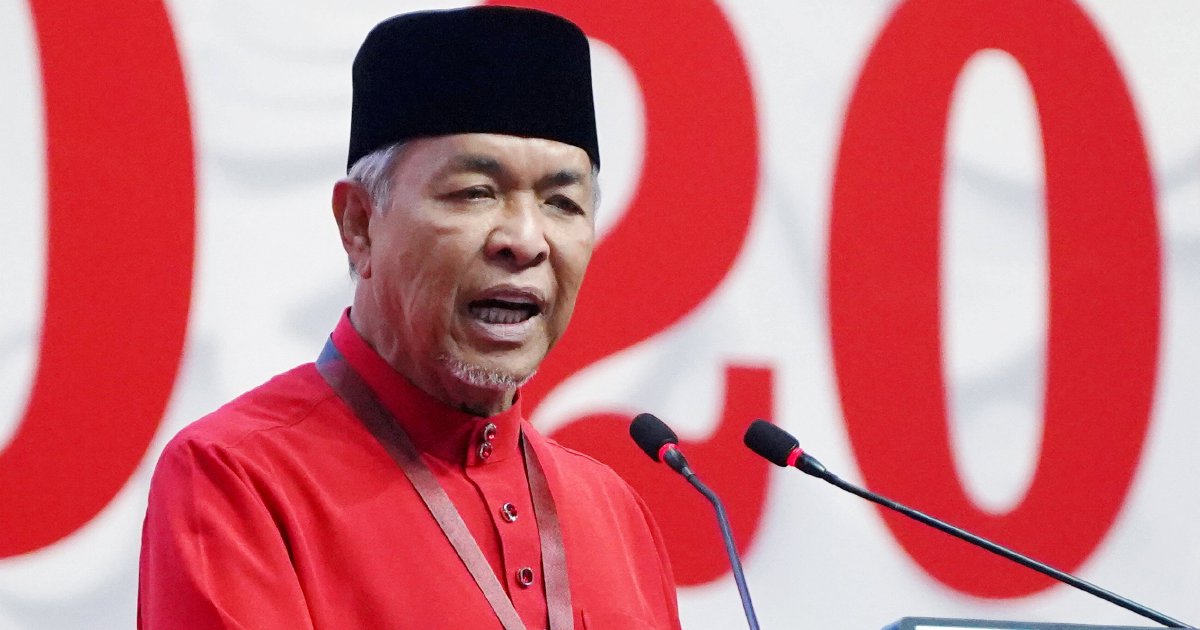
Datuk Seri Dr Ahmad Zahid Hamidi, in his capacity as BN chairman and Umno president, has signalled an uncompromising stance towards any findings of impropriety arising from the Royal Commission of Inquiry into Tabung Haji. Speaking in Putrajaya, Zahid stated that neither the BN coalition nor Umno would shield individuals or groups should the investigation uncover evidence of criminal breach of trust, wrongful conduct, or failures in governance at the pilgrim fund management body.
The declaration carries particular significance given the centrality of Tabung Haji to Malaysia's Muslim population and the institution's role in facilitating the Hajj pilgrimage. The fund manages billions of ringgit in contributions from over three million account holders, making any governance lapses matters of substantial public concern and financial consequence. The establishment of the RCI itself reflects widespread anxiety about the fund's management and operational integrity, concerns that have accumulated over several years.
Zahid's pronouncement appears calibrated to preempt suggestions that Umno or BN might attempt damage control or political protection for party members or allies who could emerge as subjects of the inquiry. By explicitly stating that wrongdoing will not be tolerated or overlooked, the Umno leadership seeks to position the coalition as committed to accountability and the rule of law, particularly important as public confidence in institutional governance remains contested in Malaysian politics.
The Royal Commission of Inquiry represents a formal mechanism for investigating alleged mismanagement at Tabung Haji. The commission's mandate encompasses examining whether poor governance, breach of fiduciary duty, or criminal conduct occurred within the organization. Such investigations typically examine decision-making processes, fund allocation, internal controls, and compliance with regulatory frameworks. The breadth of the inquiry means that numerous individuals across executive and board levels could potentially face scrutiny depending on the evidence uncovered.
For Malaysian readers, the implications extend beyond simple accountability measures. Tabung Haji's stability directly affects millions of Malaysians, particularly lower and middle-income groups who depend on the fund for religious obligations and financial planning. Any finding of systematic mismanagement could necessitate restructuring, affect dividend payments, or require government intervention to stabilize the institution. The RCI process itself, therefore, holds consequences for household finances and retirement planning across the nation.
Umno's historical dominance within Malaysian politics means that party members have held senior positions across government and statutory bodies, including within Tabung Haji's governance structure. Zahid's statement that wrongdoing will not be excused thus addresses an elephant in the room: whether political affiliation would influence how serious findings are treated. By committing to accountability regardless of political connections, Umno's leader attempts to demonstrate that institutional integrity supersedes partisan loyalty.
The timing of Zahid's remarks reflects the broader political context in which Malaysia operates. Public trust in institutions has faced challenges from various scandals and governance concerns in recent years. Political movements have partly mobilized around demands for greater transparency and accountability. Zahid's categorical refusal to compromise on Tabung Haji findings can be read as an attempt to restore confidence in BN's commitment to principled governance and democratic accountability.
However, the strength of such political declarations ultimately depends on implementation. Words alone carry limited force when institutions face systemic pressures or when enforcement remains inconsistent. The test of Zahid's commitment will emerge when the RCI releases its findings. How BN and Umno respond to any adverse conclusions, whether they initiate prosecutions, pursue disciplinary measures, or accept recommendations for institutional reform, will determine whether the declaration represents genuine policy or rhetorical positioning.
Regionally, Malaysia's governance challenges resonate across Southeast Asia, where multiple nations grapple with similar questions about institutional accountability and the balance between political loyalty and principled action. The Tabung Haji case offers a test case in how major political coalitions respond to formal investigations into alleged wrongdoing within their spheres of influence. The choices made by BN leadership could establish precedents regarding institutional autonomy and political accountability in the Malaysian context.
For the hajj pilgrims and Tabung Haji account holders themselves, the RCI represents an opportunity to secure independent verification of the fund's management. Whether the inquiry succeeds in providing genuine reassurance or uncovering systematic problems depends on both the investigation's thoroughness and the subsequent political response. Zahid's precommitment to accountability, while welcome rhetorically, gains substance only through visible follow-through on consequences.

