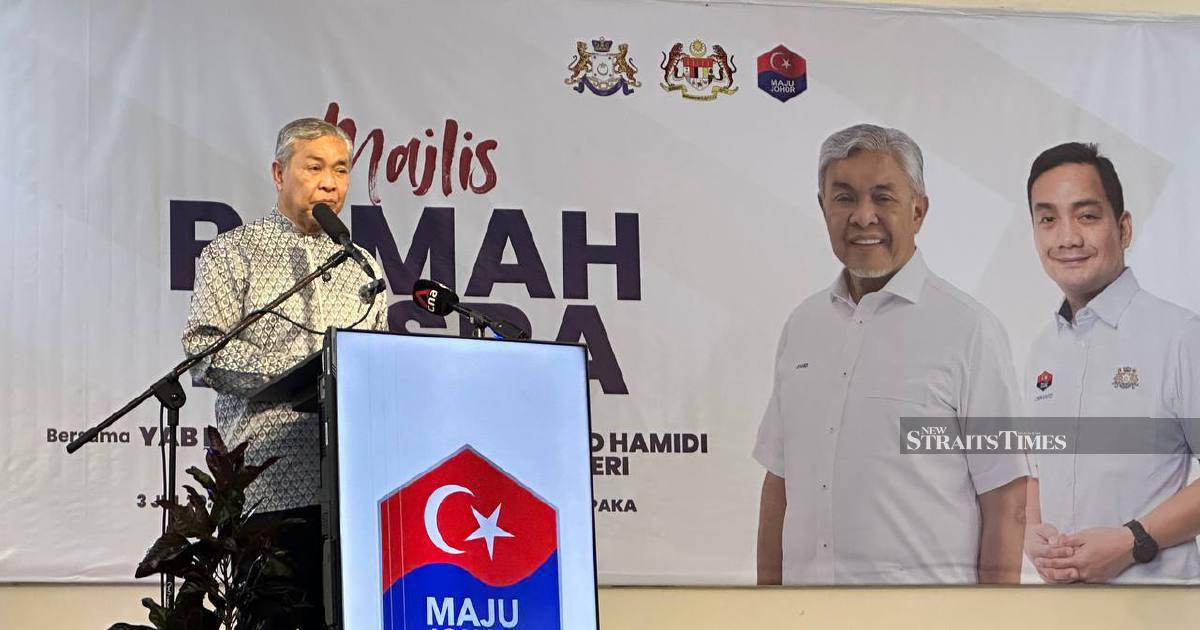
Barisan Nasional chairman Datuk Seri Dr Ahmad Zahid Hamidi has issued a public appeal to the coalition's alliance partners within the unity government, requesting they refrain from raising historical grievances and past disputes directed at Umno and the BN during the Johor state election campaign. The appeal, made during a campaign event in Johor Baru, reflects broader concerns within the ruling coalition about maintaining cohesion as the state prepares for electoral contests that could reshape the political landscape.
The request signals an underlying tension within Malaysia's unity government structure, where parties with competing interests and historical animosities have been forced to collaborate under the overarching framework of political stability. While the unity government model has prevented fragmentation at the federal level, campaign periods present opportunities for coalition members to differentiate themselves from partners, potentially reopening old wounds that have been deliberately set aside during governing periods.
Umno's position within this framework remains delicate. The party has navigated significant reputational challenges in recent years, stemming from various controversies and judicial proceedings involving senior figures. Zahid's intervention suggests concern that rival coalition members might exploit campaign dynamics to distance themselves from Umno by revisiting these historical criticisms, thereby undermining the party's electoral prospects in Johor, a state where BN has traditionally maintained strong support.
The Johor state election carries particular significance for Barisan Nasional and Umno specifically. As one of Malaysia's most populous and economically important states, electoral outcomes in Johor have historically influenced broader national political trajectories. A weakened BN performance would reverberate through the unity government's internal balance of power, potentially emboldening other coalition members to assert greater autonomy from Umno's traditional dominance.
Political analysts observe that Zahid's statement reveals the fragile nature of consensus-building within Malaysia's current governing arrangement. The unity government was established partly as a circuit-breaker to prevent democratic instability, but this mechanism requires constant diplomatic management to prevent alliance partners from using electoral competition as a vehicle for reasserting traditional rivalries. Each election campaign thus becomes a test of whether the unity framework can accommodate the competitive impulses inherent in democratic politics.
For the broader coalition of Umno, MIC, and other Barisan Nasional components, maintaining electoral credibility in Johor requires presenting a unified front to voters. If unity government partners, particularly PKR and DAP, begin articulating historical criticisms of BN leadership and governance during the campaign period, it complicates the message that Johor voters are receiving from the coalition and potentially undermines the narrative of renewed commitment to development and good governance.
The appeal also reflects pragmatic calculations about vote distribution in Johor constituencies. Many seats involve three-cornered or multi-cornered contests where coalition unity translates directly into electoral advantage. If unity government partners begin public disputes with Umno during the campaign, it could suppress voter turnout among coalition supporters and potentially benefit opposition parties seeking to capitalise on divisions within the ruling alliance.
Zahid's statement carries particular weight given his position as BN chairman and his role in managing intra-coalition relationships. His direct appeal to allies suggests that preliminary campaign discussions may have already included instances where partners questioned Umno's track record or raised historical controversies, prompting this clarification of expectations for campaign conduct.
Looking forward, the success of this request will depend on whether coalition partners view temporary electoral restraint as serving their collective interests. PKR and DAP, as urban-oriented parties with different voter bases than Umno, might calculate that electoral gains in Johor justify accepting Zahid's appeal in exchange for obtaining favourable seat allocations or commitment to specific policy priorities from BN. Alternatively, if they perceive electoral vulnerability, they may feel compelled to differentiate themselves from Umno's historical record regardless of Zahid's appeal.
The situation also has implications for how Malaysia's unity government model can function during electoral periods. If coalition members routinely deploy campaign periods as opportunities to criticise each other, the model risks becoming unsustainable between elections, as trust erodes. Conversely, if strict electoral discipline is maintained, questions arise about whether voters are receiving sufficient information to make informed choices and whether the unity government is merely masking underlying political divisions.
For ordinary Johor voters, the appeal highlights the complex political architecture they will navigate during the election. The candidates and campaign messages they encounter will be filtered through unity government dynamics rather than representing genuine policy competition. Understanding this context helps voters distinguish between substantive policy differences and tactical manoeuvres within Malaysia's current governing structure.

