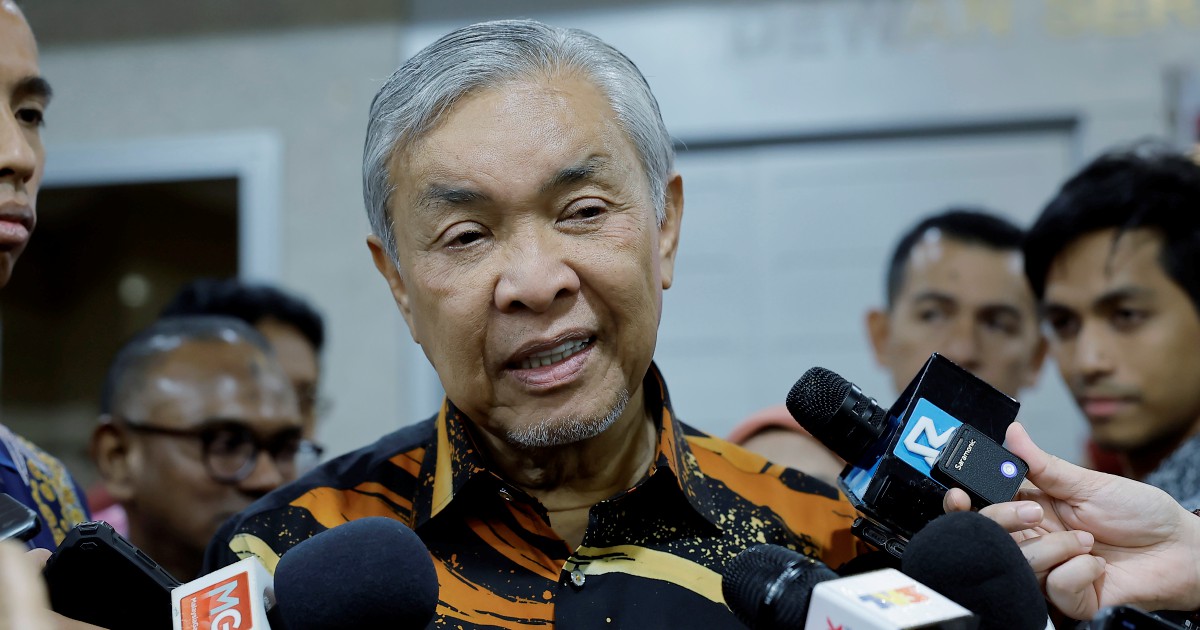
Barisan Nasional chairman Datuk Seri Dr Ahmad Zahid Hamidi has firmly rebuffed suggestions that the appointment of Negri Sembilan's Menteri Besar involved external interference, arguing instead that those raising such concerns lack understanding of how political processes actually function in Malaysia.
Spoke from Putrajaya, Zahid framed the controversy surrounding the leadership selection as stemming from a fundamental disconnect between critics and the practical mechanisms governing state administration. His dismissive tone suggested frustration with what BN views as groundless speculation about the decision-making process that led to the appointment.
The appointment of a state Menteri Besar typically involves complex negotiations between federal and state party structures, coalition dynamics, and considerations around legislative support. In Negri Sembilan's case, the choice would have required balancing multiple political interests within the BN framework, which comprises UMNO, MIC, and MCA, alongside any independent assemblymen whose support might be necessary for a stable government.
Zahid's pushback addresses a broader scepticism within certain political quarters regarding the transparency of leadership selections in Malaysia. State-level appointments frequently generate debate about the actual determinants behind who assumes the Menteri Besar position, particularly when the chosen candidate or process appears unexpected to observers outside formal party structures.
The chairman's characterisation of critics as unfamiliar with "political realities" suggests BN's conviction that their internal procedures followed established protocols and legitimate decision-making frameworks. Within Malaysian politics, state appointments operate under conventions where the ruling coalition effectively determines outcomes, though the formal recommendation still passes through the Sultan as constitutional head of state.
For Malaysian readers, this episode reflects ongoing tensions between public expectations for transparency in state governance and the pragmatic, coalition-based calculations that actually drive such decisions. The Negri Sembilan appointment controversy sits within a broader context where state governments frequently experience transitions following federal political shifts or internal party realignments.
The reference to "external interference" suggests allegations that actors outside Negri Sembilan's state structures—potentially federal-level figures or other coalition partners—influenced the outcome in ways that bypassed conventional merit-based or seniority-based selection processes. Zahid's rejection of these claims implies BN believes its procedures were entirely legitimate and internally consistent with how the coalition typically operates.
Understanding this defence requires recognising that Malaysian coalition politics operates on consensus-building and agreement among multiple stakeholders. What outsiders might view as "interference" BN likely conceptualises as normal inter-party consultation and coordination—the routine mechanism through which a multi-party coalition reaches decisions affecting state administration.
For Southeast Asian observers, Malaysia's state-level appointment processes illustrate how coalition governments function differently from single-party systems. The balancing act between preserving party interests, maintaining coalition stability, and responding to legitimate grassroots concerns creates inherent complexity that formal explanations sometimes struggle to communicate effectively.
Zahid's forceful rebuttal also signals BN's confidence that the appointment will withstand scrutiny once the Negri Sembilan state government actually begins functioning. If the new Menteri Besar performs effectively and commands Legislative Assembly support, the interference allegations will likely fade as critics move attention toward other matters. This mirrors historical patterns in Malaysian state politics where controversial appointments often become non-issues within months of assumption of office.
The broader political context matters here as well. BN has been gradually rebuilding influence and coalition cohesion following the 2018 electoral tsunami and subsequent realignment of Malaysian politics. State-level successes, including stable administrations in key states like Negri Sembilan, form crucial elements of BN's strategy to demonstrate competence and organisational strength ahead of upcoming electoral contests.
Zahid's statement essentially closes BN's formal response to the controversy, suggesting the coalition intends to move forward without further defending specific procedural details. This approach reflects confidence that the appointment decision will ultimately prove defensible through performance and outcomes rather than through detailed explanations of the selection process.
For Malaysian readers watching state governance, the Negri Sembilan episode underscores how coalition politics necessarily involves decision-making processes that operate partly outside public view. Whether observers consider such mechanisms appropriate reflects broader questions about political transparency and accountability that will likely continue shaping Malaysian political discourse.

