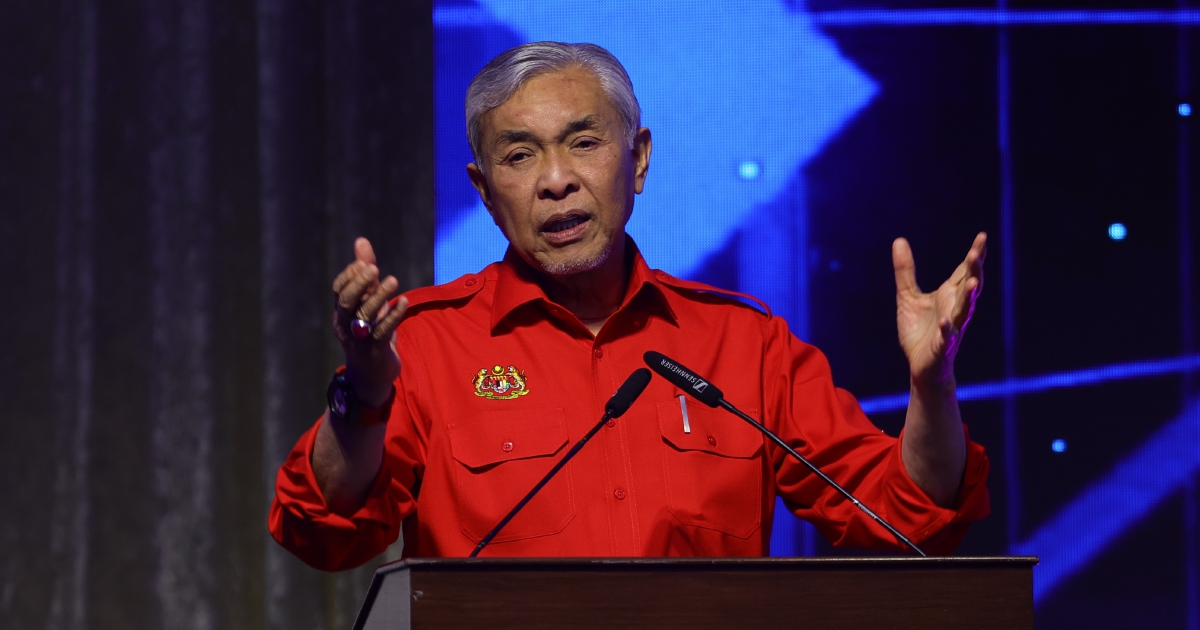
Barisan Nasional chairman Datuk Seri Dr Ahmad Zahid Hamidi has publicly confirmed that Prime Minister Datuk Seri Anwar Ibrahim possesses the constitutional power to remove ministers from the coalition if their work does not meet expectations. Speaking in Seremban, Zahid's statement represents a significant acknowledgement of executive authority and signals the BN leadership's commitment to performance-based governance within the ruling partnership.
The declaration carries particular weight given Zahid's position as head of Malaysia's oldest political coalition and comes at a time when coalition governments face heightened scrutiny over ministerial effectiveness and accountability. By explicitly affirming the Prime Minister's prerogative to make personnel changes, Zahid is effectively endorsing a merit-driven approach to ministerial appointments and removing potential friction points that could arise from disputes over individual minister performance.
This statement reflects the complex dynamics within Malaysia's current governing structure. The Perikatan Nasional government, which includes BN as a core component, has maintained relative stability since 2022, but maintaining coalition cohesion requires clear understanding of power distribution and decision-making authority. When a coalition chairman publicly confirms that the Prime Minister—who typically comes from the largest or most senior coalition partner—retains unilateral power over ministerial removals, it establishes an important precedent about the hierarchy of decision-making within the alliance.
Zahid's remarks also address a recurring concern in coalition politics across Southeast Asia: whether ministers appointed as representatives of their respective parties are truly accountable to the Prime Minister or primarily to their party leadership. By stating that performance metrics, rather than party affiliation alone, should determine ministerial tenure, Zahid is advancing a principle that could strengthen institutional governance and reduce patronage-based protection of underperforming officials.
For Malaysian readers and the wider business community, this clarity matters considerably. When the government's top leadership demonstrates agreement on accountability mechanisms, it enhances investor confidence in the stability and competence of public administration. Conversely, when coalition partners guard their ministerial slots fiercely or resist the Prime Minister's personnel decisions, it can create perception of institutional dysfunction and weak governance.
Historically, coalition governments in Malaysia have experienced tensions when coalition partners felt their representatives were being sidelined or removed without consultation. By proactively endorsing the PM's authority in this domain, Zahid may be attempting to prevent future disputes from escalating into coalition crises. This preventive approach demonstrates political maturity and an understanding that governance effectiveness ultimately depends on the Prime Minister's ability to manage his cabinet without constant interference from coalition partners.
The timing of this statement merits consideration. Malaysia continues to navigate post-pandemic economic recovery, inflation pressures, and public expectations for improved service delivery. When coalition leadership visibly reaffirms that ministers serve at the pleasure of the Prime Minister based on performance, it sends a message to the public service and to citizens that the government prioritises competence over political considerations. This can contribute to improved morale among civil servants who have grown accustomed to seeing incompetent ministers remain in office due to political protection.
Zahid's position as BN chairman adds particular significance to his remarks. BN historically held dominant position in Malaysian politics for decades and remains an important coalition component. His willingness to explicitly support the Prime Minister's authority over ministerial appointments suggests that BN has reconciled itself to operating within a coalition framework rather than as the dominant force it once was. This reflects broader political realignment in Malaysian politics since the 2018 elections disrupted traditional power structures.
The statement also carries implications for other coalition partners and potential future government formations. If established practice becomes that coalition partners accept Prime Ministerial authority over minister performance evaluations, this could reshape how coalition agreements are negotiated and what protections partners seek for their representatives. It might encourage parties to negotiate for specific ministries or portfolios rather than blanket protection for their appointees.
Within BN itself, Zahid's endorsement of performance-based accountability may signal an internal emphasis on strengthening institutional capacity and reducing the party's image as a home for political patronage. Given BN's need to rehabilitate its public standing following decades of corruption allegations and governance failures, positioning the party as supportive of meritocratic principles could contribute to rebranding efforts.
For regional observers, Malaysia's approach to coalition governance carries lessons for other Southeast Asian democracies that similarly rely on multi-party coalitions. Clear delineation of Prime Ministerial authority, accepted by coalition partners, provides a framework that can reduce internal instability and allow governments to function more effectively despite their composite nature.
Moving forward, the practical test of Zahid's statement will come when the Prime Minister actually exercises this authority. If performance-based removals occur and are accepted by BN without significant protest, it will validate the chairman's commitment to this principle. Should future dismissals trigger coalition tensions despite his public position, the statement will be viewed as rhetorical rather than reflecting genuine coalition understanding. For now, Zahid's affirmation represents a notable alignment between BN leadership and Prime Ministerial authority.

