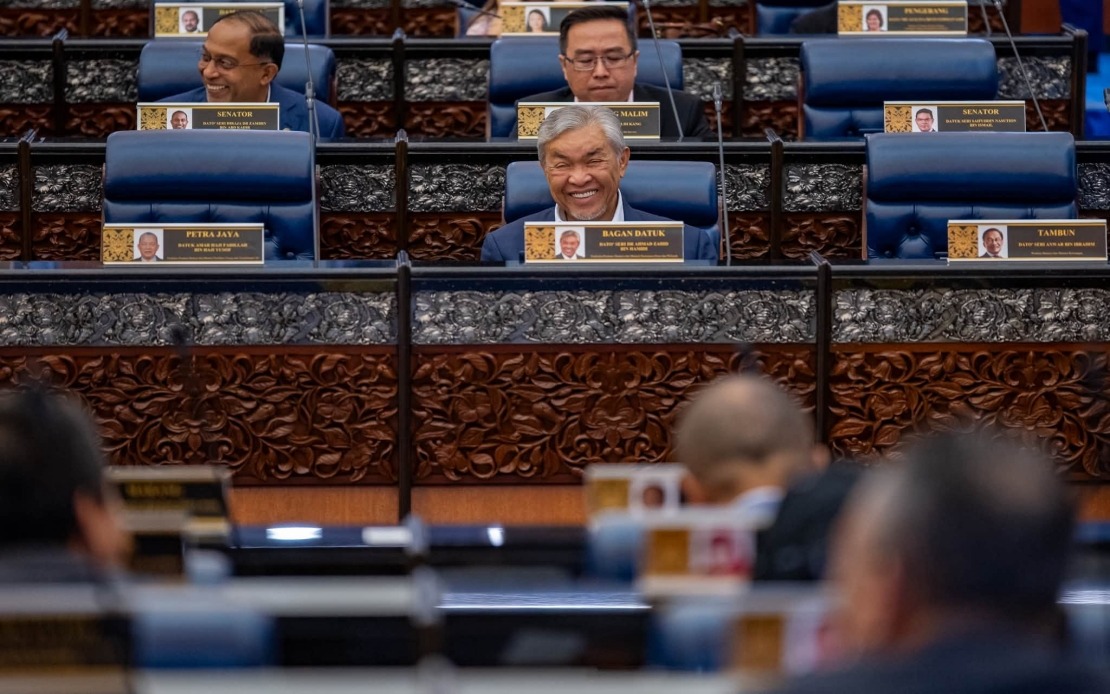
Deputy Prime Minister Datuk Seri Dr Ahmad Zahid Hamidi has underscored the importance of linking constructive feedback regarding Lembaga Tabung Haji (TH) with tangible steps for reform, emphasising that idle criticism without follow-through action undermines efforts to restore institutional credibility. Speaking after a special sitting of the Dewan Rakyat convened specifically to discuss the Royal Commission of Inquiry's findings on the hajj management agency, Zahid stressed that the institution's standing depends on converting parliamentary discourse into practical improvements rather than allowing concerns to fester as unresolved grievances.
The Deputy Prime Minister, who concurrently holds the Rural and Regional Development portfolio, framed the parliamentary debate as a crucial moment for the nation to address TH's operational shortcomings while maintaining faith in one of Malaysia's most significant Islamic institutions. His remarks reflected broader government concern that prolonged controversy surrounding TH—which manages pilgrim funds and facilitates approximately one million Malaysian hajj pilgrims annually—could erode public confidence in an organisation with deep cultural and religious significance for the Muslim community. Zahid's message sought to redirect the narrative from blame-assignment towards solution-oriented engagement, signalling that Parliament's role was not merely to air grievances but to chart a concrete path forward.
The special parliamentary session represented a watershed moment in TH's institutional history, following the government's decision on July 29 to declassify and make public the full RCI report on the agency's operations. This move granted members of Parliament unprecedented access to scrutinise the inquiry's conclusions regarding management and operational failures spanning 2014 to 2020—a seven-year period marked by investment losses and governance lapses that had severely damaged TH's reputation. The government's transparency gambit appeared designed to demonstrate accountability while simultaneously providing an opportunity for the institution to showcase its reform trajectory and capacity for institutional renewal.
The RCI's investigation identified substantial weaknesses across TH's operational structure, leading to the formulation of 25 distinct recommendations aimed at strengthening governance, risk management, and fiduciary responsibility. By late July, TH had demonstrated considerable progress in implementing institutional reforms, with the agency reporting that approximately three-quarters of the recommended improvements had already been operationalised. This implementation rate suggested that TH management had not awaited the public release of findings before commencing remedial action, indicating a proactive rather than reactive posture towards reform—a nuance Zahid appeared keen to emphasise in parliamentary discourse.
Zahid's Facebook statement cautioned against what he characterised as irresponsible public discourse disconnected from factual grounding, implicitly warning against sensationalised allegations or speculation designed to inflame rather than illuminate the TH situation. His phrasing suggested concern that parliamentary debate, while valuable, could devolve into finger-pointing exercises that satisfied political constituencies without advancing institutional improvement. The Deputy Prime Minister's invocation of wisdom and sincerity indicated an expectation that all stakeholders—including MPs from both government and opposition benches—would approach the matter with institutional maturity rather than partisan calculation.
For Malaysian investors and hajj pilgrims, Zahid's message carried particular significance given their direct financial stakes in TH's operational effectiveness and fiduciary integrity. The hajj savings scheme represents retirement planning and religious fulfilment for millions of Malaysian Muslims, making transparent governance and robust risk management existential requirements rather than mere administrative preferences. The parliamentary debate provided a forum where these stakeholders' concerns could be articulated and addressed, transforming individual worry into collective institutional accountability mechanisms.
The timing of Zahid's intervention also reflected government anxiety about managing the broader narrative around institutional failures and recovery. By emphasising responsible action following criticism, the administration sought to position itself as taking corrective measures seriously while delegitimising what officials might view as opportunistic political grandstanding. This rhetorical approach recognised that public institutions in Malaysia require sustained confidence from diverse constituencies, and that eroding that confidence through unresolved controversy serves no stakeholder's interests—whether investors, pilgrims, or the government itself.
The RCI report's existence and public release represented the culmination of extensive investigative work examining TH's structural vulnerabilities and management decisions during a period of significant investment market volatility. The findings would inform not only immediate remedial actions but also longer-term institutional restructuring conversations about TH's investment philosophy, governance architecture, and oversight mechanisms. Parliamentary debate on these recommendations provided democratic legitimacy to reform processes that might otherwise proceed through executive channels with limited public visibility or buy-in.
Looking forward, Zahid's intervention established expectations that subsequent parliamentary discourse would translate into demonstrable institutional change, creating accountability mechanisms beyond the RCI's formal recommendations. By explicitly linking criticism to responsible action, the Deputy Prime Minister signalled that the government would assess progress not by debate quality but by implementation outcomes—a standard that holds both TH management and parliamentary overseers accountable for moving beyond diagnostic clarity towards operational effectiveness in protecting pilgrim interests and restoring institutional trust.

