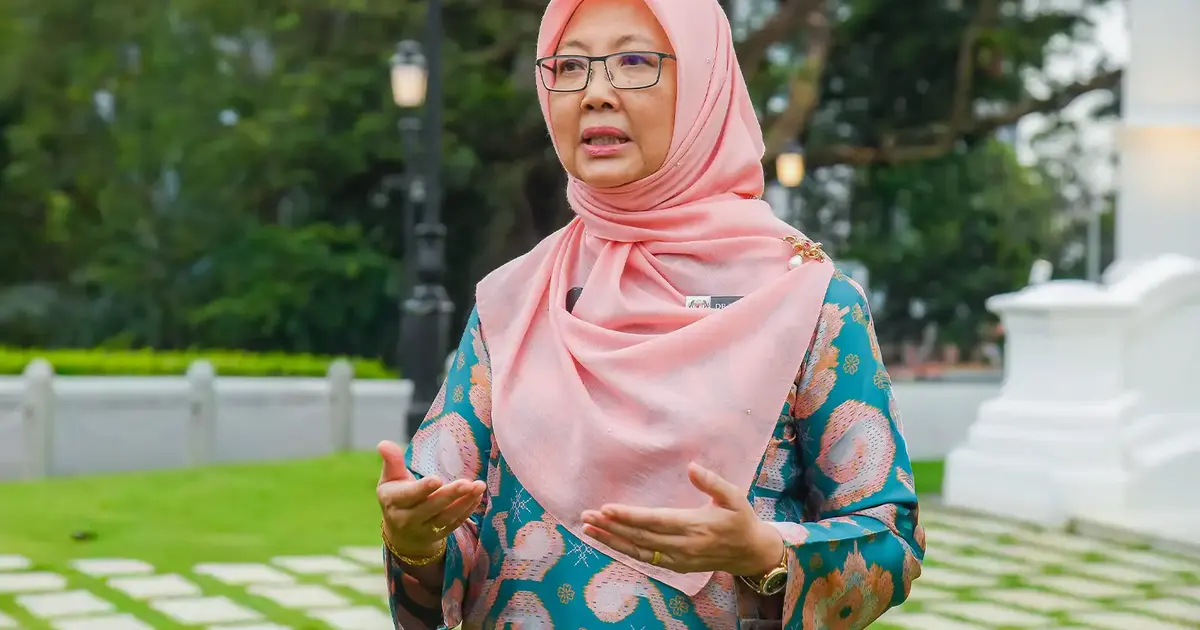
In an unexpected challenge to Pakatan Harapan's campaign strategy in Johor, Onn Hafiz Ghazi has publicly requested that the opposition coalition formally present its preferred menteri besar candidate ahead of the state elections. However, PKR vice-president Zaliha has thrown the demand into question, expressing bewilderment at what she views as a fundamentally problematic request that ignores electoral realities and coalition dynamics.
Zaliha's objection cuts to the heart of a strategic dilemma facing opposition coalitions in Malaysian politics. By demanding that Pakatan Harapan publicly identify its would-be chief minister, the Johor BN chairman appears to be seeking transparency and clear leadership messaging. Yet from the opposition's perspective, such a declaration creates unnecessary vulnerabilities without corresponding guarantees. The PKR official has questioned the logical foundation of Onn Hafiz's demand, particularly given that no mechanism exists ensuring the chosen candidate would ultimately assume the menteri besar position should the coalition win.
This exchange reflects deeper tensions in how Malaysian political coalitions manage succession planning and campaign positioning. Traditionally, opposition parties have exercised caution in naming menteri besar candidates before elections, fearing the designated figure might become a target for defection or that nomination itself could weaken electoral prospects. Zaliha's public pushback suggests Pakatan Harapan intends to maintain this strategic ambiguity, at least for now, treating the question of leadership as a matter to be resolved following electoral victory rather than beforehand.
The demand from Onn Hafiz, as Johor BN's chairman, carries particular significance given the state's political history and demographic importance. Johor has long been regarded as a crucial electoral battleground, and recent state elections there have demonstrated high volatility in voter preferences. The ruling coalition's interest in forcing the opposition to name a specific candidate may reflect confidence in their ability to exploit such a nomination or concern about Pakatan Harapan's apparent organisational advantages in certain constituencies.
From a Malaysian electoral perspective, the timing and framing of this demand warrant closer examination. Election campaigns typically involve gradual revelation of key personnel and policy platforms, with major announcements strategically timed to maximise impact. By pressuring Pakatan Harapan to accelerate its announcement of a menteri besar candidate, Onn Hafiz may be attempting to force the coalition into a suboptimal communication strategy or to provoke internal disagreements about succession within the PH leadership structure.
Zaliha's response demonstrates that Pakatan Harapan has considered this possibility and determined that transparency on this particular question does not serve its campaign interests. The PKR vice-president's stated puzzlement suggests the opposition views the demand as lacking genuine precedent or logical foundation—an attempt to impose new rules on opposition campaign conduct without reciprocal obligations on the ruling coalition side. Her criticism implies that BN is attempting to gain strategic advantage through rhetorical pressure rather than through competitive political positioning.
The broader context of Malaysian coalition politics adds another layer to this disagreement. In recent years, both BN and PH have experienced significant internal reshuffling, with defections and realignments occurring even after elections. Naming a menteri besar candidate far in advance creates a liability should that individual become unavailable or should coalition partners demand alternative candidates in post-election negotiations. Zaliha's position reflects awareness of these practical complications that Onn Hafiz's demand glosses over.
For voters in Johor seeking clarity on potential post-election governance, this exchange leaves much unresolved. The state's economy, development priorities, and administrative direction would ostensibly be shaped by whoever becomes menteri besar, yet neither coalition has yet provided definitive information on this crucial matter. The ruling BN has not named its own candidate, making Onn Hafiz's demand appear somewhat inconsistent from a transparency standpoint.
The disagreement also highlights different campaign philosophies between Malaysian political coalitions. BN's approach traditionally emphasises existing structures and the machinery of state, often assuming that voters will default to continuity unless explicitly offered compelling alternatives. Pakatan Harapan, by contrast, has often structured campaigns around broader reform messages and coalition unity rather than individual personalities, though this has varied across different state and federal contexts.
Looking ahead, the Johor elections will test whether Zaliha's refusal to bow to pressure on the menteri besar question proves strategically sound or whether voters demand greater clarity before casting their ballots. The state's particular political dynamics, where urban and rural constituencies have shown divergent voting patterns in recent contests, may influence how influential this unresolved question becomes during campaigning.
Ultimately, Zaliha's response signals that Pakatan Harapan will not be dictated to regarding its internal campaign strategy, even by opposition to a significant state like Johor. Whether this position strengthens or weakens the coalition's electoral prospects remains to be determined, but it certainly reflects confidence that the party can pursue an effective campaign strategy without pre-announcing its chief minister choice—a calculation that will be tested at the ballot box.

