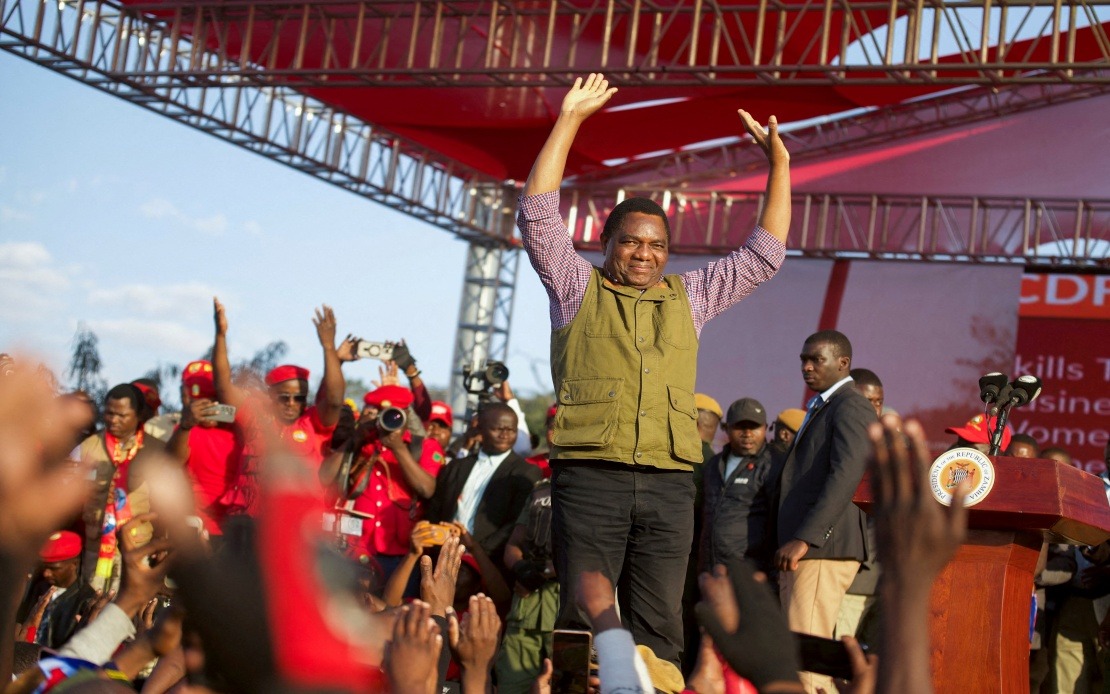
Zambian President Hakainde Hichilema has secured a decisive second term in office, clinching victory with more than 2.9 million votes in results announced by the Electoral Commission of Zambia early Tuesday morning. The 64-year-old leader's commanding performance comfortably surpassed the constitutional requirement of 50 per cent plus one vote, positioning him to lead Southern Africa's second-largest copper producer for another five years amid ongoing economic recovery efforts across the region.
Hichilema's main challenger, Brian Mundubile of the National Restoration Party for Unity and Progress, managed only 1.8 million votes, falling significantly short in the closely watched contest. The margin of victory—more than one million votes separating the winner from the runner-up—reflects substantial public endorsement for the incumbent's administration. Electoral Commission of Zambia chairperson Mwanagala Zaloumis declared Hichilema president-elect at the national election centre in Lusaka, noting that the outcome was so clear that outstanding results from selected polling stations across five of the country's 226 constituencies would prove immaterial to the final outcome.
The president expressed gratitude to voters in a Facebook statement released immediately following the official announcement, emphasizing the responsibility that comes with renewed democratic mandate. "Thank you, Zambia. We are truly humbled by the trust you have placed in our hands to hold our nation's highest office and be your servant once more," Hichilema said, framing his second term as a continuation of public service rather than merely political victory. His tone signalled an intention to maintain the inclusive messaging that has characterised his administration since taking office in 2021.
Celebrations erupted across Lusaka even before official results were announced, with residents braving pre-dawn temperatures to congregate in the streets and express their satisfaction with the electoral outcome. The spontaneous gatherings demonstrated genuine enthusiasm among voters who felt motivated to participate in the democratic process. The festive atmosphere persisted well into daylight hours, reflecting a broader sense of relief and optimism among portions of the Zambian electorate regarding their nation's political direction.
Collins Maoma, national chairperson of Hichilema's United Party for National Development, seized the moment to call upon the president to maintain the governance standards he has established. Speaking to assembled journalists, Maoma urged continued leadership characterised by the same principles that have guided the UPND administration. His remarks underscored internal party confidence that the electoral outcome provides legitimacy and momentum for advancing the government's policy agenda over the coming years.
Hichilema's first term, which began in 2021 following his victory over long-serving incumbent Edgar Lungu, has focused on economic stabilisation and debt restructuring in a nation heavily burdened by external obligations. The re-election provides space for the administration to implement medium-to-long-term development initiatives without the immediate pressure of campaign activities. For Malaysian and other regional observers, Hichilema's decisive re-election signals political stability in a key African economy and suggests continuity in Zambia's approach to regional integration and international relations.
The significance of this election extends beyond Zambian borders, as the country occupies an important position within the Southern African Development Community and serves as a crucial transport and trade hub. Hichilema's leadership has emphasised pragmatic engagement with international partners, including Malaysia and other Southeast Asian nations, particularly in sectors such as mining, agriculture, and infrastructure development. A stable political environment under familiar leadership facilitates the kinds of long-term investment commitments that drive economic growth and regional cooperation.
Zambia faces substantial development challenges that will define Hichilema's second term, including managing debt sustainability, improving electricity supply reliability, and diversifying an economy traditionally dependent on copper exports. The electoral victory provides the administration with a fresh democratic mandate to pursue these reforms, though international observers will monitor whether promised anti-corruption measures and institutional strengthening initiatives progress as pledged. For neighbouring and trading-partner nations, including those in Southeast Asia, the clarity of Hichilema's re-election removes political uncertainty that might have complicated bilateral negotiations or investment decisions.
The opposition's comparatively weak performance suggests limited immediate challenge to UPND dominance of national politics, though the persistence of opposition parties like the NRPUP indicates that competitive electoral politics remain viable in Zambia. This outcome contrasts with concerning trends in some neighbouring African states where political competition has been constrained or electoral processes compromised. The transparent conduct of Zambia's election, despite some logistical challenges common to administering votes across geographically dispersed constituencies, reinforces the nation's credentials as a relative democratic performer within the continent.
Hichilema's second term will inevitably involve navigating complex regional dynamics as tensions persist between various African governments and their international partners over debt, governance, and resource management. His administration's proven willingness to engage constructively with multilateral institutions and maintain diplomatic relationships suggests continuity in foreign policy orientation. For Malaysian policymakers and businesses with interests in Zambia or broader African engagement, Hichilema's re-election provides predictability regarding counterpart leadership and political frameworks governing cooperation.
The strong electoral performance also indicates that Hichilema retains considerable political capital among Zambian voters despite economic pressures that persist in daily life across the country. This foundation of public confidence may be essential as the administration pursues potentially unpopular structural reforms necessary for long-term economic health. The mandate Hichilema has received suggests voters understand these imperatives and have chosen to support their continuation rather than experiment with alternative approaches.

