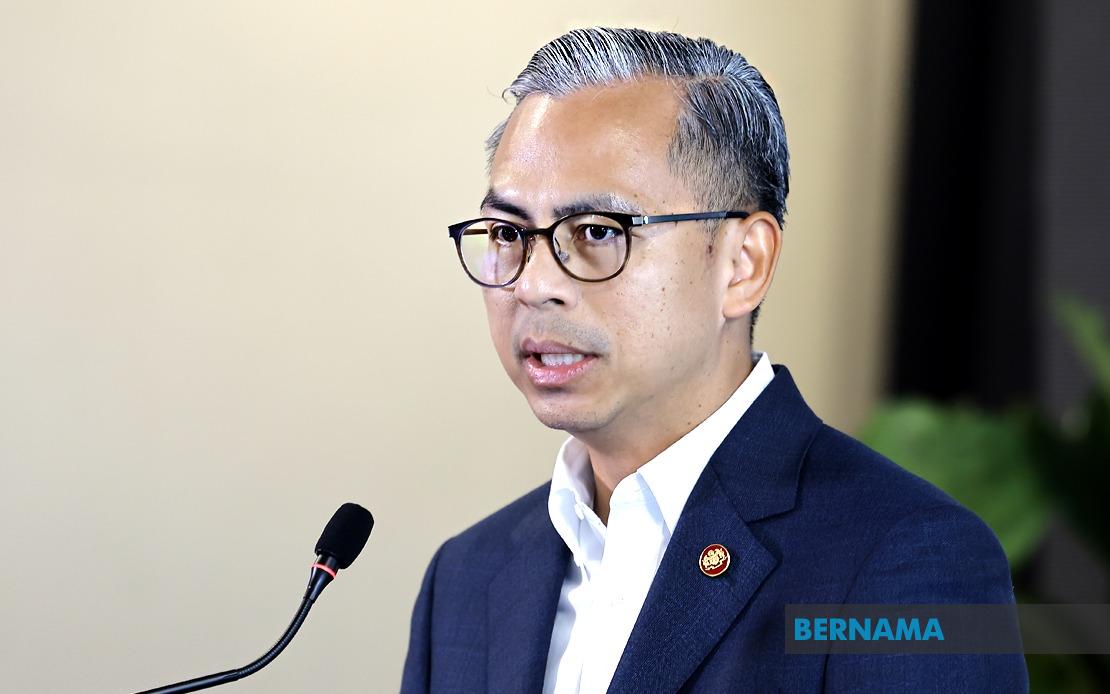
Communications Minister Datuk Fahmi Fadzil, who doubles as the Unity Government spokesperson, will stand out among 1,221 individuals receiving state honours, awards and medals from Penang in a four-day investiture ceremony beginning tomorrow to commemorate the 85th birthday of Penang Governor Tun Ramli Ngah Talib. Fadzil's distinction lies in being the sole recipient of the Darjah Panglima Pangkuan Negeri (DPPN), Penang's highest honour, which confers upon him the Datuk Seri title—a recognition that underscores his standing in Malaysia's political and administrative hierarchy.
The appointments reflect the state's effort to recognise contributions across multiple sectors of society. Beyond Fadzil, a further 19 individuals will receive the Darjah Gemilang Pangkuan Negeri (DGPN), an award that similarly carries the Datuk Seri designation. Among these recipients are Chief Judge of Malaya Datuk Seri Hashim Hamzah, whose judicial leadership shapes the country's legal landscape, alongside MARA Incorporated Sdn Bhd chairman Datuk Abdul Halim Mohammad and Invest Penang chief executive officer Datuk Loo Lee Lian. The inclusion of these figures demonstrates Penang's intention to honour both the judiciary and key economic drivers within and beyond the state.
The broader cohort receiving second-tier honours comprises corporate leaders and experienced administrators. Pelita Samudra Pertama (M) Sdn Bhd managing director Tan Sri D. Murugan, Menara Rezeki Sdn Bhd managing director Datuk Saiful Nizam Mohd Yusoff, and M Summit Group chairman Datuk Moh See Eng join the DGPN recipients, reflecting the state's acknowledgement of business contributions to economic development. These appointments signal Penang's continued emphasis on recognising private sector participants alongside public service, a balance that has characterised the state's honours system in recent years.
A third category of recipients comprises nine individuals selected for the Darjah Yang Mulia Pangkuan Negeri (DMPN), which carries the Datuk title. This tier includes former Penang police chief Datuk Azizee Ismail and UEM Group Bhd managing director Datuk Amran Hafiz Affifudin, honouring law enforcement leadership and infrastructure sector expertise. The inclusion of former security officials alongside current private sector executives demonstrates the state's multi-faceted approach to recognising public and private achievement.
A substantially larger group of 72 individuals will receive the Darjah Setia Pangkuan Negeri (DSPN), also conferring the Datuk title. This cohort encompasses figures of considerable national visibility and influence. Among them is the late Nordin Ahmad, a distinguished film actor, director and scriptwriter whose work with Cathay-Keris Film Productions enriched Malaysia's cinema heritage. The inclusion of posthumous recognition for cultural figures alongside serving officials—such as NADMA director-general Datuk Meor Ismail Meor Akim—demonstrates an institutional commitment to honouring diverse forms of national contribution.
The DSPN recipients further include Bank Rakyat chairman Datuk Mohd Irwan Mohd Mubarak, whose institution serves Malaysia's rural and lower-income populations, alongside Penang Development Corporation (PDC) CEO Abdul Latiff Abd Aziz. SRS Projek Transit Aliran Ringan (LRT) Sdn Bhd project director Adil Putra Ahmad, involved in Penang's critical transport infrastructure, and Deputy State Secretary (Development) Mohamed Abdul Rahman represent the technical and administrative personnel essential to state governance and development. These appointments underscore the importance Penang places on recognising those managing critical public services and strategic initiatives.
Below these higher tiers, the state will confer honours on substantially larger numbers reflecting a broader cross-section of society. A total of 92 individuals will receive the Darjah Johan Negeri, while 31 will be awarded the Bintang Cemerlang Negeri. The distribution widens further with 194 recipients of the Pingat Kelakuan Terpuji, 328 of the Pingat Jasa Kebaktian, 463 of the Pingat Jasa Masyarakat, and 12 of the Pingat Bakti Setia. This pyramidal structure, with smaller numbers at the apex and exponentially larger numbers at lower tiers, creates a system through which the state can recognise thousands of contributors while maintaining meaningful differentiation in prestige and significance.
Penang State Legislative Assembly Speaker and State Government Official Ceremonies Committee chairman Datuk Seri Law Choo Kiang outlined the scale and scope of the recognition in a statement. The investiture ceremony will unfold across four days, commencing tomorrow and continuing on July 13, 14, and 15, a logistical undertaking required to accommodate the sheer number of recipients. Within this timeframe, 101 individuals will receive state honours—a category encompassing the higher-tier appointments carrying titles—while the remaining 1,120 recipients will receive awards and medals of merit.
The recipients span multiple sectors and professional backgrounds, reflecting Penang's commitment to inclusive recognition. Members of the state and federal civil services comprise a significant portion, recognising public administration's backbone role. Politicians receiving appointments reflect their service to constituents and governance. Corporate figures honoured through these awards acknowledge private sector contributions to the state's economic development and competitiveness. Members of non-governmental organisations recognised in the ceremonies underscore civil society's role in addressing social needs and community development. Local entrepreneurs included in the honours reflect the importance of small and medium enterprises to Penang's economy. Members of voluntary bodies receiving recognition highlight the value of citizen-driven initiatives in social support and community welfare.
Fadzil's elevation to Datuk Seri status carries particular significance given his role as Communications Minister in the federal government. His appointment marks recognition of his ministerial service and political standing at the national level, even as it honours his connection to Penang. As the Unity Government spokesperson, Fadzil holds a prominent position in articulating the coalition government's policies and positions, making his recognition by his home state symbolically important to Malaysia's current political dispensation. The honour elevates his formal status while potentially reflecting the stability and credibility the Penang state government seeks to associate with the federal administration.
The timing of these honours during the 85th birthday celebration of Governor Tun Ramli Ngah Talib adds a layer of institutional continuity and respect. State honours ceremonies traditionally serve to reinforce the symbolic authority and legitimacy of state institutions, with the governor's patronage lending gravitas to the proceedings. Tun Ramli's long tenure and the celebration of his milestone birthday provide the occasion for the state to reflect on its values and priorities through the individuals and contributions it chooses to honour. This timing also allows the current state administration to set the tone for how Penang views achievement and service across its community.
For Malaysian observers more broadly, Penang's expansive honours list offers insight into how a state government prioritises recognition across society. The relative representation of civil servants, business leaders, community workers, and cultural figures suggests where state leadership believes excellence and contribution manifest most significantly. The ceremony's scope—involving more than 1,200 individuals—underscores the state's intention to create a comprehensive honours system that reaches across class, professional, and sectoral boundaries. As Malaysia continues to navigate economic competition with regional neighbours and manages domestic political transitions, state-level recognition systems like Penang's serve as instruments through which governments reinforce institutional values and encourage the forms of contribution deemed most essential to collective progress.

