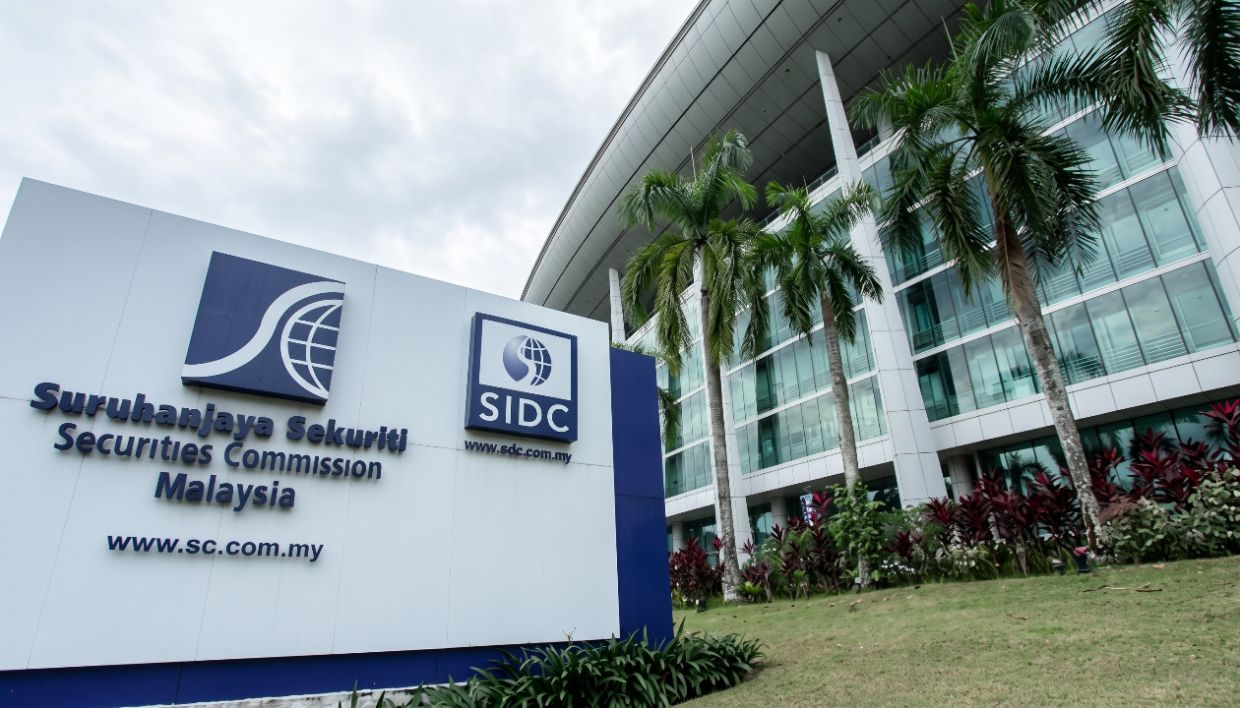
Malaysia's Court of Appeal has delivered a decisive victory for the Securities Commission by rejecting appeals from businessman Wong Shee Kai, known as Ricky Wong, and his co-defendants seeking to overturn a substantial asset freeze. The three-member appellate bench led by Justices Datuk Ravinthran N. Paramaguru, Datuk Dr Choo Kah Sing and Datuk Leonard David Shim upheld the High Court's decision to freeze approximately RM169.2 million in assets and properties on Monday, marking a significant setback for the defence in what has become one of Malaysia's more high-profile financial crime cases. The court also rejected attempts to overturn an earlier preliminary injunction issued in May 2020, while ordering the defendants to pay RM200,000 in costs to the regulator.
The underlying dispute centres on allegations of securities fraud spanning several years. The Securities Commission filed its civil suit in 2020 against Wong, co-defendant Teh Sew Wan, and the corporate entity Wong SK Holdings Sdn Bhd, accusing them of breaching Section 179 of the Capital Markets and Services Act 2007 (CMSA). The High Court formalised the asset freeze through an inter partes injunction in April 2022 following a preliminary protective order granted two years earlier. This two-stage judicial process reflects the courts' recognition of the seriousness of the allegations and the need to preserve assets that may be subject to recovery if the Securities Commission ultimately prevails at trial.
The injunction's scope extends beyond merely freezing nominated assets; it explicitly prohibits any third party from knowingly facilitating transactions or transfers involving the frozen properties and accounts. Such blanket provisions are designed to prevent the defendants from circumventing the freeze through intermediaries or shell transactions, a consideration particularly important given Wong's current status as a fugitive. This protective mechanism demonstrates the court's awareness of flight risks and the sophistication that financial crime defendants may employ to shield assets from enforcement action.
Wong's current whereabouts remain unknown, adding urgency to the Securities Commission's enforcement efforts. He is simultaneously wanted in connection with criminal charges under two separate legislative frameworks: the Anti-Money Laundering, Anti-Terrorism Financing and Proceeds of Unlawful Activities Act 2001 and the Capital Markets and Services Act. The dual regulatory and criminal nature of the allegations underscores the seriousness with which Malaysian authorities view the conduct at issue. The Securities Commission has publicly appealed for information from members of the public regarding Wong's location, indicating that conventional investigative channels have not yet succeeded in locating him.
The civil litigation remains substantially incomplete, with the trial scheduled to resume in September 2026. This extended timeline is not unusual for complex financial crime cases involving multiple defendants and parties, but it means the asset freeze may remain in place for several years pending final determination. During this period, the frozen assets effectively remain in legal limbo, unable to be reallocated or deployed for any purpose, creating considerable practical hardship for those claiming legitimate interests in the properties beyond the named defendants.
The legal representation assembled for this matter reflects the case's prominence within Malaysia's financial and legal communities. The Securities Commission deployed internal counsel alongside prominent external legal firepower, engaging Datuk Lim Chee Wee and Kwan Will Sen from Messrs Lim Chee Wee Partnership. The defendants similarly retained heavyweight advocates, with Tan Sri Muhammad Shafee Abdullah representing Wong and Wong SK Holdings Sdn Bhd, while Tan Sri Cecil W. M. Abraham took the brief for Teh Sew Wan. The calibre of counsel involved signals that all parties recognised the legal and commercial stakes inherent in the matter.
This Court of Appeal decision carries implications extending beyond the immediate parties. It reinforces Malaysian courts' willingness to maintain asset freezes in complex commercial litigation where regulatory authorities demonstrate credible grounds for believing misconduct has occurred. The appellate court's refusal to disturb the High Court's earlier reasoning provides clearer precedent for similar enforcement actions the Securities Commission may pursue against other targets. The decision also demonstrates that appellate courts will scrutinise attempts to unwind protective orders that serve the interests of justice in financial crime cases.
From a regional perspective, Malaysia's handling of this matter reflects broader shifts in Southeast Asian approaches to financial regulation and enforcement. Many regional economies have intensified crackdowns on securities fraud and related misconduct over the past decade, partly in response to international pressure from organisations monitoring compliance with anti-corruption standards. The Securities Commission's sustained prosecution of this case, despite Wong's fugitive status, signals institutional commitment to pursuing financial crimes through available legal mechanisms even when defendants prove difficult to apprehend.
The practical enforcement question now turns on whether the Securities Commission can ultimately recover any portion of the frozen RM169.2 million through successful completion of its civil suit and subsequent recovery proceedings. Even if liability is established at trial, converting judgments into actual asset recovery in cross-border contexts remains notoriously challenging, particularly when defendants have successfully absconded. Nevertheless, maintaining the freeze preserves options and prevents further dissipation of potentially recoverable assets while the litigation proceeds. The case also serves as a cautionary example for Malaysian investors and business participants regarding the consequences of alleged securities fraud and regulatory non-compliance.

