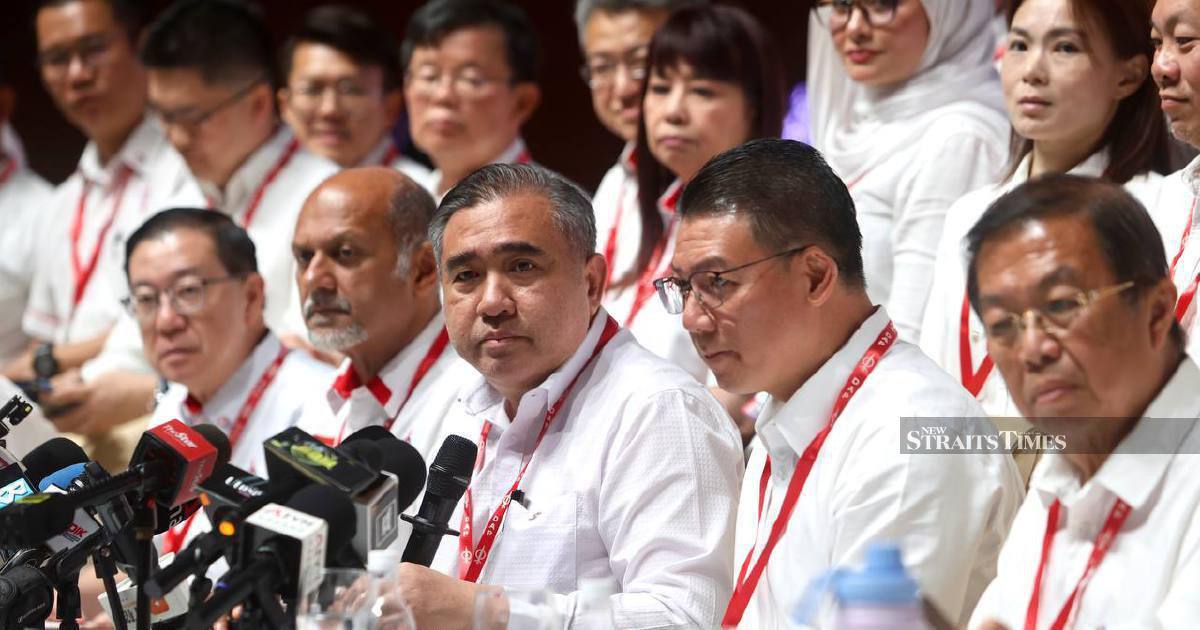
The Democratic Action Party has signalled its commitment to maintaining operational collaboration with Umno, even as tensions simmer within the party over the recent discharge not amounting to an acquittal ruling involving Barisan Nasional chairman Datuk Seri Ahmad Zahid Hamidi. The statement underscores the delicate balance the DAP must navigate between appeasing its grassroots members, who view the legal outcome unfavourably, and sustaining the broader coalition arrangement that has defined Malaysian politics since 2020.
The DNAA ruling, which stopped short of exonerating Zahid but halted prosecution of his corruption charges, has become a flashpoint within DAP circles. Many within the party view the outcome as a troubling compromise that sidesteps justice, particularly given the seriousness of the allegations involved. This sentiment reflects deeper concerns among opposition-leaning voters who had hoped the post-2018 period would herald a new era of accountability for senior political figures. The ruling's ambiguity—neither confirming innocence nor establishing guilt—has left significant room for interpretation and frustration.
Despite these internal reservations, DAP leadership has determined that preserving the coalition framework remains strategically essential. The party recognises that Malaysia's political landscape continues to fragment along ethnic and ideological lines, making broader coalitions necessary for any group to achieve meaningful governance capacity. Breaking ranks with Umno would fundamentally alter the power dynamics in Parliament and risk destabilising the government at a critical juncture when economic recovery and social cohesion demand political stability.
The pragmatic stance reflects DAP's evolution since 2020, when it entered a historic partnership with Umno and other parties to form the Pakatan Harapan government. That experience taught the party valuable lessons about the mechanics of coalition politics in Malaysia—that maintaining partnership often requires tolerating positions and outcomes that sit uncomfortably with core supporters. The challenge for DAP is communicating this realpolitik to its base without appearing to compromise on principles regarding corruption and accountability.
Umno, as the largest component of Barisan Nasional and a crucial coalition partner, occupies a complex position itself. The party has endured years of electoral decline and internal strife following its ousting from government in 2018. The DNAA ruling on Zahid, while legally enabling him to continue leading the party, does little to rehabilitate Umno's broader image as beset by corruption allegations. For Umno to stabilise and retain relevance, it needs coalition partners willing to work with it—a position DAP's public commitment now provides, at least operationally.
The Malaysian political context makes such coalitions inevitable, despite the friction they generate. The country's electoral system, combined with deep ethnic and religious divisions, means that single-party dominance remains elusive. DAP, despite its growing electoral strength particularly in urban areas, cannot govern alone. Simultaneously, Umno cannot replicate its pre-2018 electoral dominance without significant coalition support. This mutual dependency creates the framework within which disagreements like the Zahid ruling must be managed rather than resolved through confrontation.
For ordinary Malaysians, particularly younger voters and urbanites traditionally aligned with the DAP, the party's continued collaboration with Umno presents a credibility challenge. Many entered politics during the 1MDB scandal and subsequent 2018 upheaval expecting institutional reforms and stronger governance safeguards. The DNAA ruling, coupled with DAP's commitment to keep working with Umno, can appear to signal that the promised reckoning with corruption has been substantially diluted. This perception gap between party leadership and grassroots expectations will require skillful communication to manage.
The broader Southeast Asian context adds another dimension to this Malaysian political moment. Throughout the region, coalition governments have struggled with internal legitimacy while facing external pressures from authoritarian drift, economic stress, and rising inequality. DAP's maintenance of its Umno partnership, despite justified concerns, reflects the difficult compromises that democratic coalitions must sometimes make to prevent authoritarian backsliding or political collapse. The alternative—allowing political fragmentation to spiral—carries its own risks for Malaysian democracy.
Looking ahead, this arrangement appears sustainable in the medium term, though not without costs. DAP will likely face periodic criticism from its own supporters for perceived complicity in allowing powerful figures like Zahid to escape full accountability. Umno, for its part, must ultimately address the deeper questions about institutional renewal that the DNAA ruling has failed to resolve. The coalition's stability depends on both parties managing these tensions while delivering tangible governance outcomes that benefit ordinary Malaysians across ethnic and class lines.
The resolution of such internal coalition tensions often becomes visible only through concrete policy outcomes and appointments, rather than through public statements of commitment. How the DAP uses its political capital within the government to push for institutional reforms, judicial independence, and accountability mechanisms will ultimately determine whether its stated commitment to working with Umno represents pragmatic coalition politics or a troubling normalisation of impunity. For now, the party has chosen the path of continuity over confrontation—a choice that reflects both the constraints of Malaysia's political system and the uncertain demands of stable democratic governance.

