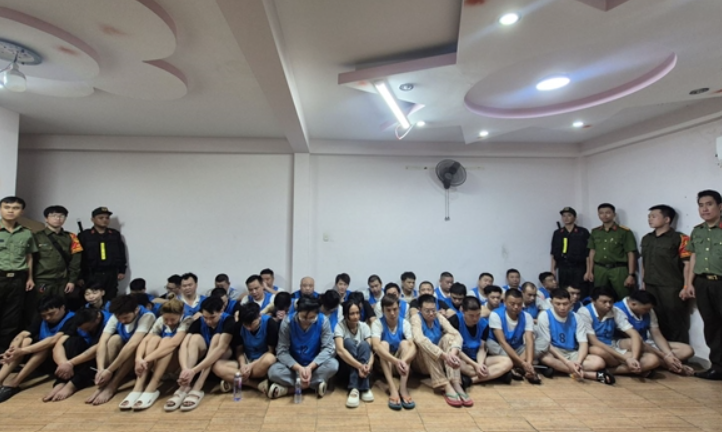
Ho Chi Minh City authorities have successfully dismantled several organised networks engaged in smuggling foreign nationals into Vietnam to establish sophisticated online fraud operations. The coordinated enforcement action, spanning multiple sweeping operations across the city, has resulted in 26 criminal suspects being charged across eight separate cases. Police seized hundreds of computing devices and mobile phones used in the fraudulent schemes, signalling a significant victory against transnational cybercrime activities increasingly targeting the region.
The investigation revealed a carefully orchestrated smuggling and fraud pipeline operating on an international scale. Suspects had been dispatched from overseas specifically to scout suitable locations within Ho Chi Minh City, establish rental accommodation, install technical infrastructure, and prepare sophisticated equipment designed to support fraud operations. The network operated with a hierarchical structure encompassing distinct roles: location scouts, landlords, accommodation managers, network technicians, and personnel coordinators. This compartmentalisation suggests professional criminal expertise and planning, indicating these were not isolated incidents but rather systematic attempts to exploit Vietnam's urban centres for transnational crime.
Twenty-two police task forces, operating alongside specialist cybercrime units and district-level officers, conducted comprehensive inspections targeting accommodation establishments and commercial premises throughout Ho Chi Minh City. The scale of the operation demonstrated the authorities' determination to combat what has become an increasingly sophisticated form of cross-border organised crime. Between them, the forces examined 1,616 temporary residences and business locations potentially connected to foreign nationals. These sweeping checks identified 160 facilities that had failed to comply with mandatory foreign resident registration requirements, while investigators documented 311 foreign nationals engaged in various immigration and labour violations.
A particularly significant discovery occurred on May 18, 2026, when officers inspecting an accommodation facility in Thuan Giao Ward uncovered 85 Chinese nationals residing without completing required immigration paperwork. The haul from this single location included nearly 200 desktop computers, numerous laptops, and over 550 mobile phones, alongside additional electronic devices. The sheer volume of equipment suggested these facilities served as coordination hubs for large-scale fraud operations rather than simple lodging. Early investigation determined that individuals had been systematically directed from abroad to establish what would become a comprehensive fraud operation centre, complete with plans to conduct internal training programmes targeting foreign victims.
As the investigation expanded geographically and operationally, detectives identified a disturbing pattern: numerous accommodation operators had deliberately overlooked standard identity verification procedures and neglected to process mandatory temporary residence registrations. In several cases, these operators had knowingly harboured individuals who had entered Vietnam illegally. Financial incentives appeared to motivate this complicity, with property owners prioritising short-term rental income over legal obligations. This corruption of the accommodation sector demonstrates how criminal networks exploit weak compliance enforcement and economic vulnerabilities within local communities.
A subsequent operation on June 8 located 83 Chinese nationals assembled at a hotel in Binh Duong Ward, where investigators discovered pre-positioned equipment and infrastructure designed for online fraud operations. Just over a week later, on June 17, authorities conducting a routine residency check at a residence in Hiep Bình Ward discovered another 42 foreign nationals residing in violation of local regulations. The premises yielded numerous electronic devices and digital evidence indicating active involvement in fraud schemes. The frequency and geographical distribution of these discoveries across different wards and districts revealed the network's expansion throughout the metropolitan area.
For regional observers, these operations highlight a troubling trend affecting Southeast Asia more broadly. Online fraud networks increasingly exploit gaps in bilateral law enforcement cooperation, immigration controls, and cybersecurity infrastructure across the region. Vietnam's location along major international travel routes, combined with competitive pricing for accommodation and reliable internet connectivity, has made it an attractive base for transnational fraud operations targeting victims across Asia, Europe, and North America. Malaysian readers should recognise similar vulnerabilities exist domestically, where foreign fraud operatives may similarly attempt to establish footholds.
The Ho Chi Minh City Security Investigation Agency initiated criminal proceedings under Article 348 of Vietnam's Penal Code, charging suspects with "organising for others to remain illegally in Vietnam." The eight distinct cases and 26 prosecuted suspects encompassed not merely the fraud operators themselves, but also the network's support infrastructure: accommodation providers, brokers, and intermediaries who facilitated illegal residence arrangements. This comprehensive prosecutorial approach targets the entire criminal ecosystem rather than simply removing individual fraudsters, potentially disrupting future network reconstitution attempts.
Police explicitly warned accommodation sector operators that economic motivation cannot justify legal non-compliance. Failing to verify guest identity documentation, neglecting mandatory registration procedures, and knowingly accommodating illegally present foreigners all carry criminal liability and substantial penalties under Vietnamese law. This message carries particular significance for regional business owners operating in tourism, hospitality, and short-term rental sectors who might face similar pressure from organised criminals seeking operational bases.
The authorities emphasised that their enhanced screening and monitoring protocols would continue targeting foreign nationals engaged in suspicious activities, with particular focus on high-technology crimes and transnational fraud schemes. Ho Chi Minh City officials committed to prosecuting any organisations or individuals exploiting the city's business-friendly policies, investment incentives, or tourism infrastructure to facilitate criminal operations. This stance reflects growing recognition that rapid economic development and international integration, while beneficial overall, create opportunities for criminal exploitation requiring proportionate enforcement responses.
In a notable warning, Ho Chi Minh City Police highlighted escalating victim counts from fraudulent "holiday ownership" schemes, where operators convince foreign nationals to invest in alleged timeshare properties or resort memberships through increasingly sophisticated deception tactics. Authorities urged victims and individuals with knowledge of such schemes to come forward voluntarily, promising potential leniency consideration for those cooperating with investigations. This appeal recognises that many participants in fraud networks are themselves vulnerable to coercion or deception, deserving differentiated treatment within the justice system.
The crackdown illustrates how coordinated, intelligence-led policing can systematically dismantle organised transnational crime networks. However, the underlying vulnerabilities these networks exploited—gaps in immigration enforcement, complicit service providers, and international regulatory fragmentation—require sustained attention. For Malaysia and other Southeast Asian nations, the Ho Chi Minh City experience offers valuable lessons about building coordinated responses, strengthening accommodation sector oversight, and developing international cooperation mechanisms to counter increasingly sophisticated cross-border fraud operations.

