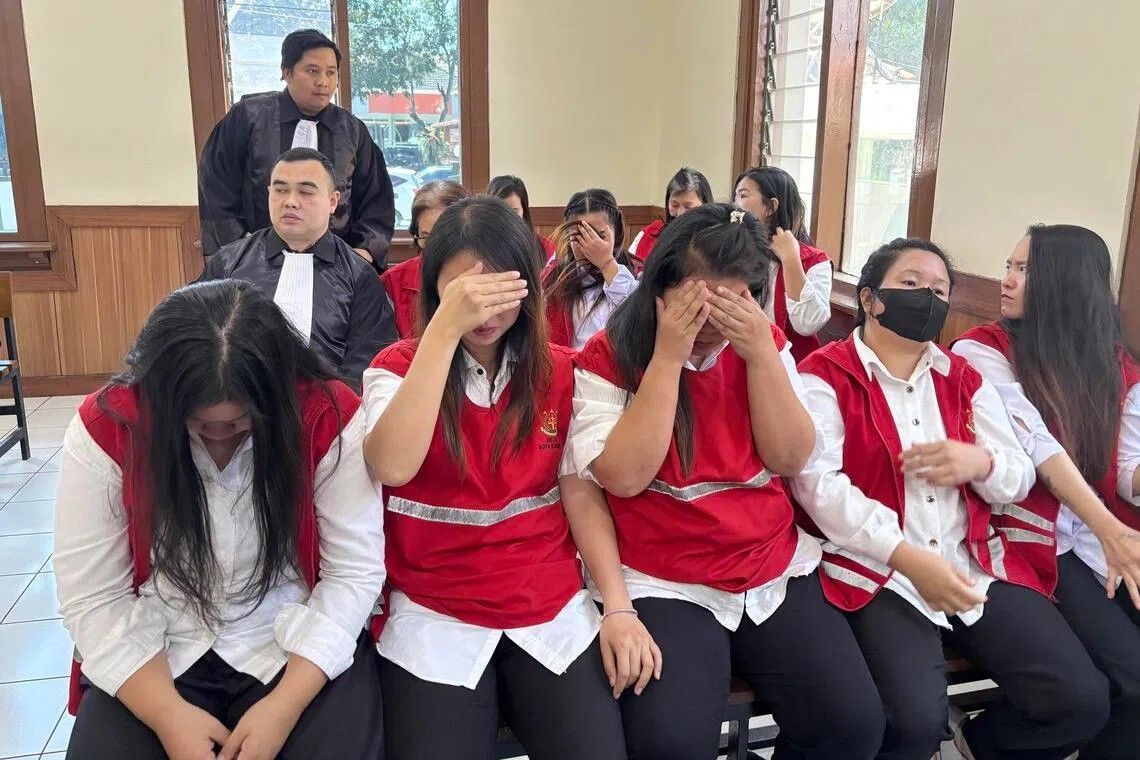
An Indonesian court has handed down prison sentences to all 19 members of a transnational baby-trafficking syndicate that smuggled infants across Southeast Asia, including to Singapore, marking a significant step in tackling one of the region's most disturbing forms of human exploitation. The Bandung District Court in West Java convicted the network's ringleader, 70-year-old Lie Siu Luan—known by aliases Popo and Lily—of human trafficking on July 21, sentencing her to seven years imprisonment for orchestrating the recruitment, documentation fraud, and international placement of at least 34 infants between 2023 and 2025.
The case exposes a sophisticated criminal operation that preyed on vulnerable newborns and desperate families across the region. Lie Siu Luan faced accusations of directly coordinating the recruitment of babies, orchestrating the creation of forged adoption paperwork, and arranging their clandestine transfer to overseas destinations. Judge Gatot Ardian Agustriono, presiding over the three-judge panel at Bandung District Court, delivered a comprehensive guilty verdict that detailed the defendant's involvement in recruiting, harbouring, sending, transferring, or receiving persons for the purpose of exploitation within Indonesian territory. The sentence handed down—seven years—fell considerably short of prosecutors' initial demand for a decade-long prison term, potentially raising questions about sentencing consistency in human trafficking cases across the region.
The criminal network extended far beyond Lie's individual actions, encompassing 18 additional defendants, predominantly women, who filled critical roles within the operation's structure. Astri Fitrinika, identified as the syndicate's chief recruiter responsible for sourcing infants from vulnerable communities, received six years and seven months imprisonment alongside fellow recruiters Djaka Hamdani and Elin Marlina, who received identical sentences. These recruitment specialists operated as the network's frontline operatives, tasked with identifying and securing infants from families willing to surrender their children. Lai Su Hua, whose role centred on falsifying government documents essential to the adoption process, similarly received six years and seven months, underscoring the court's recognition that documentary fraud formed a pillar of the trafficking operation. The remaining 14 defendants, mostly caregivers who provided temporary accommodation and care to trafficked infants awaiting placement, received somewhat lighter sentences of three years and four months, reflecting their ancillary roles within the hierarchy.
The scale of the operation's reach into Singapore and beyond demonstrates how regional trafficking networks exploit gaps in cross-border enforcement and documentation systems. Prosecutors established that at least 12 of the 34 trafficked infants were transported to Singapore, with each child commanding a price of 200 to 250 million rupiah, equivalent to approximately SGD 18,110. This pricing structure indicates a highly commercialised operation, suggesting systematic profiteering from the desperate circumstances of both impoverished families and childless couples seeking infants. The fact that multiple infants were successfully transferred to Singapore, a developed nation with considerable border controls and regulatory oversight, underscores concerning vulnerabilities in cross-border adoption verification mechanisms and emphasises how organised trafficking syndicates have adapted their methods to exploit bureaucratic complexities.
During investigations and court proceedings, key figures including Lie and Astri offered partial admissions to charges while maintaining a narrative that contradicted the severity of trafficking accusations. Both defendants asserted that none of the children had been forcibly abducted, instead claiming that parents had voluntarily surrendered their offspring. They further contended that all infants received appropriate care and suffered no abuse, a defence that appears designed to reframe trafficking as consensual transaction rather than exploitation. However, the court's guilty verdicts on human trafficking charges—the most serious accusations brought—implicitly rejected these characterisations, suggesting that prosecutors successfully demonstrated how the combination of vulnerable families, financial incentives, forged documents, and international placement constituted trafficking regardless of parental consent narratives.
The conviction carries particular significance for Malaysia and broader Southeast Asia, where adoption fraud and baby-trafficking networks have periodically surfaced. Similar cases in Malaysia have involved syndicates exploiting regulatory gaps between state religious authorities and secular courts, as well as inadequate vetting of private adoption facilitators. The Indonesian syndicate's operational methods—recruiting from impoverished communities, falsifying documents, and leveraging regional migration patterns—mirror tactics observed in trafficking cases across the region. For Malaysia, the case underscores the critical need for strengthened collaboration between domestic child protection agencies and international law enforcement to prevent infants from being trafficked through the country or to Malaysian buyers.
The trial's duration since April 2024 reflects the complexity inherent in prosecuting transnational human trafficking cases involving coordination across multiple jurisdictions and dozens of victims. Assembling evidence of organised trafficking while maintaining prosecutorial momentum across numerous defendants presents substantial challenges for Southeast Asian judicial systems, which often lack specialised trafficking investigation units and cross-border cooperation mechanisms. The speed with which all 19 defendants were convicted suggests Indonesian authorities achieved significant investigative success, potentially supported by digital forensics uncovering communication networks, financial records documenting payments, and testimony from rescued infants' families.
The differentiated sentencing structure—with the mastermind receiving the harshest penalty and peripheral caregivers the lightest—reflects judicial recognition of hierarchical culpability within criminal organisations. However, the seven-year sentence for the syndicate's orchestrator, while substantial, remains relatively modest for operations involving dozens of children and international coordination. Comparative analysis with trafficking convictions in other Southeast Asian jurisdictions suggests sentencing approaches vary considerably, potentially creating perverse incentives where traffickers calculate manageable prison risks against lucrative returns.
Looking forward, the conviction of all 19 defendants presents opportunities for regional cooperation in victim identification and repatriation. Critical questions remain regarding the current status and welfare of the 34 trafficked infants and whether cross-border mechanisms exist to restore children to original families where appropriate or facilitate adoption through legitimate channels. Singapore authorities' involvement in the investigation and potential custody of recovered infants will test bilateral cooperation frameworks between Indonesia and Singapore on vulnerable child protection.
The case also illuminates the demand-side dynamics of baby trafficking within the region. That traffickers successfully placed infants in Singapore suggests existence of willing buyers—individuals or couples seeking to circumvent formal adoption procedures through illicit channels. Addressing trafficking therefore requires not only targeting supply-side networks in source countries like Indonesia, but also investigating demand in destination jurisdictions and implementing stronger adoption verification systems across Southeast Asia. Regional governments must strengthen legislative frameworks criminalising participation in trafficking transactions, whether as buyers, facilitators, or document fraudsters.
The conviction delivers accountability but raises uncomfortable questions about prevention. Why were 34 infants trafficked over approximately two years before the network was dismantled? What regulatory failures in Indonesia's adoption system permitted such extensive document forgery? How did infants cross international borders without triggering heightened scrutiny? Malaysian policymakers should examine these questions carefully, as they directly relate to safeguarding systems in countries throughout Southeast Asia where organised crime networks exploit child welfare infrastructure for profit.

