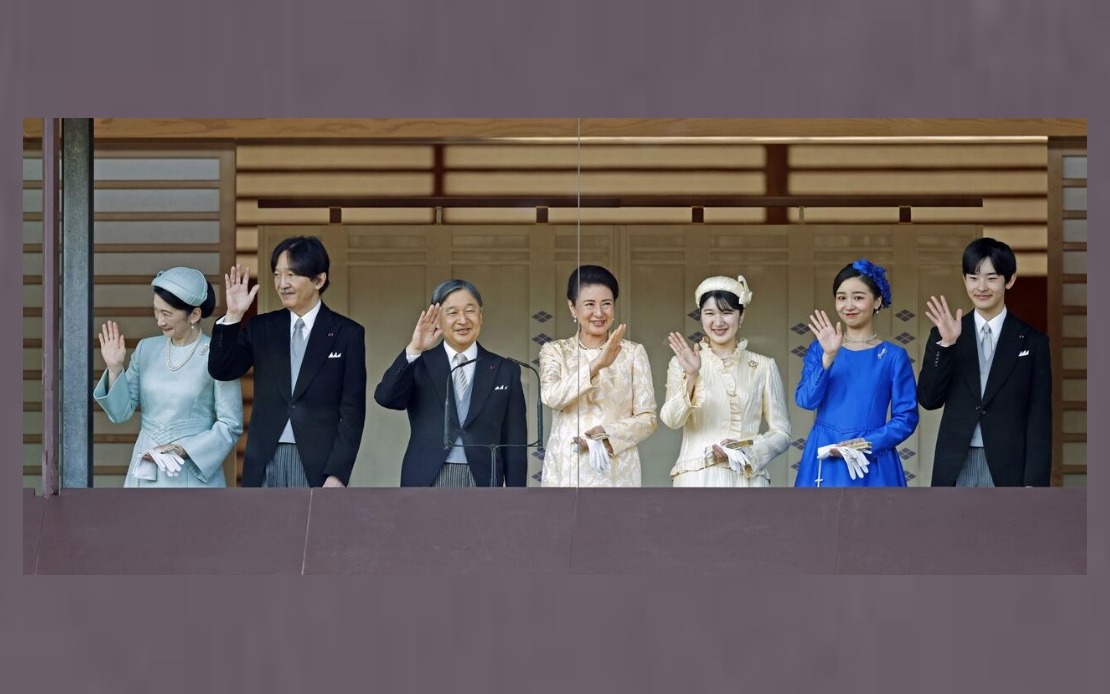
Japan's parliament has taken incremental steps to shore up the imperial system by approving sweeping changes to the 1947 Imperial House Law, though the decision preserves the patrilineal succession model that has defined the throne for centuries. The revision, championed by Prime Minister Sanae Takaichi—Japan's first female premier—aims to prevent the monarchy from withering as the royal family confronts an acute shortage of heirs. Yet the legislative outcome reveals deep tension between conservative institutional preservationism and popular appetite for broader transformation, a fissure that will likely shape Japanese constitutional debates for years to come.
The revised law introduces two principal mechanisms to expand the imperial family's size. First, it opens adoption pathways for unmarried males aged 15 and older who descend through unbroken male lines from the 11 former branch families stripped of royal status after World War II. Second, it permits female imperial members to retain their titles and privileges upon marrying non-royal men, a measure that acknowledges modern marriage patterns whilst stopping short of allowing women themselves to inherit the throne. These adjustments respond to a quantifiable crisis: Emperor Naruhito currently has only three male heirs, a demographic precarity that threatens institutional continuity under existing succession rules.
The historical context illuminates why this moment represents a watershed for Japan's monarchy. When the 1947 Imperial House Law took effect under American occupation, authorities expelled 51 individuals from 11 collateral branches, reducing the imperial family overnight to a much smaller cadre bound by strict patrilineal principles. The law's founding language—mandating succession "by a male offspring in the male line belonging to the Imperial Lineage"—remains textually unchanged despite Friday's parliamentary approval. This linguistic continuity matters symbolically, signalling that Japan's conservative political establishment views the reforms as technical calibrations rather than philosophical ruptures with ancient tradition.
Takaichi's government has justified the adoption provision as a logical extension of existing law rather than a deviation from it. Officials maintain that male descendants of reinstated branch families can constitutionally ascend the Chrysanthemum Throne without fresh legislation, provided those individuals are biologically descended through male progenitors. This interpretive stance sidesteps the most contentious succession question altogether: whether women themselves might one day become empress regnant. By emphasizing adoption of external males, the ruling coalition has navigated between institutional conservatism and minimum necessary reform, enabling the family to replenish its male heir pool without confronting deeper questions about gender equality in Japan's highest office.
The parliamentary process underlying this law revealed fissures within Japan's political establishment. Months of cross-party negotiations produced a broad "consensus" spanning 13 parliamentary parties and groups, yet opposition lawmakers have attacked the ruling Liberal Democratic Party and its junior partner, the Japan Innovation Party, for moving too hastily and without adequate deliberation. Critics contend that the Diet rushed toward a compromise that satisfies neither traditionalists seeking immutable succession rules nor reformers demanding female emperors. The absence of substantive parliamentary debate about female succession—despite being the law's central political controversy—attracted particular censure from those advocating more transparent decision-making on constitutional matters.
Public opinion presents a striking counterpoint to the government's cautious approach. A Kyodo News poll conducted in May demonstrated that 83 percent of Japanese respondents support permitting female emperors, whilst only 13.1 percent oppose the concept. This commanding majority reflects generational shifts in Japanese attitudes toward gender roles and institutional authority, transformations that have rippled across East Asia as societies grapple with population decline and traditional hierarchies. The gap between popular sentiment and legislative outcome suggests that Japan's institutional conservatism—particularly within the LDP's ideological core—continues to constrain democratic responsiveness on monarchical questions, even as Takaichi herself breaks gender barriers in politics.
For Malaysian and Southeast Asian observers, Japan's imperial succession debate offers instructive parallels regarding the tension between tradition and democratic representation. Like several Asian monarchies, Japan must reconcile hereditary institutional structures with increasingly pluralistic societies where citizens expect meaningful participation in constitutional matters. The Malaysian context differs substantially—Islam informs Malaysia's constitutional monarchy—yet both systems illustrate how dynastic continuity interacts with modern democratic norms. Japan's experience suggests that incremental, technocratic reforms may buy time without resolving underlying legitimacy questions when public preferences diverge sharply from elite decision-making.
The adoption mechanism represents the law's pragmatically clever aspect. By welcoming male descendants from formerly severed branch families, the revision restores a pool of potential heirs without requiring either female succession or revolutionary changes to patrilineal doctrine. These 11 families, originally excised from the imperial register during the occupation era, provide multiple candidates whose biological connection to the imperial line remains unbroken. The adoption provision thus transforms what might have been a succession crisis into a recruitment challenge, converting demographic scarcity into institutional flexibility. This approach appeals to traditionalists who view the patrilineal system as essential to the throne's symbolic integrity, whilst addressing the practical reality that the current family lacks sufficient male heirs.
Yet the law's silent treatment of female succession foreshadows future controversy. As Japan's population continues contracting and female participation in professional and political life deepens, renewed demands for female emperors seem inevitable. The government's decision to preserve the male-line language intact means that any future reconsideration of female succession would require fresh legislation rather than administrative reinterpretation. This deliberate choice locks the constitution into a particular historical moment, potentially forcing Japan toward more contentious constitutional debate once adoption-driven expansion proves insufficient to guarantee succession continuity. By postponing the question rather than resolving it, Takaichi's government may have merely deferred a reckoning between Japan's monarchical traditions and its democratic values.
The role of Takaichi herself in shepherding these reforms deserves examination. As a woman leading Japan's government, her stewardship of legislation that explicitly excludes female imperial succession carries paradoxical weight. Some observers interpret her approach as politically pragmatic accommodation to conservative party elements whose support her premiership requires; others view it as principled respect for institutional traditions distinct from political leadership. This distinction matters for understanding how Japanese conservatism functions: unlike Western progressivism that typically links gender equality across institutions, Japanese conservatives compartmentalize tradition and modernity, permitting women in electoral politics whilst preserving patrilineal succession in hereditary systems. Takaichi's acquiescence to this framework reveals the continuing power of institutional conservatism over reformist impulses in Japanese governance.
Regional implications extend beyond Japan's borders. The imperial succession question touches Northeast Asian geopolitics, insofar as Japan's institutional stability matters to regional security architecture. South Korea and Taiwan also navigate complex relationships between hereditary and democratic principles, making Japan's approach instructive. Moreover, the broader question of how aging societies maintain institutional legitimacy whilst accommodating demographic and cultural change resonates throughout East and Southeast Asia. Japan's cautious incrementalism suggests that democracies managing traditional hierarchical institutions often prefer evolutionary reform over transformative rupture, even when public opinion might support bolder change.
Looking forward, the 1947 law's revision settles the succession question for perhaps one or two generations. Adoption provisions will likely replenish the imperial family's male heir contingent sufficiently to forestall immediate crisis. However, Japan's demographic trajectory—among the world's lowest birthrates—means that even expanded recruitment pools may eventually exhaust themselves. Unless female succession becomes permissible, the imperial line faces long-term sustainability challenges that current reform sidesteps. The fact that Takaichi's government declined to address female succession whilst simultaneously pushing reform suggests confidence that adoption mechanisms will provide buffer time. Whether that confidence proves justified remains uncertain, but the parallel between female political leadership and male-only throne succession will likely generate mounting cognitive dissonance as decades pass.

