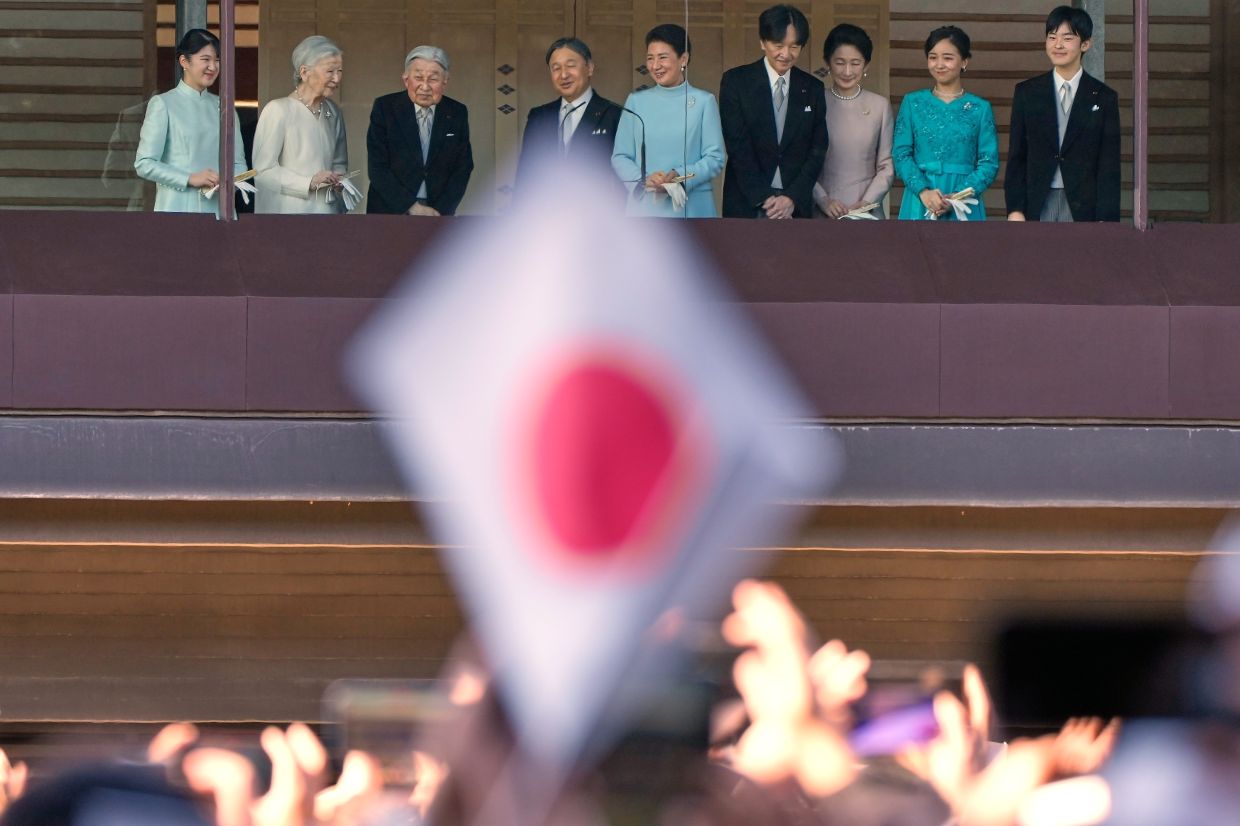
Japan's parliament has enacted reforms to its imperial succession framework, but has deliberately preserved the prohibition against female succession to the Chrysanthemum Throne. The upper house passed the legislation by a substantial majority on Friday, July 17, maintaining a restriction that appears increasingly at odds with Japanese public opinion and contemporary values, though it does introduce limited flexibility in maintaining the male imperial line.
The timing of this reform reflects deep institutional anxiety about the future of the world's oldest continuous monarchy. Emperor Naruhito, now 66 years old, has a single male heir in Prince Hisahito, his 19-year-old nephew. The young prince, who was only recently out of secondary education and is presently engaged in studying biology and entomology at university, remains unmarried. Should Hisahito fail to father a son, the present succession rules would leave the imperial household without a designated successor, threatening to break a lineage stretching back more than a millennium and rooted in Shinto mythology tracing descent from the sun goddess Amaterasu.
The legislative package addresses this succession crisis by permitting the adoption of male distant relatives aged 15 and older into the imperial family, provided they remain unmarried at the time of adoption. This represents a departure from strict bloodline protocols, yet it represents only a narrow expansion of flexibility. The law also extends a privilege previously granted only to male royals by allowing women who marry commoners to retain their imperial status, a measure that applies to the existing female members of the imperial family but offers no pathway to the throne.
Japan's Imperial Household Law, established in 1947 during the postwar reconstruction period, contains an explicit prohibition on female succession. This restriction stands in contrast to many contemporary monarchies, including the United Kingdom, Spain, and the Netherlands, which have all reformed their succession laws to permit female heirs. The current framework ensures that only males can transmit the imperial succession through the bloodline, effectively barring Princess Aiko, Emperor Naruhito's 24-year-old daughter, from ever occupying the throne. This restriction also permanently excludes Prince Hisahito's two older sisters from the line of succession, despite their closer generational proximity to the reigning emperor.
The reform process encountered significant resistance within Japan's conservative ruling Liberal Democratic Party, currently led by Sanae Takaichi, who made history as Japan's first female prime minister yet personally opposes allowing female imperial succession. This ideological inconsistency highlights the tension between progressive leadership and traditional institutional conservatism that characterises contemporary Japanese politics. Within the party, veteran politician Seiichiro Murakami voiced sharp criticism, calling it "utterly outrageous" to exclude Princess Aiko from consideration following the lower house approval on July 10, suggesting that even within conservative circles, the case for female succession commands some support.
Public sentiment diverges markedly from the government's position on this question. An Asahi Shimbun survey conducted in May revealed that 72 percent of Japanese respondents supported modifying the succession rules to permit women to become emperor. This substantial majority reflects shifting social attitudes, particularly among younger generations accustomed to female leadership in business, academia, and government. The disconnect between public preferences and legislative outcomes underscores how deeply embedded traditional succession principles remain within Japan's imperial framework, resisting democratisation even as other institutions modernise.
Notable criticism has emerged from unexpected quarters. Asahiro Kuni, an 81-year-old former member of the imperial family, has challenged the practical feasibility of the adoption scheme. Kuni descends from one of the eleven imperial branch families that were removed from the imperial register following World War II. His perspective carries particular weight given his intimate understanding of imperial life. He observed to the Asahi Shimbun that by age 15, young people have developed in freedom and would find adaptation to the restrictive protocols of imperial existence extraordinarily difficult, suggesting that the pool of potential male adoptees may be far smaller than legislation assumes.
Kuni's reservations extend beyond personal adjustment. He argued that while some individuals might theoretically express willingness to join the imperial family, deeper acquaintance with the substantial sacrifices and constraints inherent to royal membership would likely discourage acceptance. This insider perspective reveals that the government's solution, while technically expanding male recruitment, may prove largely theoretical if invited candidates decline participation. The proposal thus risks creating legislative scaffolding without practical occupants, leaving the succession crisis unresolved.
Criticism of the government's approach has penetrated even traditionally conservative media. The Yomiuri Shimbun, Japan's highest-circulation newspaper and typically a reliable supporter of the Liberal Democratic Party, recently published an editorial criticising the government's handling of imperial succession reform. This editorial breach suggests that concerns about the legislation extend beyond progressive voices into the mainstream establishment, reflecting anxiety that the reforms address symptoms rather than the underlying structural challenge.
The imperial family currently numbers 16 members total, with only five males. This roster includes retired Emperor Akihito, now 92; his brother, aged 90; the current Emperor Naruhito; Naruhito's brother; and Prince Hisahito. The narrow base of male succession represents the most immediate demographic challenge facing the institution. As older male relatives age and pass away without producing additional heirs, the succession crisis will intensify, potentially forcing reconsideration of whether female succession represents an obstacle or a necessity.
For Southeast Asian observers, Japan's imperial succession debate carries significance beyond ceremonial interest. The reform process reveals how traditional institutions interact with modern democratic values in one of Asia's most economically advanced and politically stable societies. The tension between maintaining historical continuity and responding to evolving social expectations poses questions relevant across the region, where many nations balance monarchical traditions with contemporary governance frameworks.
The coming years will test whether the adopted male relative provision proves functional or whether demographic realities and public opinion ultimately compel Japan to revisit the female succession question. The legislative compromise appears designed to defer rather than resolve the fundamental succession challenge, suggesting that further reforms may prove inevitable as Prince Hisahito reaches marriageable age and the nature of his family prospects becomes clearer.

