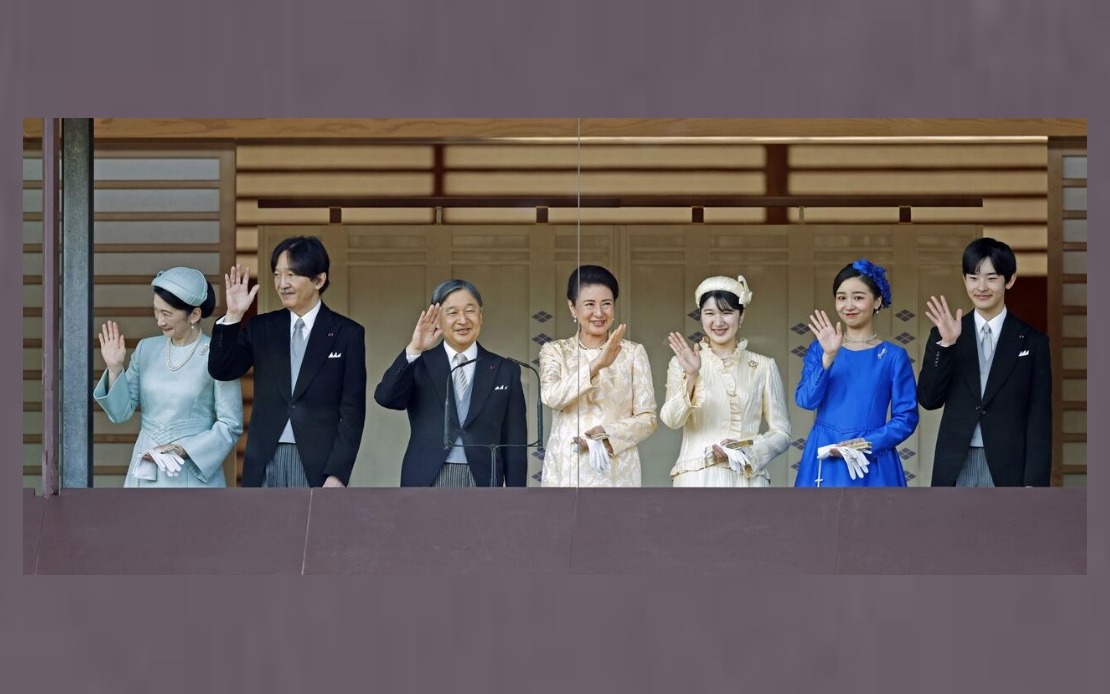
Japan's sweeping revision to the Imperial House Law, the first major overhaul since 1947, is generating profound uncertainty among the officials and staff who serve the imperial institution, even as public opinion remains fractured over the landmark change. The legislative amendment, which parliament passed on Friday, represents Prime Minister Sanae Takaichi's conservative government attempt to stabilise the imperial succession and reverse the dwindling number of royal family members, now comprising just 16 individuals. Yet the reform has opened a Pandora's box of questions about how the nation's ancient hereditary monarchy will adapt to modern realities, with palace bureaucrats expressing private doubts about the practical implementation and young Japanese questioning whether their voices were heard in crafting such consequential policy.
At the heart of the government's approach lies a strategy to recruit male candidates from 11 former imperial branch families that surrendered their royal status during the post-war constitutional reforms of 1947. Under the revised framework, males aged 15 and older from these lineages now have the legal pathway to be formally adopted into the imperial family, theoretically bolstering the numbers of those eligible to participate in state ceremonies and official duties. Imperial Household Agency officials publicly acknowledge the logic of this arrangement, with one senior figure noting that the reform has "created a path toward securing a stable number of imperial members." Yet behind closed doors, the same bureaucrats worry whether the measure addresses the underlying pressures facing the institution or merely defers the more difficult questions that Japanese society must eventually confront.
The practical feasibility of the adoption scheme has already drawn scepticism from within the targeted pool of candidates. Asahiro Kuni, an 81-year-old member of the Kuninomiya branch family, expressed considerable doubt about whether individuals would willingly surrender their everyday lives to join the imperial household, telling journalists that he questions whether the scheme is realistic. This candid assessment underscores a fundamental tension: the imperial system demands extraordinary personal sacrifice and constant scrutiny, conditions that may deter potential candidates regardless of their genealogical eligibility. Agency staff members have also voiced concern about whether adopted members would genuinely comprehend the symbolic nature of the modern Japanese imperial institution and whether they could authentically embody the values and commitments that contemporary emperors like Naruhito have come to represent through their public engagement and compassionate activism.
The reform has deliberately sidestepped the question that dominates public discourse: whether women should be permitted to succeed to the Chrysanthemum Throne. Despite widespread polling evidence that a substantial proportion of Japanese citizens support the idea of a female emperor, including the possibility of Princess Aiko, Emperor Naruhito's only daughter, ascending in the future, the government has constructed a framework that implicitly rejects this path. Instead, the law allows princesses who marry commoners to retain their imperial status if they choose to do so, rather than automatically losing it as under previous custom. This represents progress in some respects, yet critics interpret the overall package as part of a broader conservative political agenda to preserve male-only succession at all costs, a position they argue increasingly clashes with contemporary Japanese values around gender equality and meritocracy.
The amendment creates a perplexing situation for the five unmarried female members of the imperial family currently navigating their personal futures, most notably Princess Aiko and Princess Kako, daughter of Crown Prince Fumihito. These women now face a genuinely agonising choice that reflects the law's fundamental contradiction: they may either marry outside the family and attempt to maintain royal status, or potentially leave the imperial system altogether. One aide to a female imperial family member characterised this decision as "quite difficult" given contemporary public expectations and the symbolic weight of imperial membership. The aide further observed that the arrangement creates an awkward situation whereby spouses and children of women who retain their status would remain ordinary citizens, potentially leading to "strange" family dynamics with different legal statuses coexisting under one household. Such administrative complications hint at deeper problems the government has declined to directly address through comprehensive public debate.
Public reaction to the legislative changes has reflected the broader polarisation characteristic of Japanese society's approach to tradition and modernisation. Older citizens such as Shinichi Kokubun, 76, who personally encountered Emperor Naruhito and his family during their visit to tsunami-devastated Fukushima Prefecture, expressed optimism that adopted members could successfully embody the emperor's commitment to understanding the people's experiences and needs. Kokubun suggested that if adoptees demonstrate the kind of genuine compassion and dedication that the current emperor exemplifies, the public would likely accept their role within the institution. This perspective acknowledges the possibility that imperial legitimacy ultimately derives not from bloodline alone but from demonstrated commitment to serving the nation.
Conversely, younger Japanese have articulated frustration with how the government has prosecuted this constitutional reform largely through elite institutions without creating meaningful space for grassroots participation or education. Miyu Nakao, 22, from Hiroshima, pointed out the disconnect between government action and public sentiment, noting that opinion polls consistently show strong support for female succession yet the authorities proceeded unilaterally with a male-focused solution. A 20-year-old university student in Osaka similarly lamented that few Japanese his age understand the Imperial House Law or its implications, and criticised the government for failing to conduct sufficient public outreach or facilitate substantive democratic discussion about such a fundamental constitutional matter. This generational critique highlights how the reform process itself, irrespective of its provisions, has undermined public confidence by appearing to exclude citizens from decisions that shape their national symbols and institutions.
Imperial Household Agency officials must now navigate the practical complexities of implementing rules that stretch beyond what historical precedent clearly illuminates. The symbolic character of the modern Japanese emperor, enshrined in the postwar Constitution and exemplified through Emperor Naruhito's extensive public engagement and emotional connection with citizens, represents a significant departure from pre-war imperial traditions. Whether candidates from former branch families, or indeed women who marry outside the institution, can authentically embody this modern understanding of imperial duty remains an open question that no legislative provision can definitively answer. Palace insiders acknowledge this fundamental uncertainty, with senior officials privately expressing concern about whether the institution's continuity and public affection can survive such unprecedented structural changes without clearer consensus about the monarchy's evolving purpose and character.
For Southeast Asian observers, Japan's imperial reform deliberations offer instructive perspectives on how constitutional monarchies navigate questions of legitimacy, modernisation, and democratic participation. Many regional nations maintain their own institutions of traditional authority and face analogous tensions between preserving cultural continuity and adapting to contemporary expectations around representation and equality. The Japanese experience suggests that technical legislative solutions cannot substitute for genuine public dialogue about the values and functions that symbolic institutions should serve. The apparent rush to resolve the numerical decline of the imperial family, while leaving the deeper philosophical questions unresolved, risks creating a governance structure that citizens neither fully understand nor actively support, potentially weakening the monarchy's cultural authority over time.
The months and years ahead will determine whether Japan's revised Imperial House Law successfully addresses the sustainability questions it was designed to solve, or whether it represents merely a temporary expedient that defers rather than resolves the fundamental tensions between tradition and democracy that characterise modern monarchy. The government's confidence that the adoption mechanism will attract suitable candidates remains untested, while the emotional and practical challenges facing unmarried princesses suggest that the royal family's personal circumstances may yet force a more direct reckoning with female succession that current legislation appears designed to avoid. What remains clear is that Japan's imperial institution, despite its nearly two-millennia history, is entering genuinely uncharted territory, and the government's apparent reluctance to engage Japanese citizens in thinking through the implications may itself pose a greater threat to imperial stability than any reform could address.

