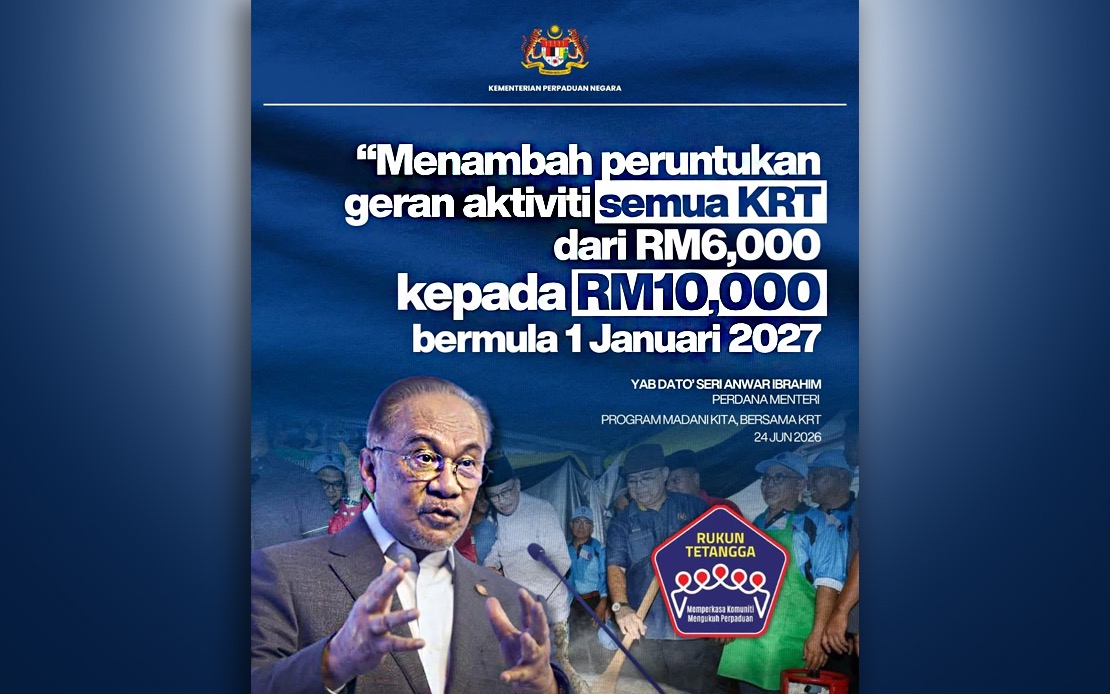
Malaysia's neighbourhood watch movement stands to receive a significant financial boost as the government raises annual funding for all 8,615 KRT (Kawasan Ronda Tetangga) groups nationwide to RM10,000, nearly 67 per cent higher than the previous RM6,000 allocation. National Unity Minister Datuk Aaron Ago Dagang outlined the decision following Prime Minister Datuk Seri Anwar Ibrahim's announcement during the MADANI KITA programme in Dataran Segamat, Johor, with disbursement scheduled to commence on January 1, 2027.
The funding increase represents a strategic shift in government policy toward community-led initiatives at the grassroots level. Rather than relying solely on top-down governance structures, the MADANI administration is positioning neighbourhood watch groups as essential pillars of social cohesion and local development. By enhancing their financial capacity, policymakers aim to enable KRT organisations to undertake more substantive programmes that directly address community needs without requiring constant dependence on central government resources for routine operations.
KRT groups, which have operated for over five decades as informal guardians of neighbourhood harmony, currently mobilise approximately 250,000 active members across the country. These volunteer-driven organisations have demonstrated tangible impact, with Ministry of National Unity data indicating that member activities reached more than 12 million Malaysians during the past year alone. The scale of involvement underscores why the government perceives these groups as legitimate channels for delivering policy outcomes at the hyperlocal level, where traditional administrative machinery sometimes struggles to establish meaningful engagement.
Within the Malaysian context, neighbourhood watch groups serve functions that extend well beyond their name suggests. They operate as informal but effective social safety nets, organising community defence mechanisms, youth programmes, welfare assistance, educational initiatives, and local economic projects. The expanded budget will theoretically permit KRT chapters to move beyond basic security patrols toward more ambitious community development ventures, including skills training, micro-business support, and comprehensive neighbourhood welfare schemes that require sustainable funding.
Aaron characterised the grant increase as reflecting government recognition of KRT's historical contribution to nation-building, particularly in fostering interethnic and interreligious understanding across Malaysia's ethnically diverse communities. He emphasised that neighbourliness constitutes the bedrock of national unity, and that meaningful relationships transcending racial and religious boundaries represent Malaysia's enduring strength as a multicultural society. This framing positions increased funding not merely as economic stimulus but as an investment in social capital and national cohesion.
The timing of the announcement carries political significance as Malaysia continues navigating post-election consolidation under the MADANI framework. By directing substantially increased resources toward grassroots community organisations rather than establishing new bureaucratic structures, the government signals commitment to institutional pluralism and decentralised development. This approach potentially bypasses delays inherent in formal government channels while leveraging existing volunteer networks and community trust that KRT groups have accumulated over decades.
Since its launch in 2024, the MADANI initiative has emphasised inclusive economic and social development strategies centred on ordinary Malaysians and community institutions. The KRT funding increase aligns with this broader philosophy by demonstrating tangible commitment beyond rhetorical pledges. For residents in neighbourhood groups, the enhanced allocation translates into greater capacity to fund activities such as organised sporting events, skills workshops, elderly care programmes, emergency response mechanisms, and community beautification projects that previously depended on volunteer fundraising or ad-hoc sponsorships.
For Malaysia's regional standing, the emphasis on grassroots development through voluntary community networks offers an alternative development model emphasising social capital accumulation alongside economic growth. Many Southeast Asian nations grapple with balancing rapid urbanisation and economic transformation against maintenance of traditional social structures and community bonds. Malaysia's deliberate enhancement of neighbourhood watch funding suggests recognition that sustainable development requires preserving and strengthening the social infrastructure that enables communities to self-organise around collective concerns.
The ministry has signalled intention to monitor utilisation of expanded funding to ensure KRT groups direct resources toward impact-driven programmes rather than administrative overhead. This accountability mechanism suggests government awareness that grant increases alone do not guarantee improved outcomes; effective deployment requires capacity building, strategic planning, and community-driven prioritisation of needs. The implicit challenge for KRT leadership involves demonstrating that additional resources translate into measurable improvements in neighbourhood harmony, social welfare outcomes, and community participation.
Looking ahead, the January 2027 implementation date provides KRT organisations approximately six months for planning and capacity preparation. Groups will need to assess their operational capabilities, identify priority programmes aligned with local conditions, and establish transparent accounting mechanisms to justify expenditure. For neighbourhood watch coordinators and members, the expanded budget represents both opportunity and responsibility, requiring deliberate choices about programme design and resource allocation that serve genuine community interests rather than merely consuming available funds.
The announcement also carries implications for how Malaysia approaches policy implementation through community structures. Rather than treating volunteer organisations as mere extension agents of government policy, the enhanced funding model acknowledges KRT groups as legitimate institutional actors deserving resources commensurate with their demonstrated contribution. This approach potentially strengthens civil society by providing stable funding for community-driven initiatives while preserving operational autonomy that enables grassroots groups to respond to locally-specific needs and priorities.

