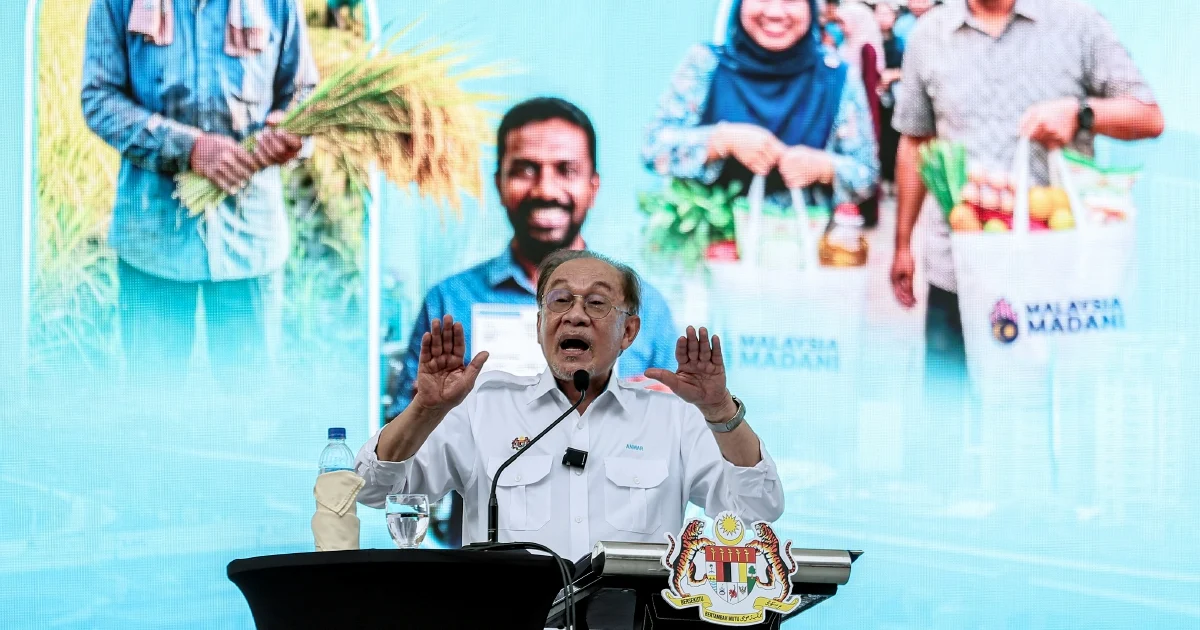
Prime Minister Anwar Ibrahim has unveiled a significant expansion in financial support for Malaysia's Neighbourhood Watch Areas, commonly known as KRT in Malay, signalling the government's commitment to strengthening community-based security frameworks across the nation. The initiative will see annual grants climb from the current RM6,000 to RM10,000 per unit, representing a 67 percent increase in funding. Disbursements under the enhanced scheme are scheduled to begin on January 1, 2027, giving neighbourhood associations time to prepare for the new funding levels and plan resource allocation accordingly.
The announcement was made in Segamat, a town in the state of Johor, underscoring the Prime Minister's engagement with grassroots communities and his administration's focus on decentralised policing strategies. This move reflects broader policy objectives within Malaysia's government to empower residents at the neighbourhood level, acknowledging that community vigilance and coordination with formal law enforcement agencies play a crucial role in maintaining public order and reducing petty crime.
Neighbourhood Watch Areas represent a fundamental pillar of Malaysia's crime prevention architecture at the ground level. These voluntary associations, typically comprising residents of residential estates, apartment complexes, and gated communities, organise patrols, monitor suspicious activity, and liaise with police departments to enhance security awareness. The grant funding traditionally supports operational costs such as patrol equipment, communication systems, training programmes, and administrative functions that enable these groups to function effectively.
The increased allocation demonstrates recognition by Putrajaya that the previous funding level had become insufficient to meet contemporary operational demands. Rising inflation, increased costs of maintenance and equipment, and the expansion of neighbourhood watch programmes into new residential areas have all placed financial pressure on these grassroots organisations. The RM4,000 annual increase per unit, whilst appearing modest in absolute terms, translates into meaningful improvements for neighbourhood associations attempting to serve growing populations and undertake more ambitious community safety initiatives.
For Malaysian residents, particularly those living in organised residential communities with active neighbourhood watch presence, the enhanced funding should translate into more visible security measures, better-equipped patrols, and potentially expanded programmes addressing broader community concerns beyond crime prevention. Many KRT units have begun diversifying their functions to include disaster preparedness, community welfare checks, and youth engagement activities, all of which require adequate funding.
The timing of the announcement, with implementation scheduled for early 2027, allows various administrative channels within government and local authorities to coordinate the disbursement mechanisms and ensure smooth transition to the new funding framework. State governments and relevant federal agencies will require adequate lead time to adjust budgeting procedures and communicate changes to thousands of neighbourhood watch groups operating throughout the country, from densely populated urban areas to semi-rural districts.
From a regional perspective, Malaysia's emphasis on community policing models aligns with approaches adopted by several Southeast Asian neighbours facing similar challenges of urban crime and community fragmentation. Thailand and Indonesia have experimented with analogous neighbourhood security schemes, though Malaysia's relatively formalised and government-funded model distinguishes it within the regional context. The enhanced funding commitment signals confidence in the KRT framework's effectiveness and potential for expansion.
The initiative also carries political significance, positioning the Prime Minister as responsive to ground-level concerns and willing to allocate substantial additional resources to programmes affecting ordinary Malaysians. In a political environment where public confidence in government delivery has fluctuated, tangible investments in community safety demonstrate commitment to bread-and-butter issues that resonate across demographic and geographic boundaries.
Stakeholders in the neighbourhood watch community have generally welcomed increased funding, though implementation will require coordination between multiple government levels. Local police departments maintain official relationships with KRT units, and enhanced funding could enable more structured training and better integration between neighbourhood patrols and formal law enforcement strategies. The success of the initiative will ultimately depend on how effectively the additional resources are utilised and whether they generate measurable improvements in community safety and resident satisfaction.
Beyond the financial dimension, the announcement implicitly acknowledges that Malaysia's security architecture functions most effectively when citizens actively participate in crime prevention rather than relying solely on formal police capacity. As urban populations continue expanding and police resources remain constrained relative to demand, community-based approaches become increasingly valuable. The RM10,000 annual grant level, though still modest in absolute terms, represents meaningful government validation of this principle and investment in sustaining grassroots security networks.

