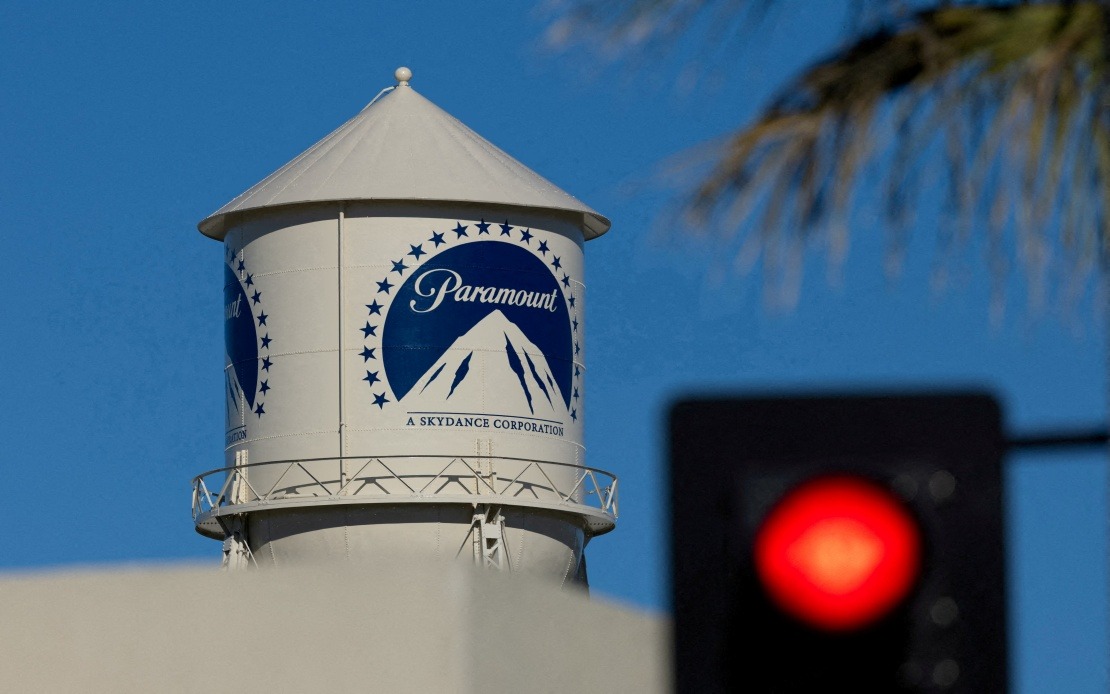
The entertainment industry's landscape shifted dramatically when Paramount decided to halt its pursuit of Warner Bros Discovery following a legal challenge launched by a coalition of 12 United States states. The decision, confirmed through court filings released on Friday, represents a significant setback for what would have been one of the most consequential media consolidations in recent years. The company will only resume efforts to complete the transaction once a court ruling on the competition lawsuit is delivered, or by June 1, 2027 at the latest—a timeline that effectively puts the deal in limbo for the foreseeable future.
The judicial intervention came after a federal judge temporarily suspended the merger proceedings through mid-August to evaluate whether the states had demonstrated sufficient grounds for a preliminary injunction that would permanently block the combination. By agreeing to this suspension, the judge signalled serious concern about the competitive implications raised by the plaintiff states, which include the influential California market regulator. This judicial caution suggests the states' arguments regarding potential market distortion have resonated with the bench, despite the transaction having already received approval from the US Justice Department.
State attorneys general have built their case on the premise that merging Paramount and Warner Bros Discovery would substantially reduce competition in the lucrative market for theatrical film distribution and exhibition. Their fundamental concern centres on cinema operators, who they argue would face significant pressure if two major studios consolidated, potentially limiting content choices and negotiating leverage for independent exhibitors. The judge's preliminary assessment acknowledged that the combined entity would indeed command a considerable share of the film production and distribution market—substantial enough to warrant the immediate procedural halt on grounds that competition concerns appeared substantiated.
This position contrasts starkly with the evaluation conducted by the United States Justice Department, which had already given its blessing to the deal without imposing remedial conditions. The department's analysis concluded that neither television and streaming competition nor film production capabilities would suffer material harm to American consumers. This divergence between the federal executive position and state-level antitrust enforcement reflects broader tensions within the American legal system regarding appropriate scrutiny of major corporate transactions in the media sector.
The European Commission similarly approved the takeover but attached conditions to its authorization, indicating that regulators on the continent viewed the transaction as requiring safeguards to protect competitive dynamics. This pattern of conditional or challenged approval across different jurisdictions underscores the complexity of evaluating massive media consolidations in an increasingly interconnected global entertainment ecosystem.
Paramount's ownership structure adds a fascinating dimension to the proceedings. The company is controlled by the Ellison family, whose patriarch Larry Ellison built his fortune in software and has cultivated a well-documented relationship with United States President Donald Trump. This proximity to the current administration might have been expected to facilitate regulatory approval, yet it has not insulated the transaction from determined state-level opposition, demonstrating that consolidation resistance persists across political channels.
The deal itself represents Paramount's determination to outbid Netflix for control of Warner Bros Discovery's sprawling media empire. Netflix had initially secured an agreement last year to acquire just the streaming and studio operations, but Paramount intervened with a substantially higher offer encompassing the entire conglomerate, including major television properties such as CNN. The valuation has climbed to approximately US$111 billion, reflecting the premium Paramount was willing to pay to gain control of one of the world's most recognizable media portfolios.
For Malaysian and Southeast Asian observers, this legal stalemate carries implications beyond American borders. The consolidated entity would have wielded enormous influence over content distribution to Asian markets, potentially affecting which films and television programs reach regional audiences and at what licensing costs. Local media companies throughout Southeast Asia depend on reliable access to Hollywood content at competitive rates; a dominant combined entity could reshape these commercial relationships to the detriment of smaller players.
The extended timeline—with resolution potentially delayed until mid-2027—creates profound uncertainty for stakeholders across both companies and the broader entertainment ecosystem. Employees face prolonged instability regarding organizational direction and potential redundancies. Content creators must navigate unclear future partnerships and distribution channels. Investors in both companies suffer from extended ambiguity regarding transaction completion or abandonment. This protracted holding pattern represents a peculiar form of regulatory limbo that may ultimately prove more disruptive than either approval or decisive rejection.
The states' legal strategy focuses on preserving competitive structures that protect diverse media ownership and prevent excessive concentration in the hands of singular conglomerates. Their argument resonates with longstanding American antitrust doctrine emphasizing that market structure matters for competitive outcomes, even when particular consumers might not perceive immediate price increases. This theory of harm—based on structural prevention of competition rather than demonstrated consumer injury—represents one of the more aggressive applications of modern antitrust enforcement against major media transactions.
The outcome of this litigation could establish important precedent regarding how aggressively regulators examine media sector consolidations going forward. Should the states prevail and secure an injunction, future transactions of comparable scale in entertainment and communications would face substantially heightened scrutiny and potentially insurmountable obstacles. Conversely, should Paramount ultimately overcome this legal challenge, it would signal that even determined state opposition cannot block transactions the federal government has approved, potentially emboldening further consolidation.
For now, Paramount remains suspended in a state of regulatory limbo, unable to proceed with one of entertainment's most ambitious acquisition proposals while simultaneously unable to pivot toward alternative strategies with certainty. This paralysis demonstrates the formidable power that state-level antitrust enforcers retain over even the largest corporate transactions, particularly when they can convince courts that competitive concerns warrant immediate intervention.

