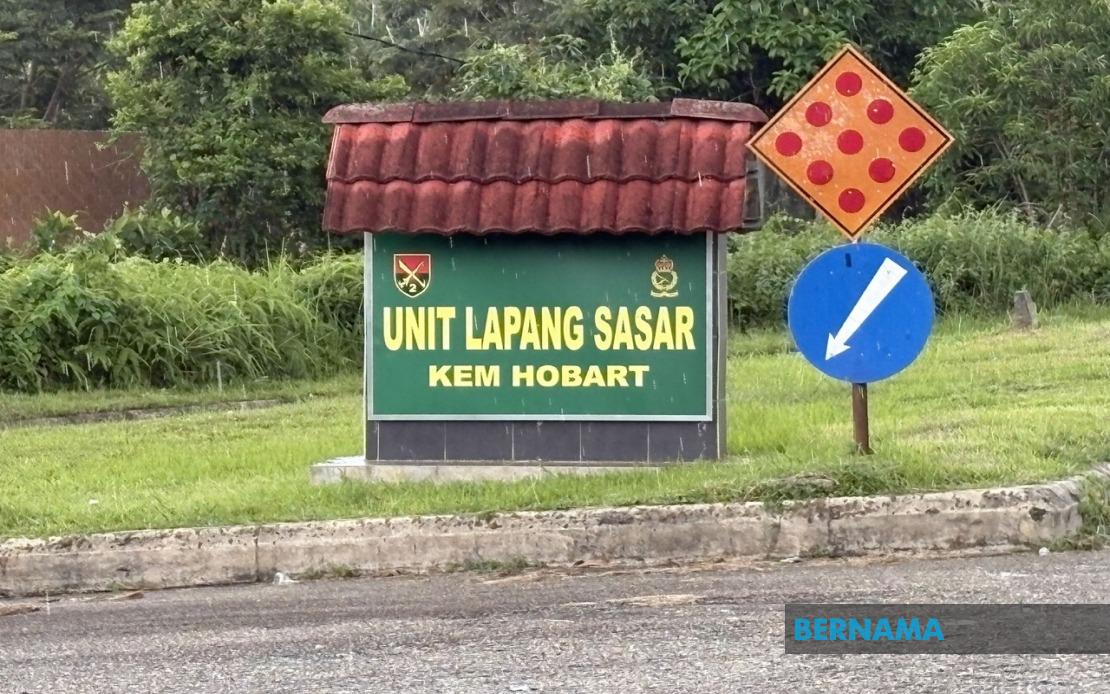
The Defence Ministry has determined that a faulty or premature safety lever release caused the fatal grenade explosion that claimed two lives at Kem Hobart in Gurun, Kedah during a training exercise last month. Defence Minister Datuk Seri Mohamed Khaled Nordin announced the findings of the Board of Inquiry on July 24, explaining that evidence gathered from the blast site, the positioning of victims' injuries, and physical scene analysis all pointed to the grenade activating before it could be thrown from the trainee's hand.
The tragic incident occurred on June 16 when two Malaysian Armed Forces personnel were conducting a routine grenade-throwing drill at the military camp. The investigation, which commenced immediately after the Board of Inquiry's establishment on June 17, examined the explosion comprehensively across multiple levels of Army command structure. Investigators scrutinised technical aspects of the device itself, reviewed whether proper procedures had been followed, and collected statements from witnesses and personnel familiar with the training protocols in use that day.
According to Mohamed Khaled's statement, the injuries sustained by the two victims corroborated the theory that the grenade detonated while positioned close to their bodies. The thrower experienced severe trauma to the head and right hand, while the handler, who was positioned nearby, suffered critical injuries to the head, torso, and left limbs. These injury patterns were consistent with an explosion occurring at close proximity rather than at a distance, suggesting the device had activated before being released.
However, a significant limitation emerged during the investigation: the absence of eyewitnesses prevented investigators from pinpointing the exact moment when the safety lever disengaged. This gap in direct observation means that while the timing of detonation can be inferred from physical evidence, the precise cause of the lever's early release—whether due to manufacturing defect, handling error, or procedural breakdown—remains uncertain based on the available evidence. Such ambiguity underscores the challenge in conducting forensic investigations into explosive incidents where the device itself is destroyed in the blast.
Understanding the technical safeguards involved provides context for why this incident is particularly concerning to military leadership. Grenades utilise multiple safety layers specifically designed to prevent accidental detonation: a clip that secures the safety lever, a pin that must be deliberately removed, and the safety lever itself, which must be held in place by the thrower's grip. Only when all these mechanisms are disengaged does the explosive train activate, initiating a chemical reaction that produces detonation approximately five seconds later. This multi-stage safety design reflects decades of military engineering aimed at protecting personnel during training and combat operations.
The Malaysia Armed Forces has long relied on standardised grenade-throwing exercises to build competency among combatants, as proficiency with such devices remains a fundamental infantry skill. Kem Hobart, located in Gurun, Kedah, serves as a training installation where soldiers from various units receive instruction in weapons handling, tactical drills, and explosive device operation. The camp's role in military education makes the incident particularly poignant, as it occurred in a context designed explicitly to prepare personnel for hazardous environments while maintaining safety standards.
Mohamed Khaled's statement emphasised the Defence Ministry's commitment to preventing recurrence of such incidents. The Ministry and Malaysian Armed Forces have pledged to strengthen multiple aspects of grenade training and handling. Enhanced safety procedures will be implemented across all units, with particular attention to how grenades are stored, maintained, and deployed during exercises. Training execution protocols will be tightened to ensure instructors maintain heightened supervision levels, and handlers will receive reinforced education on proper techniques and risk identification.
The announcement represents an important acknowledgment that even well-established training procedures can benefit from revision and strengthening. Military institutions worldwide periodically reassess safety protocols in response to accidents, seeking to identify systemic vulnerabilities that contributed to incidents. In this case, while technical factors may have played a role, the Defence Ministry's emphasis on supervision and procedural compliance suggests a recognition that human factors—attention, fatigue, or gaps in instruction—may warrant examination alongside equipment-related concerns.
For Malaysia's defence establishment, this incident carries broader implications beyond the immediate tragedy. Public confidence in military training programmes depends partly on demonstrable commitment to personnel safety. By publicly releasing detailed findings and committing to enhanced safeguards, Defence Ministry leadership signals that the institution takes such incidents seriously and is responsive to emerging risks. This approach contrasts with opaque handling of accidents, which can erode morale among service members and their families.
The two soldiers who died have become part of a sobering historical record of training accidents that occur across military forces globally. While grenades and explosives are inherently hazardous, meticulous adherence to safety protocols dramatically reduces risks. The incident at Kem Hobart serves as a stark reminder that military training, despite its essential role in national defence, demands unwavering attention to detail and a culture of safety that prioritises personnel welfare above all other considerations. As the Defence Ministry implements its strengthened protocols, the hope remains that such tragedies will become increasingly rare, and that lessons learned will extend to Malaysian Armed Forces units across the country and potentially influence training practices in regional military establishments.

