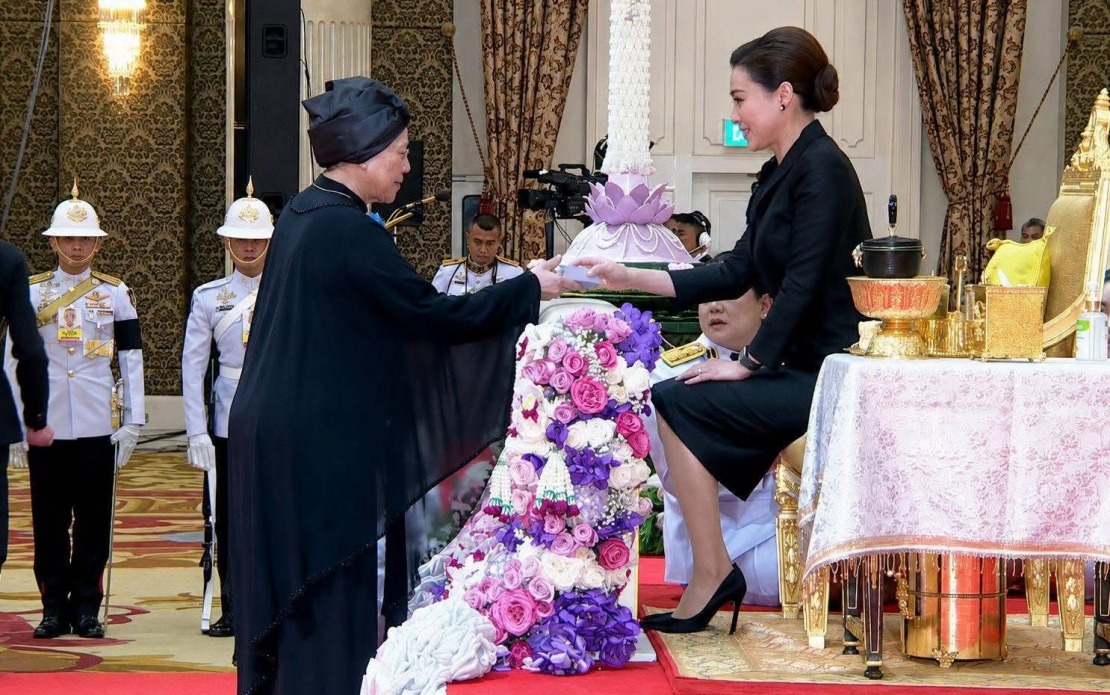
Prime Minister Datuk Seri Anwar Ibrahim has lauded Prof Emerita Tan Sri Datuk Seri Dr Sharifah Hapsah Syed Hasan Shahabudin for receiving the 'Outstanding Woman Award for Social Development' from Thailand's Queen Suthida Bajrasudhabimalalakshana, underscoring the distinction the honour brings to Malaysia's standing in regional affairs. Alongside his wife Datuk Seri Dr Wan Azizah Wan Ismail, Anwar extended his congratulations to Sharifah Hapsah, framing the award as validation of the capabilities and meaningful impact Malaysian women continue to demonstrate across the international community.
The Prime Minister's remarks, shared via social media, positioned the accolade as more than a personal achievement for Sharifah Hapsah. Instead, Anwar interpreted it as a broader testament to the calibre and professional accomplishments of Malaysian women navigating global spheres, particularly in development work where social impact translates into measurable change within and beyond national borders. This framing aligns with Kuala Lumpur's broader diplomatic messaging around regional cooperation and the visibility of Malaysian talent in ASEAN affairs.
Anwar used the occasion to articulate a policy direction under his administration, calling for the recognition to serve as inspiration for additional women to step forward and engage through expertise, strategic leadership and principled commitment in strengthening the social fabric while progressing the Malaysia MADANI agenda. The invocation of MADANI—the government's overarching development framework emphasising prosperity, inclusivity and civilisational advancement—linked women's participation directly to the administration's core governing vision, suggesting that female contribution is fundamental rather than supplementary to national objectives.
The Government's commitment to advancing women's roles forms a cornerstone of its stated developmental priorities. Under the MADANI framework, the administration has signalled its intention to sustain emphasis on women's agency, broaden their access to opportunities across economic, governmental and professional sectors, and safeguard their capacity to exert influence and drive progress. This positioning reflects both internal political priorities and international obligations around gender equity that Malaysia has undertaken through regional and global forums.
Sharifah Hapsah's recognition by Thai leadership carries subtle diplomatic weight within ASEAN circles. The award, presented by the Thai Queen, underscores the interconnectedness of women's leadership networks across Southeast Asia and provides Malaysia with a visible platform to demonstrate the region's commitment to inclusive development models. Thailand's decision to honour a Malaysian woman for social development contributions suggests growing institutional acknowledgment of cross-border knowledge exchange and collaborative welfare initiatives among member states.
The timing of such international recognition often amplifies domestic messaging around gender inclusivity and women's empowerment. For Malaysian policymakers, Sharifah Hapsah's award becomes a reference point in justifying budgetary allocations, legislative initiatives and institutional reforms aimed at reducing barriers to women's advancement. When women from one ASEAN nation receive formal recognition from peers in another, it strengthens the case for resource investment in parallel programmes domestically.
Malaysian women's growing visibility in international spheres reflects decades of educational advancement and professional integration, particularly in medicine, academia, civil service and non-governmental sectors. The emergence of figures like Sharifah Hapsah—whose professorial standing and social development work command recognition beyond Malaysia—indicates successful pipeline development from secondary education through tertiary training into expert-level positioning. This trajectory, while still uneven across all sectors, demonstrates tangible progress in human capital development.
However, gaps persist between headline recognition and substantive structural change. While international accolades celebrate exceptional achievers, systemic barriers in wage equity, leadership pipeline pathways and work-family reconciliation remain pressing challenges across Malaysian institutions. Anwar's linkage of individual achievement to systemic policy commitments attempts to bridge this gap, yet implementation and accountability mechanisms require ongoing scrutiny to translate rhetorical support into institutional transformation.
The Malaysia MADANI framework positions women's participation as integral to broader development goals rather than as a parallel or aspirational track. This semantic shift matters—it reframes women's advancement not as a diversity measure but as a strategic imperative for competitive advantage and inclusive growth. For regional observers, Malaysia's public emphasis on women's contributions reflects attempts to position itself within a progressive ASEAN narrative, distinguishing its approach from more conservative neighbouring frameworks.
Sharifah Hapsah's accolade also highlights the often-underrecognised contributions of women in social development sectors. Academic and development work frequently lacks the visibility and remuneration of corporate leadership or high-profile political positions, yet carries profound impact on community resilience, social cohesion and public welfare. International recognition of such contributions helps elevate the status and perceived importance of these domains, potentially encouraging greater talent recruitment and institutional investment in social development infrastructure.

