U Naing Htun Lin, owner of the Sky Villa Condominium in Mandalay, has been sentenced to five years' imprisonment with hard labour by the Aungmyaythazan Township Court for his role in the structural failure that killed over 200 people during a devastating earthquake. The conviction marks a significant legal consequence in Myanmar's response to one of the deadliest building disasters in the region's recent history.
The formal charges were filed on February 10 at the Aungmyaythazan Township Court under Section 304-A of the Penal Code, which addresses causing death by act endangering life or personal safety. The case originated from an investigation conducted by the No. (1) Area Police Station in Aungmyaythazan Township before advancing through the judicial system. The Special Investigation Department, represented by staff officer U Zaw Moe Aung, acted as the plaintiff in the proceedings.
During the initial phases of his trial, U Naing Htun Lin was permitted to remain free on bail while the court examined evidence against him. This arrangement changed dramatically on March 17, when the court revoked his release and remanded him into custody, suggesting that judicial authorities had determined sufficient grounds existed to warrant his detention pending verdict. The decision reflected growing concerns about the gravity of the allegations and potentially the magnitude of negligence implicated in the construction defects.
On June 23, the Aungmyaythazan Township Court issued its judgment, imposing the five-year sentence with hard labour under the criminal negligence statute. However, the legal proceedings have not concluded, as both the prosecution and defence teams have pursued appeals and revision applications challenging various aspects of the case. The Aungmyaythazan District Court has requested the complete case file for review under Criminal Revision Case No. 39Ka/2026, indicating that higher judicial scrutiny remains ongoing.
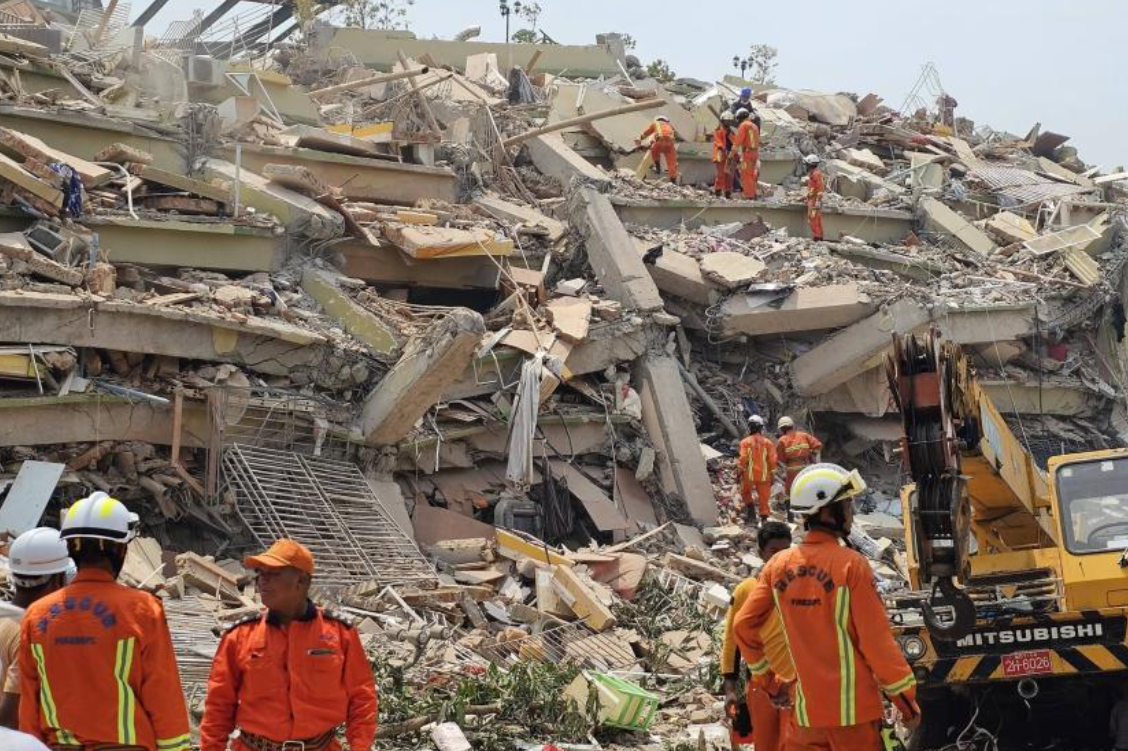
The Sky Villa complex was an 11-storey residential building situated between 21st and 22nd Streets on 60th Street in Aungmyaythazan Township. During the earthquake, the structure experienced catastrophic failure, with rescue operations recovering more than 200 bodies from the rubble. The building's collapse represented one of the most lethal consequences of the seismic event, drawing intense public attention to construction standards and building safety oversight throughout Myanmar.
The condominium was constructed by NTL Construction Company, whose managing director is U Naing Htun Lin. The involvement of the company's leadership in the construction process raises broader questions about quality control, adherence to building codes, and structural engineering practices in Myanmar's construction sector. The earthquake, which struck the Mandalay region with considerable force, exposed vulnerabilities in infrastructure that may have reflected inadequate construction practices or maintenance failures.
Following the collapse, U Naing Htun Lin's family, including his wife Daw Thet Thet Khine, organised a series of three separate ceremonial events at a monastery pavilion located on 19th Street in Mandalay. These gatherings provided a platform for the family to publicly apologise to the bereaved families of those who perished in the disaster. The gesture included financial compensation of 10 million kyats per deceased victim, demonstrating acknowledgment of responsibility, though such payments do not erase the legal consequences now imposed.
The five-year sentence carries significant implications for construction accountability in Myanmar, where building safety standards and enforcement mechanisms have historically faced criticism. The conviction suggests that courts are prepared to hold developers and building owners criminally liable when structural failures result in mass casualties, particularly when negligence or inadequate construction standards can be demonstrated. This legal precedent may influence future construction practices and the vigilance of regulatory authorities across Myanmar.
For Southeast Asian observers, the case illustrates the evolving approach within the region to corporate and individual accountability in construction-related disasters. Many developing economies grapple with balancing rapid infrastructure development against stringent safety requirements, and Myanmar's judicial response to the Sky Villa collapse demonstrates one national approach to this tension. The case underscores how seismic events can serve as catalysts for revealing pre-existing structural vulnerabilities that may have roots in construction practices, engineering oversight, or regulatory enforcement gaps.
The ongoing appeals and revision proceedings ensure that legal questions surrounding the verdict and sentencing will receive continued examination. Both the prosecution and defence have legitimate interests in the outcome, as the case establishes precedent for how Myanmar's courts address criminal negligence in construction contexts. The final adjudication of these appellate matters will further clarify the legal standards expected of developers and building owners, potentially reshaping construction sector practices throughout the country.
The Sky Villa case also highlights the intersection of natural disasters and human responsibility. While earthquakes cannot be prevented, the extent of loss of life often depends significantly on the quality and resilience of built infrastructure. U Naing Htun Lin's conviction acknowledges this reality by holding the building owner accountable for structural deficiencies that contributed to the catastrophic outcome. As Myanmar continues recovering from the earthquake's broader impacts, this legal resolution provides some measure of justice while also signalling that those responsible for construction failures will face serious consequences.

