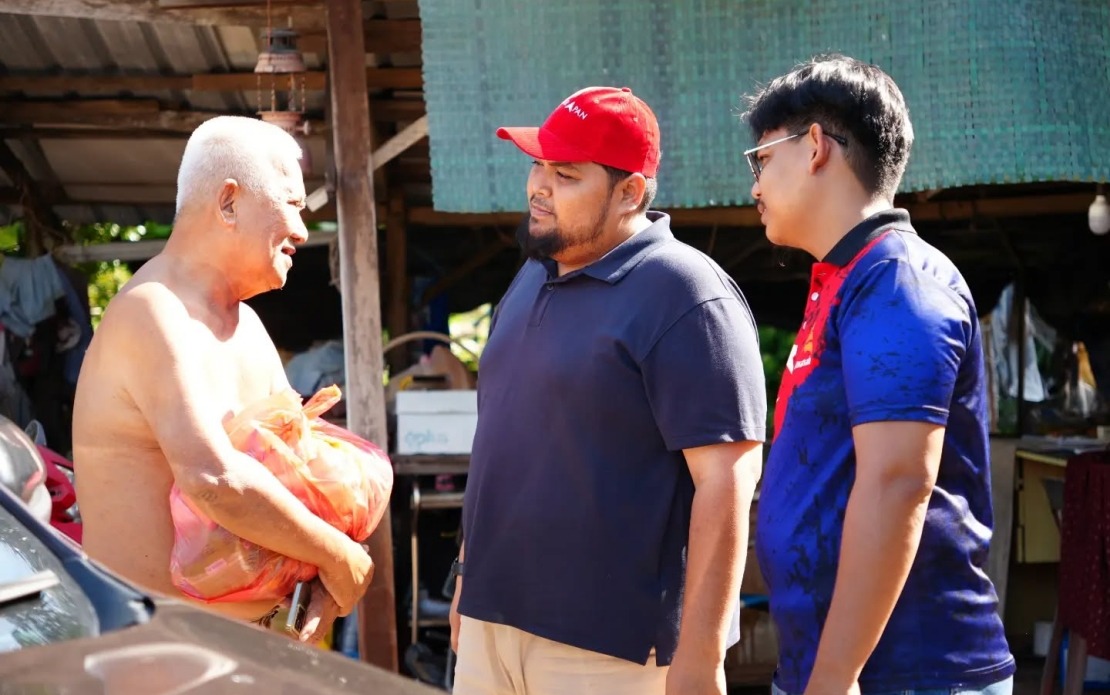
With the 16th Johor State Election set for Saturday, July 11, Pakatan Harapan's Maharani candidate Muhammad Taqiuddin Cheman is sharpening his appeal to younger constituents by zeroing in on practical economic concerns that shape their life decisions. The affable campaigner, known colloquially as Taqi, recognizes that the final stretch before polling day presents a critical window to connect with the demographic that will determine his electoral fortunes. Rather than broad policy pronouncements, he is employing targeted engagement sessions across Muar's youth networks to identify and address the specific obstacles young people confront as they attempt to establish careers and livelihoods locally.
The former Pulai Sebatang assemblyman, who served in that role from 2018 to 2022, has identified employment scarcity and entrepreneurial constraint as the paramount issues dominating conversations with younger residents. This focus reflects a sobering reality affecting Muar and similar secondary towns across Malaysia: the persistent brain drain of educated young people seeking opportunities in major urban centres or industrial hubs. Taqiuddin's campaign narrative frames his candidacy not as ideological positioning but as practical problem-solving, positioning him as an advocate prepared to facilitate solutions that established systems have struggled to deliver.
A particularly telling illustration emerged from Taqiuddin's recent interaction with young business operators at District 84, where approximately seventy traders operate within severe spatial constraints. These entrepreneurs have independently scouted potential commercial locations but lack formal channels or political patronage to convert their identified opportunities into secured premises. By highlighting this gap between entrepreneurial ambition and bureaucratic access, Taqiuddin presents himself as the intermediary who can translate private initiative into public support, a resonant pitch to a demographic that often feels overlooked by established political structures.
Muar's historical characterization as a "retirement town" underscores the urgency driving Taqiuddin's strategic pivot toward youth issues. The district has watched successive cohorts of young professionals depart for employment elsewhere, while those who remain frequently work in the semiconductor sector—a reality that speaks to limited diversification of local economic opportunities. This exodus represents both a loss of human capital and a demographic concern for the constituency's long-term vitality. Taqiuddin's campaign implicitly acknowledges this vulnerability while positioning Pakatan Harapan's governance agenda as capable of reversing these trends through targeted intervention and resource allocation.
Packatan Harapan's "Johor For All" manifesto provides the policy architecture undergirding Taqiuddin's specific promises. The RM500 million allocation dedicated to young entrepreneur expansion signals state-level commitment to the economic empowerment agenda he advocates locally. This alignment between grassroots campaign messaging and party-wide policy commitments grants his pledges additional credibility, suggesting that his advocacy extends beyond electoral rhetoric into concrete governance frameworks capable of implementation. For young voters assessing candidate viability, this integration of local concerns with systematic party policy carries substantial weight.
The Maharani Energy Gateway project, anticipated to conclude in the near term, represents another tangible development anchoring Taqiuddin's economic vision for the constituency. Major infrastructure initiatives typically generate employment multipliers across construction, services, and related sectors, potentially providing the job creation catalyst that young Maharani residents are seeking. By emphasizing proximity to this significant project while positioning himself as its capable political representative, Taqiuddin attempts to associate his candidacy with forthcoming prosperity and opportunity.
Skills development infrastructure emerges as a secondary but significant dimension of his platform. The absence of quality Technical and Vocational Education and Training institutions in the Maharani constituency represents a structural impediment to workforce development aligned with emerging industry demands. Taqiuddin's emphasis on establishing such facilities addresses a systemic gap that perpetuates dependence on either expensive external training or settlement in regions offering superior educational infrastructure. This proposal appeals simultaneously to young people seeking accessible skill-building pathways and to parents concerned with local educational provision.
Primary sector constituencies within Maharani receive particular attention in Taqiuddin's platform. The identification of infrastructure deficiencies affecting both oil palm cultivation and fishing—drainage systems impeding plantation operations and shallow river conditions constraining maritime commerce—reflects awareness of economic realities among rural and semi-rural voter segments. His proposal to enhance second-generation fishermen's livelihoods through skills and infrastructure investment recognizes that agricultural and extractive sectors remain significant employment sources despite urbanization pressures. This inclusive approach prevents his youth-focused messaging from narrowing to urban professionals while maintaining relevance to primary sector operators.
Taqiuddin's prior involvement in business enterprises provides another dimension to his credibility when discussing entrepreneurship. His lived experience navigating commercial challenges, regulatory environments, and market conditions offers authenticity that purely political backgrounds cannot easily replicate. This biographical element, while secondary to policy substance, contributes to the perception that he understands firsthand the obstacles young entrepreneurs confront, lending his advocacy an experiential foundation beyond abstract ideological commitment.
The Maharani contest itself has evolved into a complex four-cornered contest involving formidable competitors. Mohamad Anuar Hayan representing Perikatan Nasional, Datuk Ashari Md Sarip for Barisan Nasional, and Muhammad Amir Fiqri of Parti Ikatan Demokratik Malaysia each bring distinct partisan resources and organizational machinery to what shapes as a tightly competitive engagement. Within this crowded field, Taqiuddin's targeted focus on youth economic grievances represents a strategic differentiation attempting to claim a distinctive issue space. Whether this concentration suffices to overcome the substantial machinery and resources commanded by better-established parties will ultimately determine the election outcome.
The final days preceding July 11 will likely witness escalated campaign intensity across all constituencies as parties deploy final persuasion efforts and mobilize ground organizations. For Taqiuddin, the remaining campaign period provides diminishing time to consolidate support among the demographic segments he has prioritized, making each engagement session and community interaction potentially consequential. The extent to which his emphasis on practical economic solutions resonates with younger voters versus competing messaging from opposing candidates will substantially influence both the Maharani result and broader patterns across the Johor state election.

