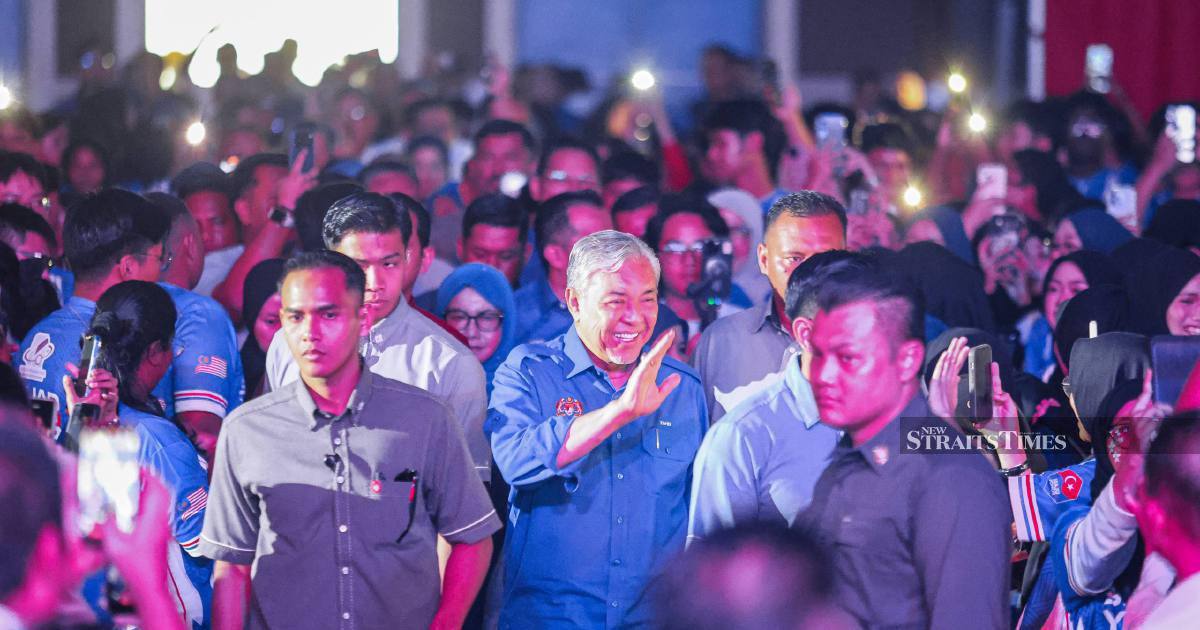
Barisan Nasional is making a strategic pitch to Johor's youth electorate, framing the July 11 state election as pivotal for the state's development trajectory. Deputy President Datuk Seri Zahid Hamidi has positioned caretaker menteri besar Datuk Onn Hafiz Ghazi as the coalition's central figure for the campaign, emphasising the need for continuity in governance and infrastructure growth that appeals particularly to younger voters seeking economic opportunity and progress.
The messaging reflects BN's awareness that youth engagement is critical in determining electoral outcomes in Johor, a state that has undergone significant political shifts in recent years. By elevating Onn Hafiz as the embodiment of development-focused leadership, the coalition seeks to consolidate support among voters aged 18-40 who may have been previously disengaged from traditional politics. This demographic represents a substantial portion of the electoral register and their participation patterns have historically influenced state election results.
Onn Hafiz's tenure as caretaker menteri besar comes at a juncture where Johor faces multiple development challenges. The state has been navigating post-pandemic economic recovery while attempting to maintain its competitive edge as a destination for both domestic and foreign investment. BN's campaign narrative centers on the notion that stability and experienced leadership under proven administration are prerequisites for sustained growth—a proposition the coalition believes resonates with pragmatically-minded younger voters concerned about employment prospects and livelihood security.
The timing of Zahid's appeal is strategically significant. With the election approximately two months away at the point of this announcement, the coalition is establishing its foundational messaging before the official campaign period reaches peak intensity. Early engagement with youth constituencies allows BN to build momentum and counter any alternative narratives from opposition parties that may also be positioning younger candidates or development-centric platforms.
Johor's electoral dynamics have been competitive in recent election cycles, with various coalitions vying for control of the state assembly. The youth vote represents a genuinely contested battlefield where neither major coalition can claim overwhelming dominance. This makes Zahid's outreach efforts particularly important to BN's overall strategy, as youth turnout and preference shifts can determine marginal seat outcomes across multiple constituencies.
The emphasis on continuing development under Onn Hafiz's leadership implies a contrast with potential political uncertainty or administrative disruption that might accompany a change in state government. This appeal to continuity is complemented by implicit promises that BN's track record in infrastructure, economic planning, and service delivery positions the coalition to deliver concrete benefits to younger voters—from job creation in growing sectors to improved urban amenities and digital connectivity.
From a regional perspective, Johor's election outcome carries implications beyond state boundaries. As Malaysia's southernmost state with extensive cross-border economic ties to Singapore, Johor's governance stability affects investor confidence throughout Southeast Asia. BN's emphasis on continuity and development appeals to constituencies beyond young voters, including the business community and overseas interests monitoring Malaysia's political trajectory.
The coalition's decision to position Onn Hafiz prominently rather than distributing campaign focus across multiple candidates suggests confidence in his electoral appeal and administrative record. This concentration of messaging also simplifies voter choice—a strategic consideration when competing against potentially fragmented opposition forces. Whether younger voters perceive Onn Hafiz as adequately responsive to their specific concerns regarding education, skills training, youth entrepreneurship, and wage growth will partly determine the effectiveness of BN's campaign among this critical demographic.
For Malaysian political observers, this development illustrates how both major coalitions are intensifying efforts to secure youth support through tailored messaging rather than generic appeals. The explicit targeting of Johor's younger electorate reflects broader recognition that demographic shifts are reshaping electoral mathematics. Political parties that successfully mobilise youth constituencies through platforms addressing specific generational concerns—rather than relying solely on traditional party loyalty or elder-voter networks—are likely to gain electoral advantage in coming years.
As Johor moves toward its July 11 election, youth engagement will continue as a central campaign focus for competing coalitions. Zahid's appeals to back Onn Hafiz represent one component of BN's broader effort to maintain state control while adapting its messaging to resonate with voters who prioritise tangible developmental outcomes and economic opportunity over historical or ideological party affiliations.

